Ireland is neutral and has 'better neighbours', says EU diplomatic chief as defence spending questioned
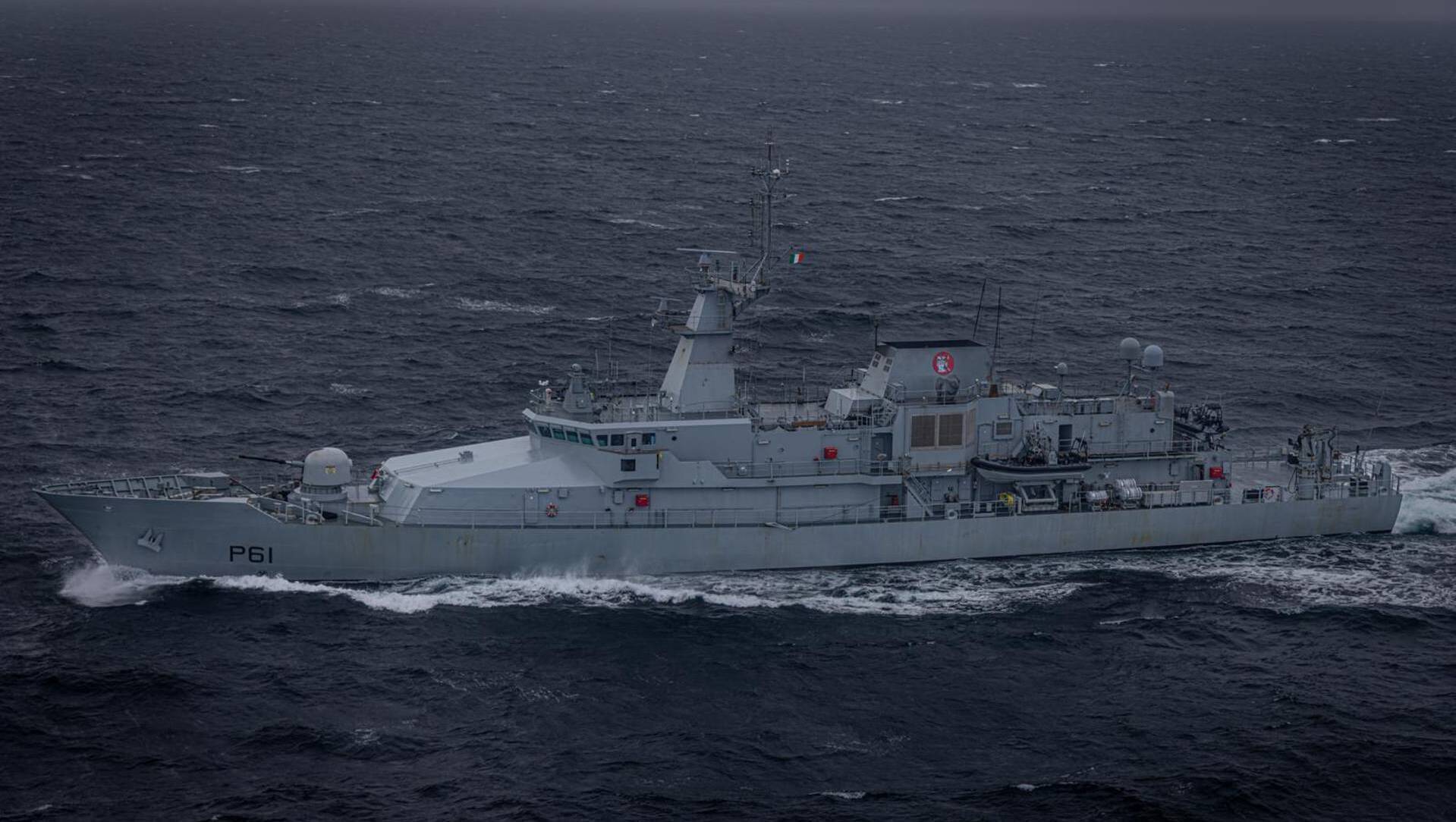
The Irish Naval Service patrol vessel LÉ Samuel Beckett could be seen patrolling off the coast, supported by a British Royal Navy warship positioned outside Irish territorial waters. File picture
Defence minister Helen McEntee and EU diplomatic chief Kaja Kallas were both pressed this morning about Ireland’s record as one of the lowest defence spenders in Europe.
They were speaking to national and international media as they entered a meeting of EU defence ministers at Druids Glen Hotel, Co Wicklow, as part of Ireland's Presidency of the EU.
Gardaí and Defence Forces have a significant security operation in place, with the Defence Forces’ counter-drone technology visible at the event and Air Corps helicopters regularly circling.
The Irish Naval Service patrol vessel LÉ Samuel Beckett could be seen patrolling off the coast, supported by a British Royal Navy warship positioned outside Irish territorial waters.
International and national media raised Ireland’s defence spending, which, as reported by the last July, remains at the bottom of the EU defence spending table, with just 0.2% of GDP (or 0.3% of GNI) allocated to defence.
Figures published by the European Defence Agency revealed that 23 of the EU's 27 member states have met or exceeded defence spending equivalent to 2% of GDP.
Read More
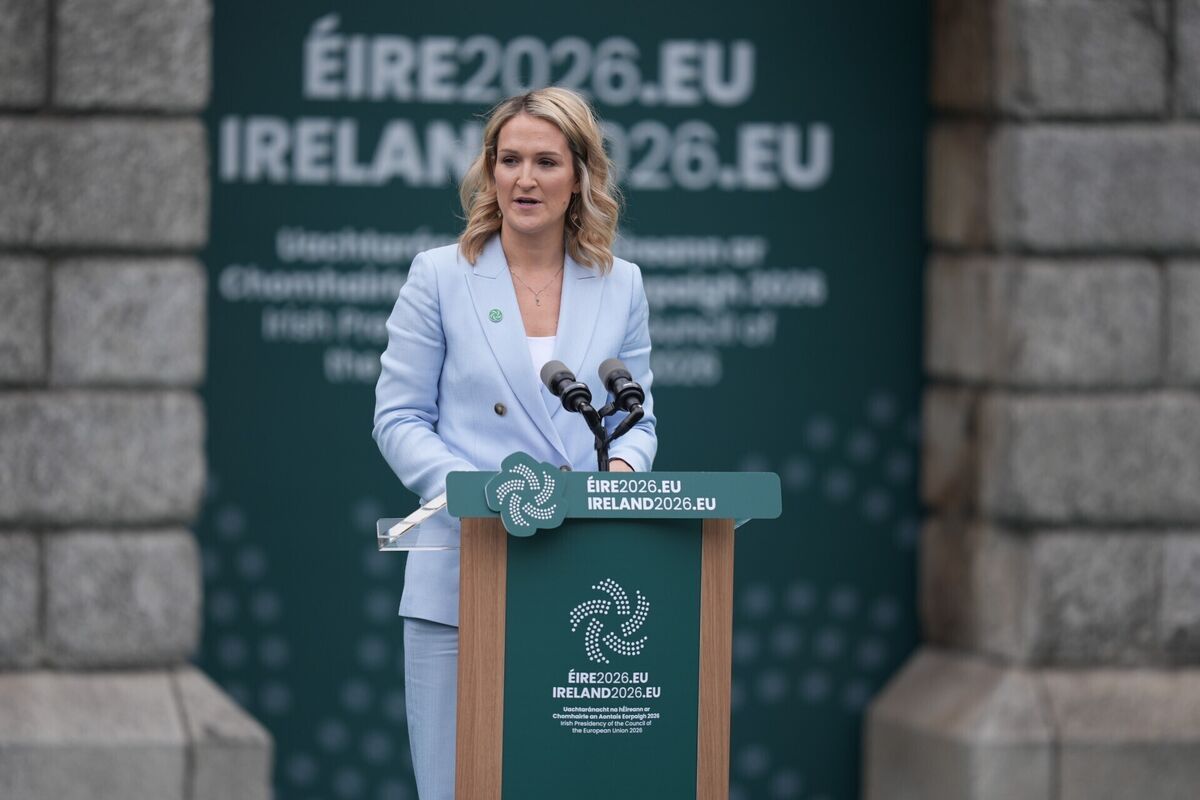
Responding to questions on this and whether Ireland was doing enough, Ms McEntee said: “What I can assure people is that our funding will continue to increase. We have increased our budget by 43% in the last four years alone and we are having discussions as we speak about our budget [for 2027].”
She said European countries can be assured that both she and the Irish Government as a whole are committed to increase defence spending.
The minister said Ireland was also committed to increasing its cooperation with member states, including in the area of maritime security and technology.
Asked about the fact that Ireland’s security for the EU Presidency involved naval and air support from the likes of France and Britain, she said: “I won’t get into security details, but what I can say is we have a significant security operation in place.”
She said Gardaí were being supported by the Defence Forces and that they have been in contact with international colleagues for many years on security matters and that Ireland was “no different” from any other EU country in that regard.
Ms McEntee added: “We are investing significantly in having a new military radar. We are investing significantly in counter-drone technology, which you can see in operation. We are also investing in our maritime space.”
When questioned about Ireland’s defence budget, Ms Kallas said: “I haven’t looked into Ireland’s budget.”
Told it was 0.2% of GDP, she said: “Well yes, yeah.”
Ms Kallas added: “Ireland is a neutral country and that’s why the defence spending has been lower and you [Ireland] have much better neighbours that much other European countries have.”
Asked specifically whether Ireland was doing enough to protect the EU’s maritime security, including from the threats posed by the Russian shadow fleet, Ms Kallas said: “We will be discussing maritime security today and it is a great concern for all of us, the cables that are underneath the sea and are really affecting people in their day to day lives.
“Of course member states are making different contributions to defence. It depends on whether they feel the threat is real or not. We have seen on the news the threat level has risen so it requires contribution from everybody.”
In addition to maritime security and measures to tackle the Russian shadow fleet, the meeting will spend much of its time focusing on Ukraine, now in its fifth year of defending itself from a full-scale Russian invasion.
A week of intensive drone bombing on its capital, Kyiv, resulting in civilian casualties, and Russian threats to increase attacks on its energy infrastructure are focusing minds on how to increase aerial defences in Ukraine.
The current situation in the Middle East is also on the agenda, including the possibility of any potential future EU-led military mission in Lebanon after the UN mission UNIFIL, which Ireland is part of, ends in December.
Ireland's involvement in an EU mission is currently blocked by the triple lock, which requires a UN mandate. Legislation to remove the requirement on Ireland's overseas missions has been delayed to the next Dáil term, but the Government appears determined to try and pass it through all stages speedily.
Violent attacks on Palestinian farmers in the West Bank by militant Israeli settlers are also scheduled to be discussed at today's meeting.
Nato deputy secretary general Radmila Shekerinska, who spoke at an event hosted by the Dublin-based Institute of International and European Affairs on Monday, is attending and taking part in discussions.
CONNECT WITH US TODAY



Be the first to know the latest news and updates