Knowing about religions is a foundation for all sorts of learning

Although updates have been underway in RE as a Junior and Leaving Cert subject, such reform is of diminished value if schools don’t offer the subject or deem it less important than others. File picture
As traditional Catholic belonging continues to dim in Ireland — fuelled by Church scandals, growing religious diversity, and secularisation — some call for removing the teaching of religions from primary and post-primary schools in Ireland.
As the numbers identifying as atheist or of no religion have dramatically increased, this call, on the surface, seems reasonable, especially if Christian identity becomes linked in some circles to corruptive ethno-nationalist stirrings.
And yet, to best serve and prepare our students academically, culturally, civically, practically, spiritually, and ethically, the challenge of reform is not in removing the Christian religion from schools, but providing a richer, deeper, and more robust interfaith and religiously pluralist curricula for students to learn from and about various worldviews and religious faiths.
This realisation is illustrated in two stories occurring in different continents and contexts and by a gap of 24 years.
The first was while teaching a university course (my first one) on American Fiction 1914-1945 at Queens College in New York in 2002 and the second was an audacious attempt in 2025 to teach Leaving Cert Religious Education (RE) to my daughter who attended Educate Together schools (so never had any religion class) and had stopped going to church after her confirmation.
In that English class in New York, with novels by Faulkner, Hemingway, Steinbeck, Anzia Yezierska, and others, students consistently raised questions about biblical and theological allusions or themes in the novels. What is a samaritan, original sin, Bartimeus, and Cain?
And as a class in New York City, students also approached the novels from their religious and cultural perspectives, so interactions were sharpened when a Jewish student referred to the Talmud or a Muslim student discussed a hadith. I kept thinking: how could you effectively teach (or read) these works without even basic biblical and interreligious understanding?
In the case of teaching my daughter Leaving Cert RE, desperation was the main drive. Her school didn't offer the subject, and because she has dyslexia and was given language waivers, she needed another subject (and dad, after all, was a theology professor, even if that could complicate expected answers!).
What was consistent in both stories, though, despite the 24-year gap and differing contexts, were the benefit and need of nurturing interfaith literacy and how much the subject of religions and worldviews appeal to such a wide-ranging group.
My daughter, who would not answer ‘religious’ in any survey, found herself (embarrassingly) bringing up the ethics of Aristotle in a conversation with friends or applying Buddhist practices of sustainability in a geography class examining climate change. In university now studying Creative and Cultural Industries, she is grateful for this interfaith foundation which gives her insights into global peoples and cultures indicative of the New Ireland while also aiding her career development.
Although updates have been underway in RE as a Junior and Leaving Cert subject, such reform is of diminished value if schools don’t offer the subject or deem it less important than others. Religions and worldviews suffuse all aspects of society and culture.
Students who know little about other faiths and traditions are under-equipped and ill-prepared to engage in meaningful discussion, projects, and learning in a range of fields and professions.
Studying other faiths and religions, especially meeting those from other traditions and worldviews, expands, complicates, and nurtures our sense of being local and global and what Peter Phan calls the “joy of religious pluralism”. Such joy acknowledges how all faiths are flawed and need one another.
It also celebrates deeper intimacy or even what Pope Leo positively referred to as “wasting time together” in his encyclical, Magnifica Humanitas. Such “wasting” is actually a mutual gift of cherished but finite resources: our time and attention.
What would such interfaith literacy mean in the classroom — and beyond? It entails more than mere facts about other faiths — though interfaith ignorance can have stultifying, financial, and socially embarrassing repercussions.
At its roots, interfaith literacy admits our own valuable way of life does not contain all truths or equally appeals to everyone with the same robustness or comfort.
It rejoices in hearing other opinions and perspectives and seeks out differing interpretations and paths — so long as those ideas raise and empower the beauty and dignity of every human life, especially the poor, the migrant, the forgotten, the marginalised, the unloved.
Interfaith literacy encourages attempts to answer eternal and ever-elusive questions: from the meaning of life and the search for inner-peace; the reality of horrific, often desolating forms of suffering; the quest for greater prosperity and flourishing for all; the origins of life; the mystery of forgiveness; the power of a virtuous life; to how to forge a just society; end war, violence, and structural injustice; and to tackle global warming, climate change, and species and habitat destruction.
And for those concerned or engaged in the rise of AI development, progress, and blind spots, interfaith literacy can highlight ethically balanced, multi-perspective, inclusive, and creative frameworks.
Teaching interfaith literacy is essential to such goals and calls. Promoting it — and not deeming religions a private matter or removing it from schools — should be a priority for peoples of all faiths and worldviews.
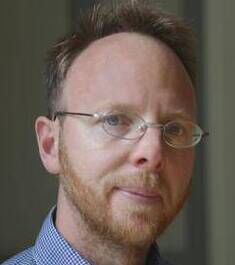
- Dr Peter Admirand is an associate professor of Theology and director of the Centre for Interreligious Dialogue at Dublin City University

CONNECT WITH US TODAY



Be the first to know the latest news and updates