Musk touts Tesla's 'green' credentials but workers' rights warrant protection
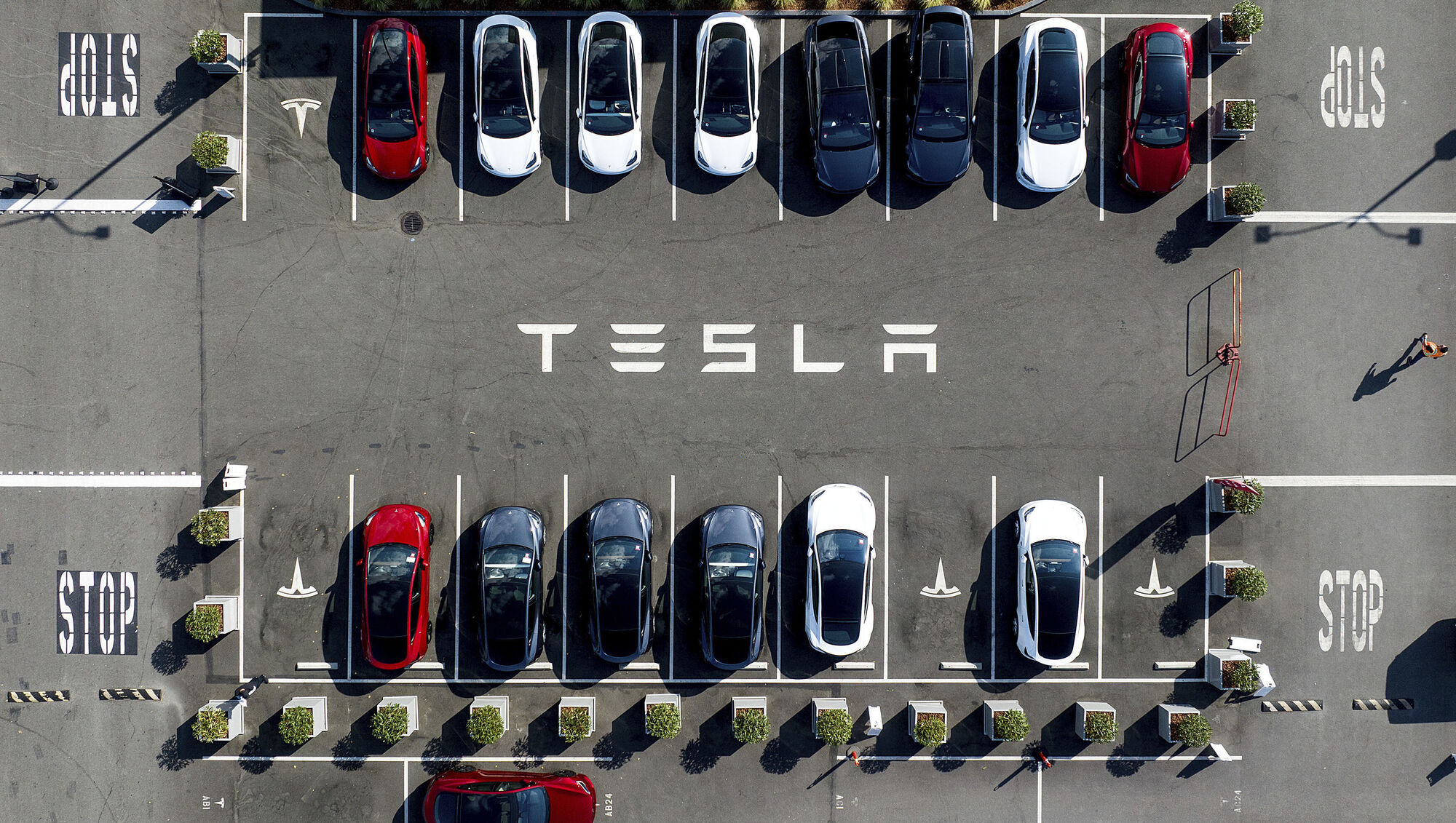
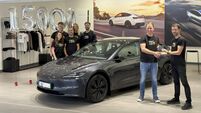
Tesla is well-placed to capitalise on the new ICE2EV scrappage scheme offered by the Government recently. Photo: AP/Noah Berger
So far this year, 29,840 new EVs have been registered, a 61% increase on the same period in 2025. Brian Cooke, director of the Society of the Irish Motor Industry, attributed this increase to the new ICE2EV scrappage scheme offering a grant up to €8,500 where older petrol or diesel cars are swapped for a newfangled EV.
No doubt you will have noticed the futuristic Tesla cars cruising Irish roads. The EV producer is well-placed to capitalise on these subsidies; but what do we know about the company other than its CEO is the outspoken, Mars-obsessed Elon Musk?
For instance, how does Musk and Tesla treat its workers? For many, this question may seem bizarre, even irrelevant, but traditionally the automotive industry scores highly on worker collectivism.
If the State’s €10 million fund, which fully sold out within an hour, is designed to “accelerate the transition”, it begs the question what does this “transition” mean for workers? And do citizen-consumers have any power over its direction?
The EU car industry employs six million workers directly and another six million in related industries and services. This amounts to approximately 7% of all EU jobs.
Despite being in direct competition, traditional car-makers, such as Volkswagen, Audi, Peugeot, Fiat, Volvo or Ford, have been central to European success across the decades. The European Commission describes the industry as “a core engine of European prosperity and an essential part of Europe’s identity”.
Trade union representation in the sector is strong and generally higher than the national average. This means not only that wages are respectable, but also that workers have a say in how these corporations are managed.
Recently, the sector has been facing a perfect storm of technological change, linked to environmental prerogatives, and increased competition from Chinese and US brands, such as Tesla.
In the wake of the 2008/9 financial crisis, and with the impending climate emergency coming down the track, policymakers looked to launch a ‘green’ variant of capitalism.
The US administration adopted ambitious policy goals to promote the development of battery technology and EVs.
Steven Chu, the Nobel Prize-winning physicist and then-secretary of energy provided the Silicon Valley-based battery start-up and EV manufacturer, Tesla, with a $465 million government loan, which went towards building a Californian ‘gigafactory’.
Hitherto, traditional car manufacturers and commentators had ridiculed Musk’s ambitions to electrify the car world, but the public money would create thousands of “green collar” jobs.
Subsequently, Tesla sales in Europe, particularly from 2017 onwards, experienced significant growth.
This was especially the case in Norway and Sweden, albeit to a lesser degree.
The Norwegian sales, in particular, were critical to Tesla’s development and are in no small part down to very generous state subsidies.
In a podcast with close friend Nicolai Tangen, director of the Norwegian Sovereign Wealth Fund, Musk noted ‘there's a lot of Teslas in Norway, it's crazy. I'd once again like to thank Norway for the support’.
Tesla’s track record when it comes to labour relations in the US is pitiful, to say the least. (Remember Musk’s treatment of Twitter workers in Dublin following his acquisition of the company).
According to Forbes, between 2014 and 2018, the Californian plant had three times as many health and safety violations as the 10 largest auto plants combined. A former “green collar” employee stated: “If they found one thing you were really good at, you were going to be there for 12 hours a day, five, six, seven days a week".
A California judge ruled that actions by Musk, including tweets, and other Tesla executives violated labour laws by sabotaging employee attempts to unionise. Tesla appealed and the judges voted 9-8 in favour of Tesla and Musk deeming his tweets as “constitutionally protected speech”.
The National Labor Relations Board’s (NLRB) investigations into dismissals at Musk’s companies resulted in Musk successfully suing the former’s constitutionality. Last February, the NLRB, adopting Musk lawyers’ argument, announced it was abandoning cases because it lacked jurisdiction.
Perhaps coincidence, but Musk’s hostility to workers’ rights could, more than anything else, explain the South African entrepreneur's support of Trump in the 2024 election, which came at a cost of $290 million.
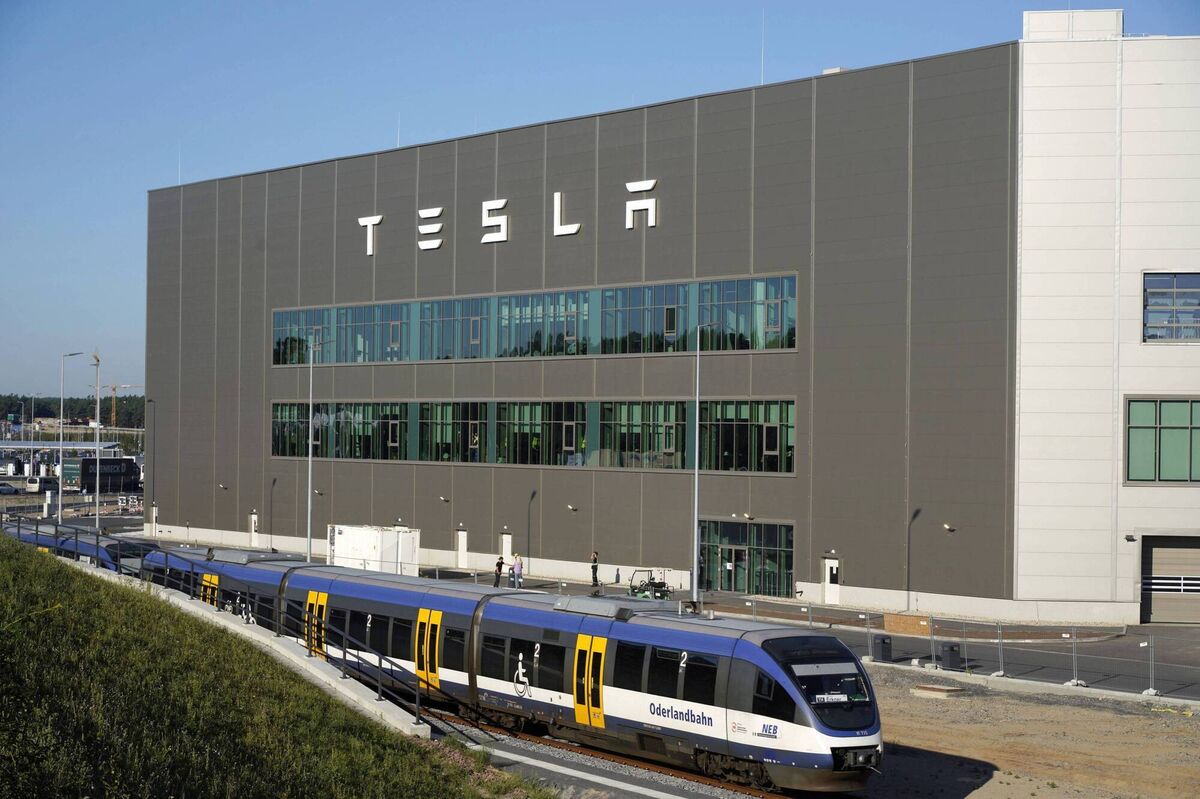
Inaugurating its gigafactory outside Berlin, in March 2022, Musk told the workers: “Any car that we make is a step in the direction of a sustainable future […] with every car we make, with every battery we make, we’re making the future better”.
From a labour standpoint, this audacious claim is hollow and tantamount to an eco-social paradox: saving the planet while screwing worker collectivism.
Nowhere is the eco-social paradox more evident than in Sweden, a country noted for its strong unions and collective agreements, the backbone of the Nordic model. Currently, Sweden is experiencing its longest-running postwar strike with Musk’s Tesla.
In 2023, 20,400 Tesla cars were sold in Sweden, almost double the 2021 figure. The Swedish union, IF Metall, started organising Tesla mechanics with a view to concluding a collective agreement. Following fruitless negotiations with Tesla management, the union opted for the only weapon at its disposal, namely strike action. That was in October 2023.
In Sweden ‘sympathy’ actions by other unions is (still) possible and is used to ramp up pressure on reluctant employers. Even its threatened use has produced success against other anti-union corporations, including Bezos’ Amazon.
Fourteen other unions have joined IF Metall’s campaign by exacting blockades against third-party firms providing products and services to Tesla.
For instance, postal unions are blocking Tesla’s mail and package deliveries, cleaners’ unions are hindering cleaning and garbage disposal at Tesla’s facilities, electricians’ unions are refusing electrical work and maintenance at Tesla workshops and charging stations.

There is even a transnational dimension to the strike with dockworkers in Sweden, Norway, Denmark and Finland refusing to unload Tesla cars. Such actions may seem as excessive to those uninitiated in (Nordic) labour relations, but this is how unions defend their ‘model’, characterised by high union density and collective bargaining coverage.
Tesla remains belligerent and almost three years later the Tesla workers are still on strike.
Compared to elsewhere, Tesla’s market share in Ireland is low. This is changing following the introduction of State subsidies designed to ‘green’ the economy.
However, if we are serious about the idea of a ‘just transition’ this should not come at the cost of worker collectivism, which has provided European automakers with a comparative advantage vis-à-vis its competitors and ensured European prosperity.
Tesla, and its eco-social paradox, is hoping to upend this arrangement to the benefit of its shareholders.
As environmentally-conscientious consumers, we have the power to choose EVs that are not inimical to workers’ rights.
A recent interview with Tesla’s new Irish director Kieran Campbell noted there "should be some interesting conversations to come".
Surely, how Tesla treats its workers, respects workers’ rights and engages with unions is one worth having.
- Darragh Golden is an Ad Astra fellow and assistant professor in employment relations at University College Dublin.
CONNECT WITH US TODAY



Be the first to know the latest news and updates