Paul Hosford: Homeless numbers continue to rise — but where is the outrage?
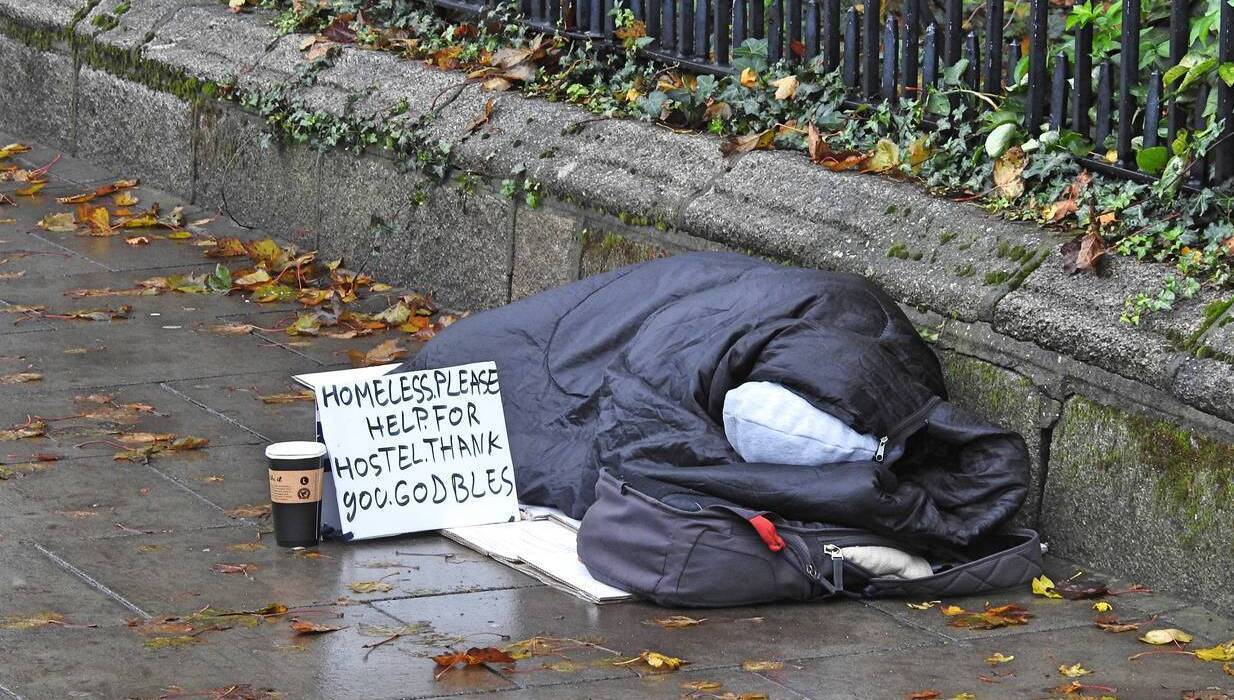
The homeless numbers tick closer to 20,000 with every month and there is little in the way of anger from the public. File picture
Another final Friday of the month, another record level of homelessness in Ireland.
The machinery of the announcement is so well-rehearsed now that some around Leinster House know that the presence of journalists in the halls on a Friday means an announcement is coming.
The choreography is familiar; a Department of Housing email at 2pm with a link to a report.
The days of a quote from the housing minister are long gone, so the email is really just that link to a PDF which in recent months has added a total of the numbers of people homeless. In months past, you would have to add up the numbers yourself from across columns of adults (12,055 this time) and children (5,830).
Read More
The issue of the delivery of the figures is not the real story here, though. That is the ongoing human tragedy of thousands of children growing up in homes which are not theirs. Of the impact on developmental milestones of growing up in hotel rooms. Of too many kids who won't spend Christmases and birthdays in hotel rooms and B&Bs.
But the delivery speaks to a public and policy apathy towards a problem that at one point caused apoplexy and can now barely muster a shout.
While 10,000 was seen as a Rubicon moment, one from which the body politic could no longer shy away, the numbers tick closer to 20,000 with every month and there is little in the way of anger from a public which has come to believe that this is an intractable, intangible, and unsolvable issue and, therefore, not worth protesting.
With Friday's announcement came the usual condemnation from the opposition, the constructive criticism of housing charities and NGOs and a collective moving on before the weekend kicks off.
It is an example, in the clearest terms, that one person being homeless is a tragedy, but 18,885 is a statistic.
And this is not really the fault of any one person or group. People have immediate concerns. At a time when food prices remain high, energy costs have surged, and almost any public service could be added to that list, many simply lack the capacity for the kind of sustained public anger seen in the past.
It's not that people don't care. It's that the problem has persisted for so long that it has become difficult to imagine how it might ever be resolved.
There is another problem with the numbers, too: They are necessarily abstract.
A family becomes a line on a spreadsheet. A child becomes a number in a column. A hotel room becomes emergency accommodation. A person who has lost their home becomes part of a monthly total.
The language is designed for administration, not outrage.
They represent parents trying to maintain some semblance of normality for children who know that the place they sleep is temporary. They represent people whose lives are being organised around the availability of a room rather than the stability of a home.
The danger is that the monthly figure has become an event rather than a warning.
It arrives, it is reported, politicians react, charities respond, social media fills for a few hours, and then everyone goes back to the rest of their lives.
There is no obvious moment when this stops.
There was a time when every new record was treated as evidence that something had gone badly wrong. Now another record is almost treated as confirmation that things are exactly as expected.
The political arguments remain familiar: Supply, planning, affordability, construction, investment, regulation, vacancy, infrastructure. All of these matter. None of them changes the fact that there are children going to sleep tonight in accommodation that was never intended to be a home.
And perhaps that is where the public conversation has become stuck.
We have become very good at explaining why the number is going up. We are less good at explaining when it will come down.
Until then, the final Friday of every month will continue to arrive.
And so will the email.
- Paul Hosford, Deputy Political Editor
CONNECT WITH US TODAY



Be the first to know the latest news and updates