Liam Quaide: People with intellectual disabilities have the right to a home
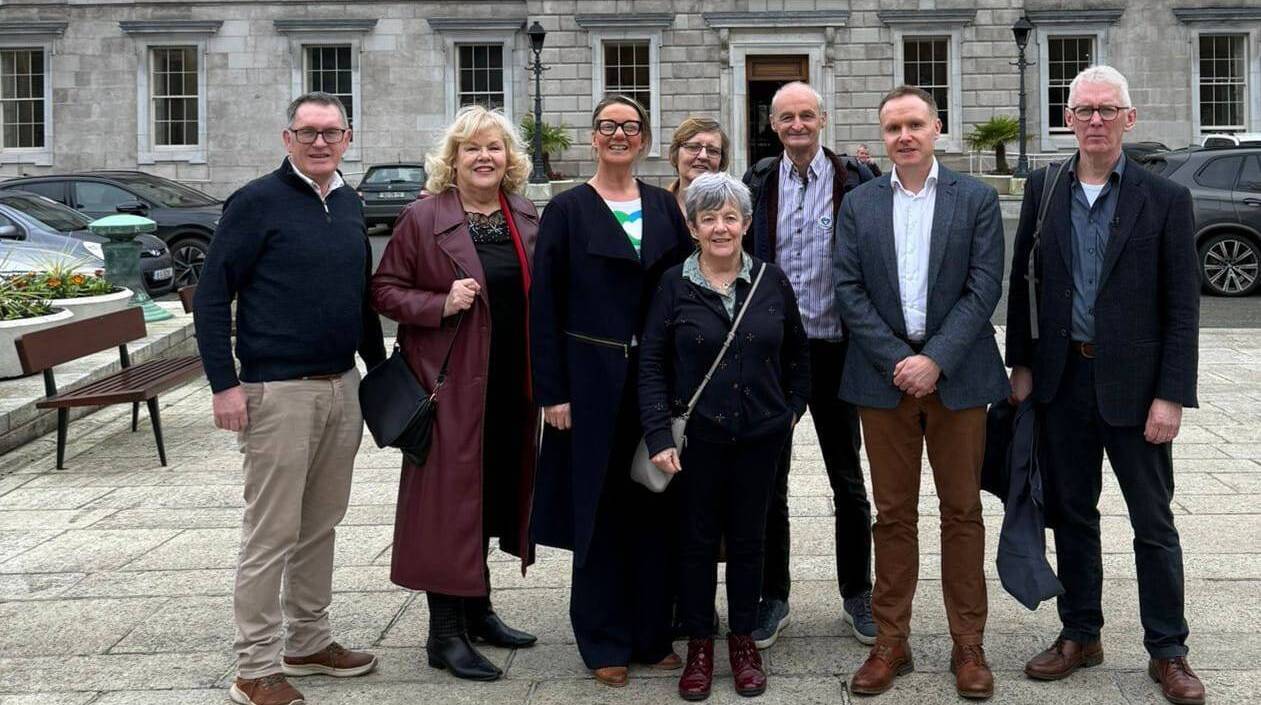
Cork East Social Democrats TD Liam Quaide with members of the Before We Die group at the Dáil.
Among the State’s most serious failings is the crisis that thousands of people with an intellectual disability and their families are caught up in — an absence of any plan for future living arrangements.
A home is not a vacant bed found when everything else has collapsed. It means choice, belonging, continuity of relationships and support; living in your own community, close to the people and places that give your life meaning.
For many people with an intellectual disability, and for their families, the absence of future planning has created a kind of purgatory.
There is no clear answer to where the person will live, who will support them, or what will happen when a parent becomes ill, dies, or simply cannot cope.
Years are lost to uncertainty, while the person at the centre is denied a secure future. When crisis comes, the answer is too often whatever placement can be found, even if that means traumatic upheaval, severed connections, and exile far from home.
That world of suffering remained hidden until the campaign group Before We Die shone an uncompromising light on it. Since forming last year, they have brought thousands of isolated families together, turning private anguish into political force.
I first became aware of Before We Die through my TD colleague Gary Gannon, who spoke movingly in the Dáil after attending an early campaign meeting in Marino. His speech coincided with my research into the privatisation of residential services for people with an intellectual disability.
Read More
The figures showed the crisis from another angle: successive governments had drifted into a costly, crisis-led model, reliant on for-profit placements, often located far from a person’s community.
Cianan Brennan’s reporting in the Irish Examiner gave powerful early national expression to what Before We Die families had lived with for years: Ageing parents, already run ragged by full-time caring, being forced to become lobbyists on behalf of their adult sons and daughters.
These families are asking Government to stop abandoning their relatives to agonising uncertainty. They are asking for a system that upholds a person’s basic right to choose where and how they live, that involves family and chosen advocates where the person wishes, and plans early enough so long-term dislocation does not remain the default response.
This week, the Social Democrats are bringing forward a private members’ bill in the Dáil that would:
- Require Government to publish a five-year National Community Living Strategy;
- Assess unmet need, including people living with ageing parents not captured on formal housing lists;
- Develop individual community living plans with the person at the centre;
- Provide multi-annual funding to build public and not-for-profit community living capacity; and
- Publish annual data on waiting lists, emergency placements, distance from home and spending by provider type.
The figures we have are stark, but incomplete.
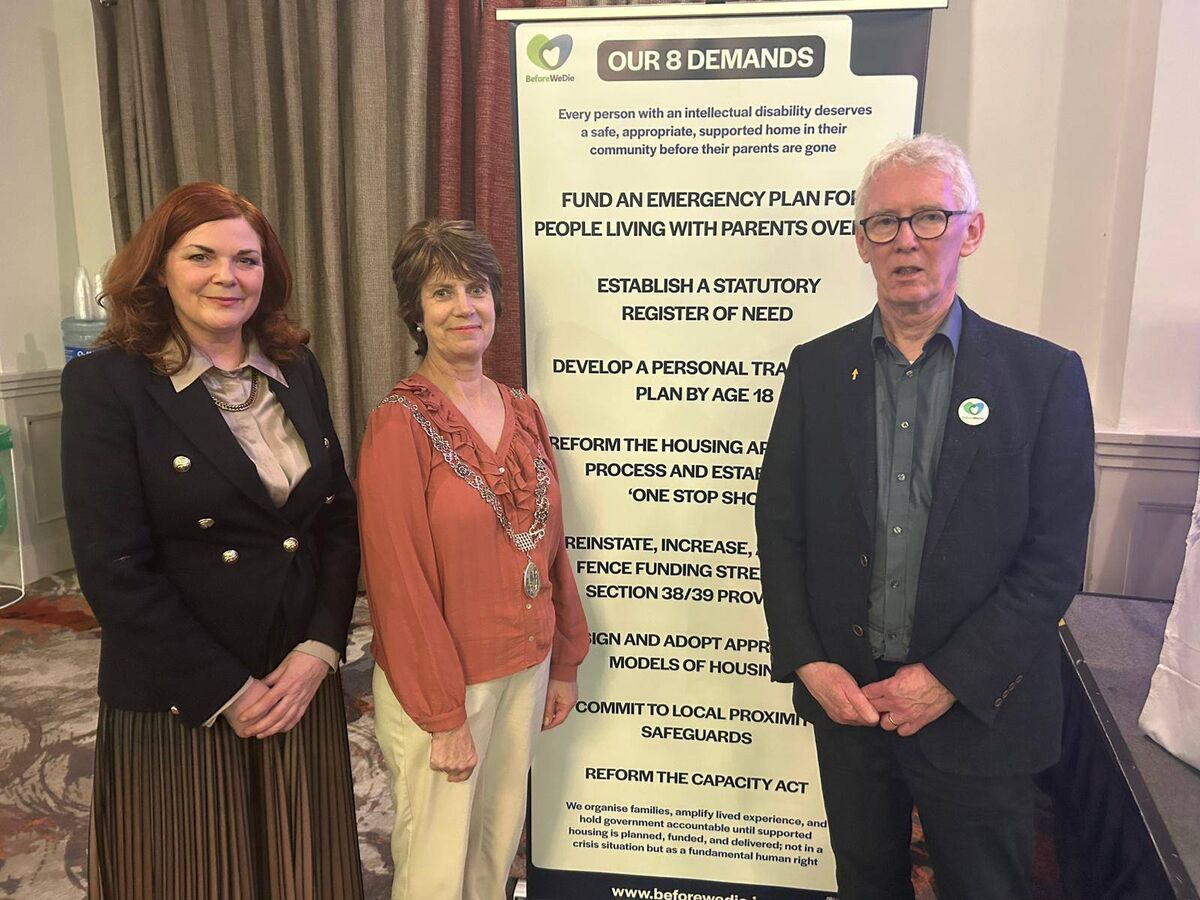
The emotional reality behind them is bleaker again: when families were asked to describe how they felt about future living arrangements, the words that came back included worried, anxious, angry, powerless, afraid, and terrified.
Before We Die has highlighted that more than 2,000 adults with an intellectual disability live with parents aged 70 or over, including 500 whose parents are over 80. Its survey found that only 2% of families had a formal written housing plan, and only 19% of adults surveyed were on the housing list.
Responses to Parliamentary Questions I submitted show that at least 606 people with an intellectual disability in residential settings are living outside their home county, and at least 193 are more than 100km from home. Large geographical areas were unaccounted for in the data, so the true figures are likely much higher.
As a psychologist working in adult mental health services for eight years, I witnessed people with an intellectual disability falling between underfunded disability and mental health services, at risk of exploitation in the community, or trapped in complex family situations.
I became aware of people with a mild intellectual disability languishing in psychiatric wards, nursing homes, or unsafe community settings because services could not support them.
In 2020, I described this as a hidden tragedy.
One striking example of successive governments’ failure to plan featured in the Oireachtas disability matters committee, when Siobhán Bryan, chief executive of the Muiríosa Foundation, told me that 46 of Muiríosa’s 142 residential properties were privately rented.
A respected not-for-profit provider is forced to plough large sums into the rental market and may invest tens of thousands of euro bringing a rented house up to Hiqa standard, while still facing the risk that the landlord may sell.

Meanwhile, for-profit providers are able to build up substantial property portfolios with the funding they receive from the HSE. By the end of 2025, approximately 16% of residential places for people with an intellectual disability were provided by private for-profit companies, up from 8% in early 2022. €526m in public money was paid to 220 for-profit providers in 2025.
Funding must be multi-annual, planned and tied to human rights standards, safeguarding, proximity to family and community, and the will and preference of the person.
Our motion would move policy away from crisis and fragmentation towards robust, community-first, rights-based planning.
Before We Die has given this crisis a name, a voice, and political urgency. Government must now respond with planning, funding, and accountability.
- Liam Quaide is a Social Democrats TD for Cork East and the party’s disability spokesperson
CONNECT WITH US TODAY



Be the first to know the latest news and updates