Cork has Ireland's best city centre, but needs to avoid making the same bad decisions as Dublin
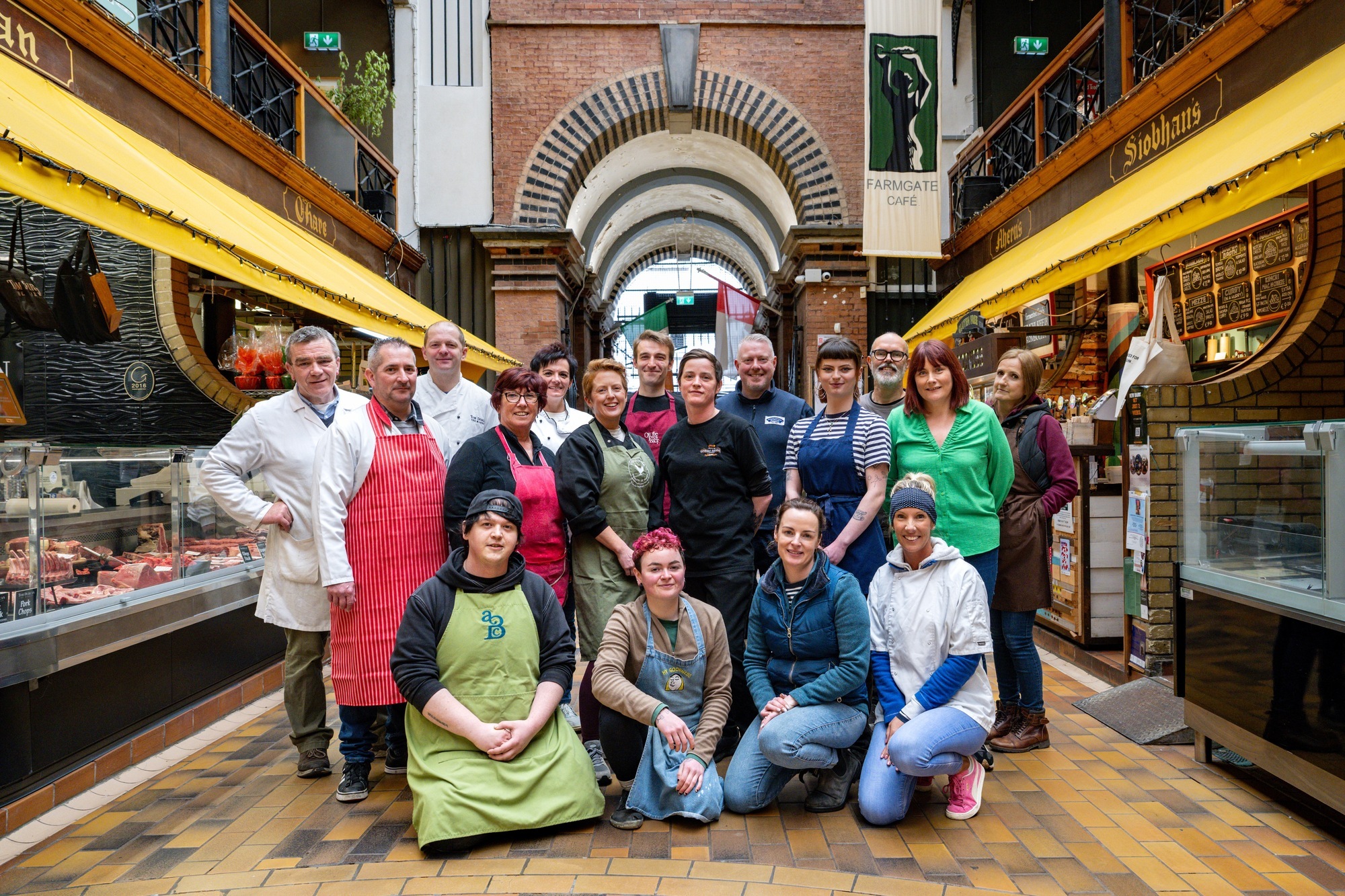
Cork's English Market is the beating heart of the city. Picture: Chani Anderson
At the Irish Examiner's Future Cork event last February, the Metropole itself could barely contain the exuberance. Because on that day, by some real metric that everyone could sense but no one could quite put their finger on, Cork had officially surpassed Dublin.
Not by size. Dublin has the highest population (at least 2.5 times Cork's, whichever way you draw the boundaries), the biggest economy and the largest air and sea ports. It is the centre of most media and the hive of the chattering classes.
It's home to all the Nationals — the National Gallery, the National Library, the National Archives, the National Government, the National Museum (well, most of), the National Concert Hall, and the Abbey Theatre.
It's home to all the Royals — the RIA, the RHA, and the RDS. It has most of the classy buildings — the Custom House, the Four Courts, the old parliament, the GPO, Christ Church and St Patrick’s.
And it has maybe the most impressive set of Georgian terraces on this island or the neighbouring one. Add UCD, Trinity, Dublin Castle, the Phoenix Park, St Stephen's Green, the King's Inns, a Calatrava bridge and Temple Bar, and you have a city with an enviable entry on Tripadvisor.
Anyone planning a first visit to the island would wonder how they'd ever find the time to go anywhere else.
And yet this doesn't reflect the reality of the situation. Because despite all its obvious advantages, Dublin is not the most satisfying urban experience the island has to offer.
Dublin's massive expansion over the past 50 years hasn't strengthened its identity. Thanks to questionable planning choices and a timid approach to infrastructure, large parts of the new metropolitan area beyond the M50 have a very weak relationship to the historic core. They feel detached from the centre that anchors them.
Even within the area historically considered the heart of Dublin — inside the canals — things aren't holding together. There was a time when O'Connell Street, Dublin's grandest boulevard, was the main street for the entire capital, maybe even for the country. That's no longer the case.
North and south city feel less like contrasting halves of a single urban area and more like cities on either side of a modern-day iron curtain. The top half of O'Connell Street, like much of the north inner city, is now hard to describe beyond a collection of buildings held together by a sense of desolation.
What we mean when we speak of historic Dublin is now reduced to part of the southside: Grafton Street and its side streets; Trinity; College Green and Dame Street; St Stephen's Green; and the area around Government Buildings — extending west as far as Christ Church and south into the Georgian belt. This is the Dublin that still carries the image we traditionally hold of the capital. Move beyond it and the intensity drops sharply.
And now the case for Cork.
With St Patrick's Street at its centre, that which is Cork takes in Oliver Plunkett Street, the Grand Parade, the South Mall and the wonderful grid of streets connecting Patrick Street to the quays of the river's northern branch — along with all the lanes, alleyways, restaurants, cafes, specialist shops and older commercial fragments. It reaches across the Lee to MacCurtain Street and Patrick's Hill. The whole area holds a wide variety of building types, street widths, topography and atmosphere, yet the ensemble hangs together.
Its buildings have identity: Hill's Brown Thomas, the Pav with its Serlian windows, those random bow-fronted townhouses that show up as if by accident — even the McDonald's is cool. Grafton Street is elegant and busy, but once you've been to Cork it feels very small, closer in scale to Shop Street in Galway (no shade to Galway intended).
Trinity is Dublin's best player. It has scale, formality, a sense of occasion, and some wonderful buildings — the library, the science museum and the Beckett Theatre among them. It's like when Mbappé was at Paris Saint-Germain: brilliant, lovely to look at, but remote, diffident, a little above its surroundings.
Cork's English Market is the PSG of more recent vintage. Not flashy, no illusions of grandeur, no classical flourishes — it still manages to be the beating heart of the city. It's Dembélé: there for everyone, a team player.
Now, this is interesting. Take Google Maps and screen-grab the surviving southern core we've just called Dublin; do the same for the area centred on St Patrick's Street; overlay one on the other in Photoshop, and the two areas are relatively close in size.
Here's the point: as a share of its metropolitan area, central Cork is much larger than the surviving core of Dublin. Taken in context, 'Cork' is most of the city; 'Dublin' is a shrinking enclave. This is why Cork is the more intense architectural experience.
But here's the thing about urban coherence: you can lose it. Dublin is the story of a city that did. There was a time when Dublin was all vibe — when those in the know proclaimed it the most underrated capital in Europe, when young people were intoxicated by its potential. It made some mistakes that Cork would do well to examine.
First, Dublin once had an enormous area of disused docks, and it embarked on a massive regeneration project. But it added a great wedge of new city without ever extending the old one. The new buildings turned out to be far less engaging than the renderings.
Then Dublin decided to build a light rail. Many felt the expense of putting the tracks underground through the city centre would have been worth it. Above ground was the cheaper option and, of course, it won out.
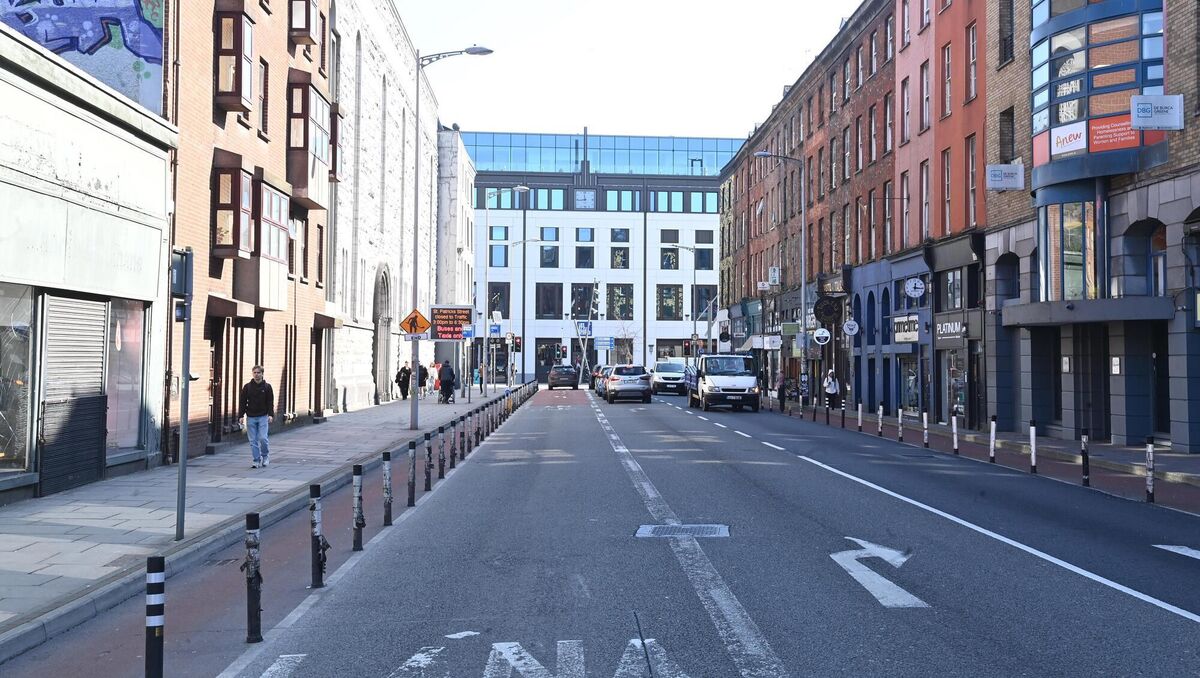
As a result, the once fabulous coherence of St Stephen's Green has been rent asunder, Harcourt Street is all a-clutter, and entire stretches of Middle Abbey Street feel like one long train platform.
Perhaps Dublin's planners can be forgiven for not anticipating every problem, but the designers of Future Cork won't have that excuse. Voices of caution have already been raised: warnings against creating a new area the size of the city itself yet bereft of life, or handing St Patrick's Street over entirely to the new Luas. We'd do well to examine all the details before we sign the agreement.
At the end of the day, Carlsberg doesn't do regret — but if it ever changes its mind, we don't want to do it to us.
- Garry Miley is a lecturer at South East Technological University’s Department of Architecture


CONNECT WITH US TODAY



Be the first to know the latest news and updates