France's 'Beur-Blanc-Noir' team success belies the divisions at home
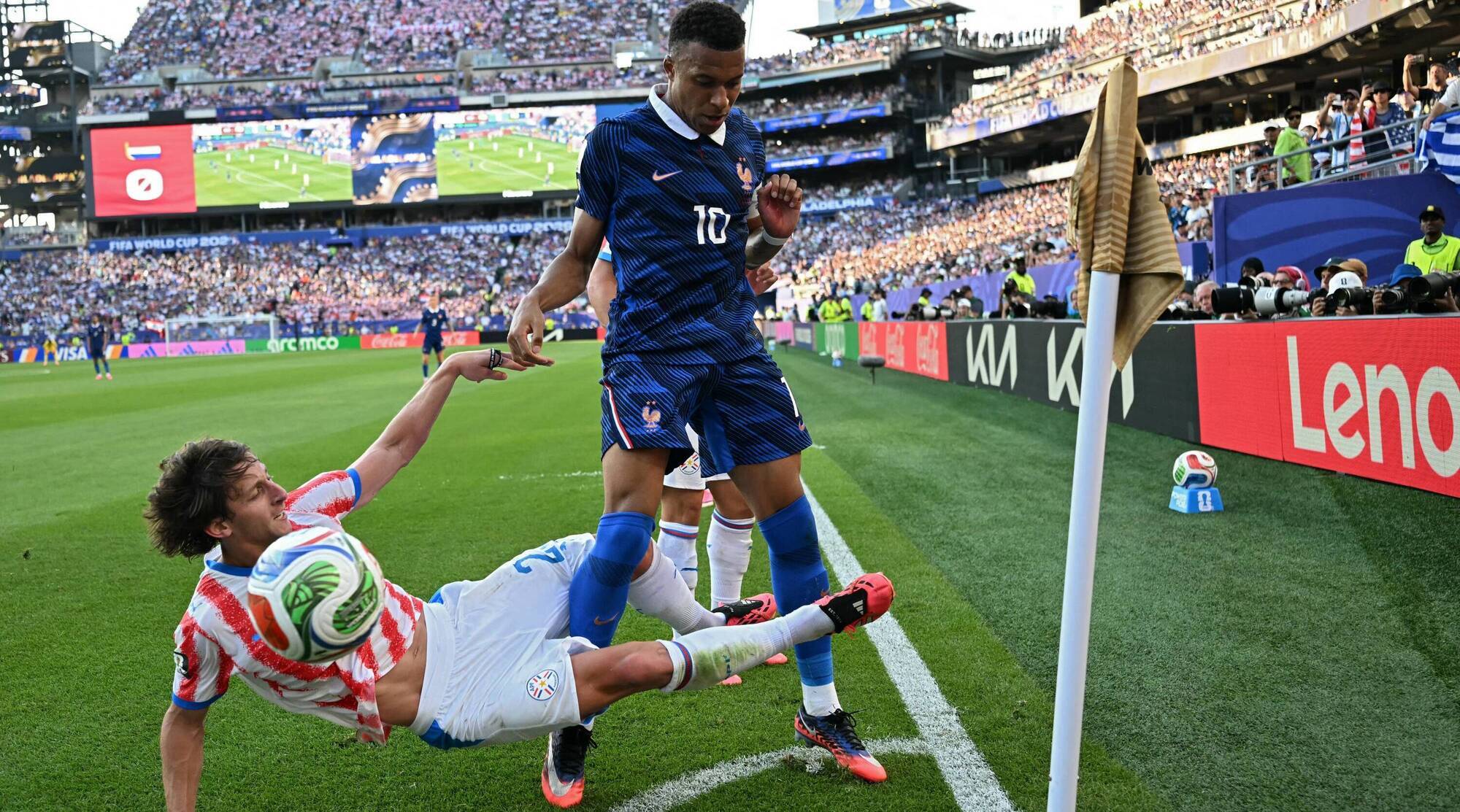
Kylian Mbappé knew France needed to get their hands dirty to cope with Paraguay’s dark arts. Photo: Mauro Pimentel/AFP/Getty
Despite the fact that we’re not there, this World Cup has proved particularly addictive, with many fools (including your correspondent) staying up to all hours to watch games in which we have no skin. Sudden fans of the DRC, Norway, Japan and of course Cape Verde, we deftly shift alliances as the nations thin out, without ever alighting on England. God forbid.
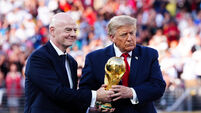
It’s all good fun, but below the surface, murky undercurrents: the mysterious rescinding of US striker Folarin Balogun’s red card, FIFA’s invention of a Trump-mollifying peace prize, Gianni Infantino’s sycophancy, Gianni Infantino in general. This whiff of chicanery has threatened at times to overwhelm the football.
Many of the tournament’s brightest moments have come courtesy of Kylian Mbappé, and France. Their fearsome front line has terrified all comers and reminded me at times of a purring Rolls Royce engine. Last Saturday, Paraguay did their best to throw a spanner in the works in a filthy and bad-tempered encounter that saw the Paraguayans kick, elbow, push and shove the French 11 around the park, flying in with two-footed tackles in a desperate attempt to prevent the outbreak of football.
Read More
At least three of them should have been sent off: remarkably, none were. When Kylian Mbappé was lining up to take a place kick, one of the Paraguayans paused to rake his studs over the penalty spot. Mbappé scored anyway, laughed at his tormentors, and afterwards said: “They thought we’d show up in our tuxedos to play, but we know how to play dirty football too. We won and we were better than them.”
This fractious mood may not have been helped by comments made before the game. In a most unhelpful online interjection, former Paraguay goalkeeper José Luis Chivalert said: “In 1998 we faced the French and now Paraguay will face a squad from Africa”. By which he seemed to imply that Mbappé, Ousmane Dembelé, Michael Olise, Désiré Doué and all the other players in the team of west and north African descent are not in fact French.
After the game, things got worse, as Paraguayan senator Celeste Amerilla took to X to describe Mbappé as “a colonised Cameroonian desperately trying to pass himself off as French”. Kylian Mbappé was born in Paris. Depressing stuff, but not entirely surprising, because race, and politics, have long been inseparable from the fortunes of Les Bleus — just ask that great squad from 1998.
I lived in Paris through the 1990s, and was lucky enough to witness the triumph of ‘98 at first hand. But the national team’s success was not celebrated by everyone, and Marine Le Pen’s father Jean-Marie was among the loudest malcontents.
Until that point the French had been the nearly men of European football and, despite the efforts of great teams in the 1950s and '80s, had never won a World Cup. They did not start the tournament as favourites, with most pundits fancying reigning champions Brazil. In Ronaldo and Rivaldo, Cafu and Roberto Carlos, the Brazilians boasted some of the finest attacking players in the world, and seemed unstoppable.
France, on the other hand, had a superb defence but lacked a decent striker: they did, however, have Zinedine Zidane. Raised in the tough Marseilles cité of La Castellane, and the child of Algerian immigrants, Zidane exemplified a team including many players from poor backgrounds with African heritage.
Coached by Aimée Jacquet, and captained by Didier Deschamps (the current manager), the squad reflected the multicultural make up of modern France, and became known in the press as ‘Beur-Blanc-Noir’. As the tournament progressed, and the team began to gel, this merit-based squad selection became an unintentional political statement, and a symbol of an inclusive, open-minded idea of France. For Jean-Marie Le Pen and his far-right Front National party, this was nothing less than an affront.
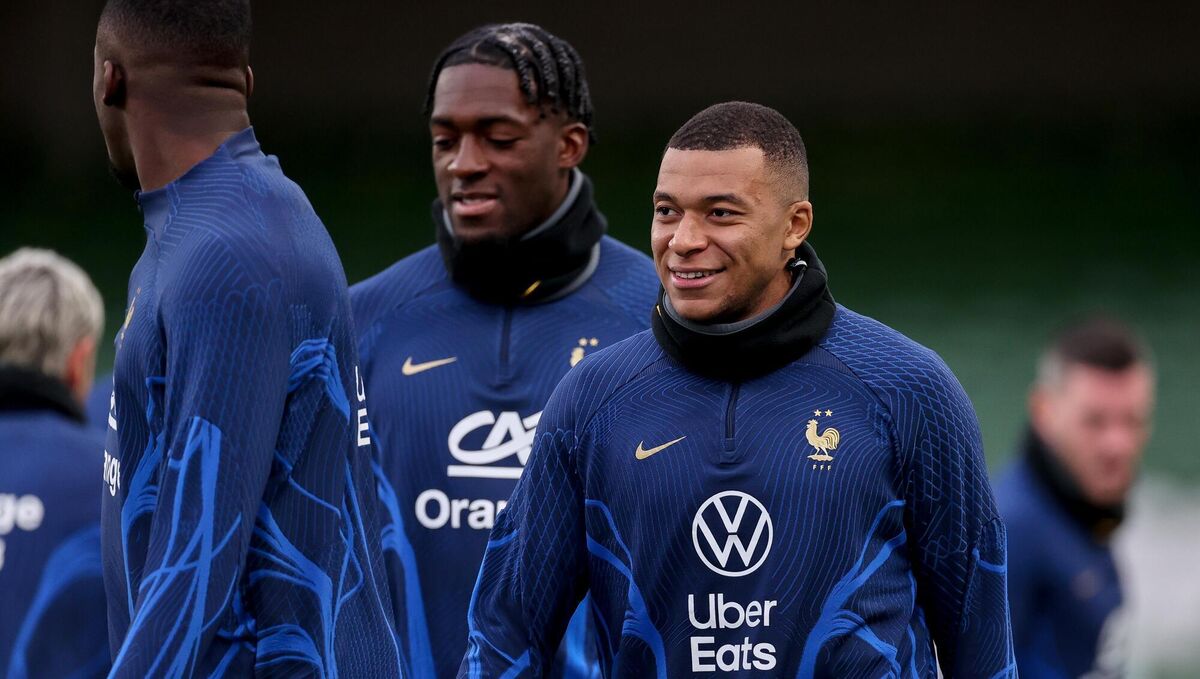
Many of France’s star players, like Zidane, Lilian Thuram, Thierry Henry and Marcel Desailly, were the children and grandchildren of immigrants from former French colonies, and had grown up in a society that tended to marginalise people of colour. Not surprisingly, when it came to singing , not all the players were enthusiastic. This was all the excuse that Monsieur Le Pen needed.
Throughout the tournament, he criticised the team’s composition as “artificial” and “not truly French”. As Le Pen had publicly stated his belief in “the inequality of races”, his comments were not surprising, but they helped expose a fault line in French society, between left and right, young and old.
What kind of France did we want? When France beat Italy in the quarter-finals, and Croatia in the semis, the World Cup final at the Stade de France began to seem much more than just a football match.
Tickets for that game were at a premium, and I only had friends in low places, so ended up watching the match in a packed Marais bar. Before kick-off I glumly noted that the less some of my French friends know about football, the more wildly optimistic they were, but wiser heads expected the silkier skills of Ronaldo and Rivaldo would prevail.
Zinedine Zidane, though, hadn’t got the memo. Up to that point, the Marseilles wizard had had a relatively quiet tournament, including a bad-tempered sending off against Saudi Arabia. But on July 12, 1998, he grabbed the tournament by the throat.
After 27 minutes, he headed his side into the lead from a curling corner: on the stroke of half time, he added a second. At that point, everyone in the bar flung their drinks in the air, soaking us all with wine, and beer (the farsighted barman had insisted on plastic glasses). And by the end of the game, which France won 3-0, Zidane’s was the name the whole bar, city and country was chanting. Well, perhaps not the whole country, but this victory seemed truly significant, something beyond sport.
After it, as we walked along Rue de Rivoli, cars streamed in from the banlieues to celebrate, and black, brown and white hands were hanging from the windows, high-fiving passers by. A kind of truce had been declared, between the haves and have-nots, who were joined in a unifying moment of national joy.
Up on the Champs Élysées, flickering proudly on the side of the Arc de Triomphe, was a giant photo of ‘Zizou’ bearing the legend, 'Zidane Président’. It seemed a significant moment: sadly it was not.
Politically speaking, the opportunities presented to France by that victory were largely squandered, and instead, the banlieues languished in neglect, and young men fell prey to jihadi radicalisation.
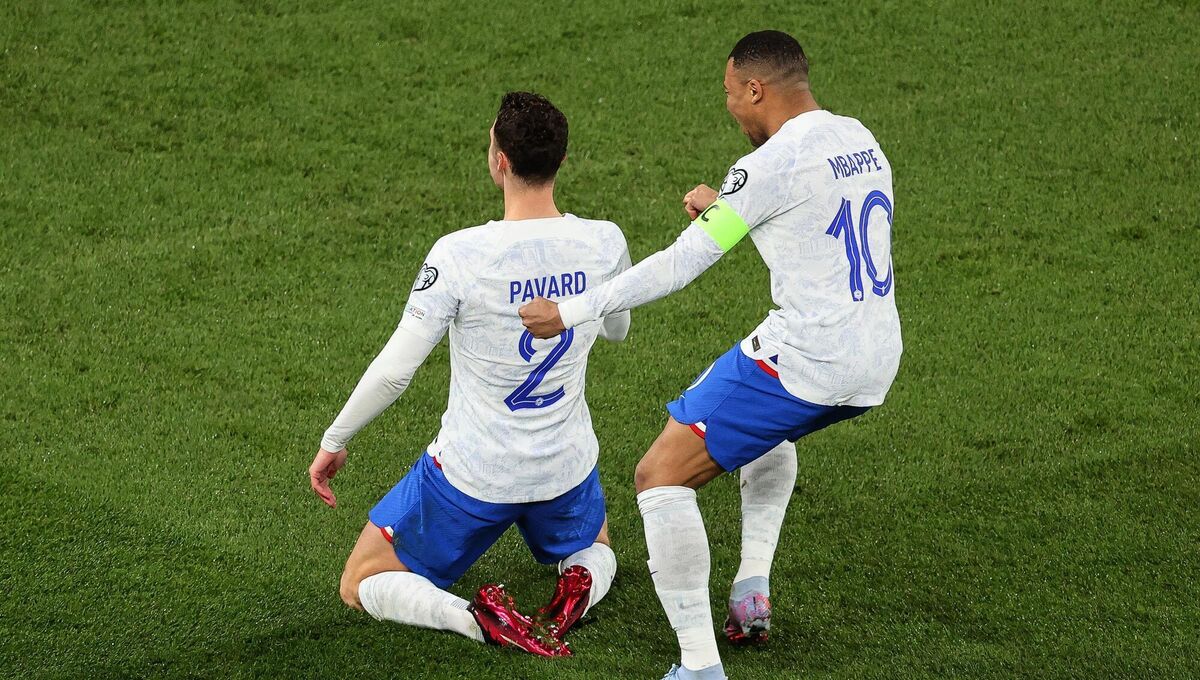
Those arguments are still going on, and current French star Kylian Mbappé has openly criticised Marine Le Pen and her party, (now revamped as the Rassemblement National), prompting angry responses from her and her shiny protegé, Jordan Bardella. Mbappé, who has a refreshing tendency to honestly speak his mind, has been criticised for his outspokenness by ex-player Michel Platini. Coming from a former UEFA grifter, this seems a bit rich.
France, meanwhile, face Morocco in the quarter-finals on Thursday on the way to a potential semi-final against Spain. If they get through that, it’s likely England or Argentina will await them in the final. On current evidence, the French have nothing to fear. But if they win, will all of France be happy?
Didier Deschamps certainly will be. The current coach and captain of the ‘98 team has already won a World Cup as manager, and will retire after this campaign. His expected replacement? One Zinedine Zidane.
- Paul Whitington is a writer, critic, commentator, and regular contributor to RTÉ’s .


CONNECT WITH US TODAY



Be the first to know the latest news and updates