TP O'Mahony: Liberty may live in our hearts, but it needs laws to protect it
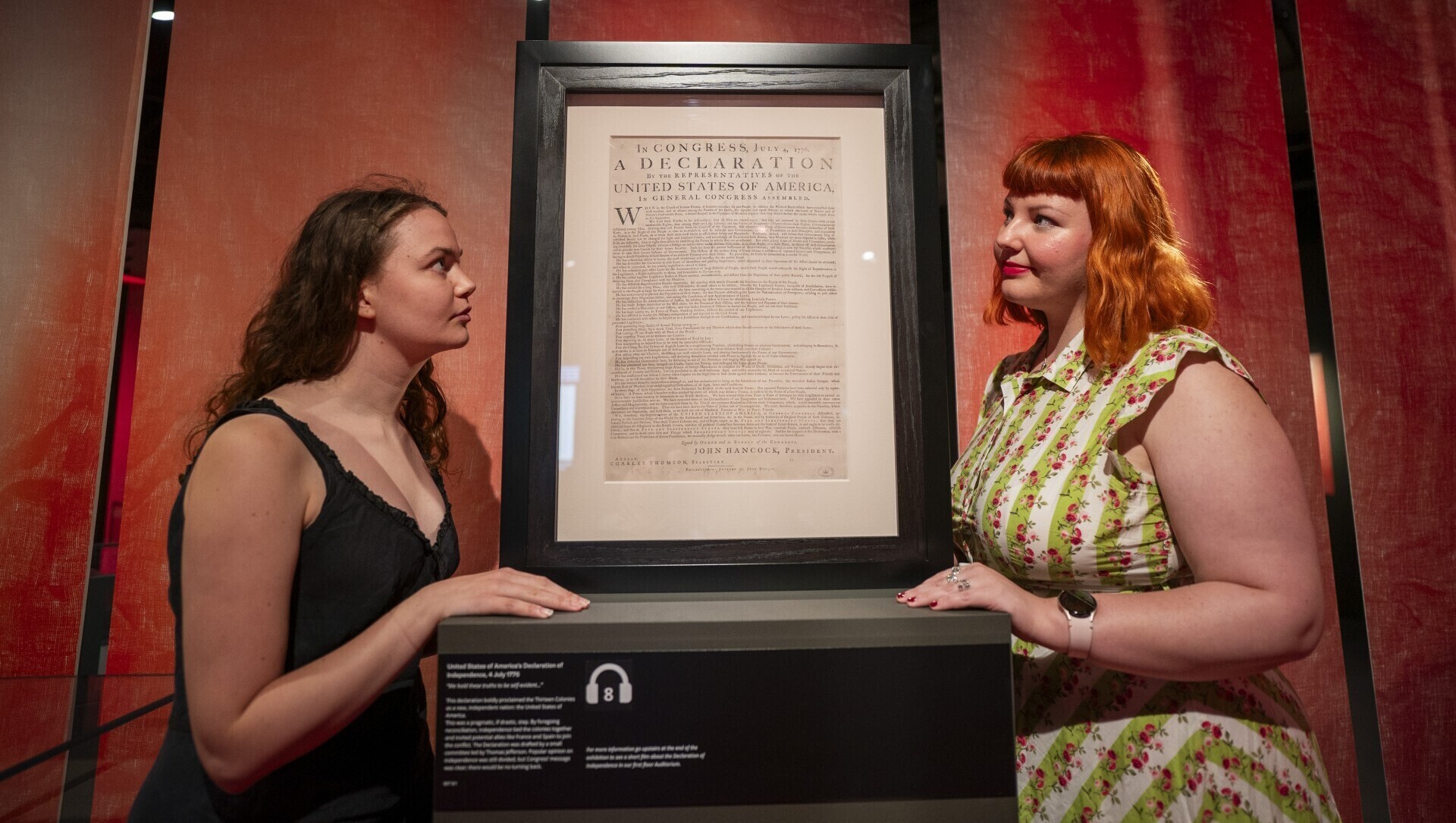
The Declaration of Independence, drafted by Thomas Jefferson, states that ‘all men are created equal’— but women and slaves were not included. Picture: Ben Birchall/PA
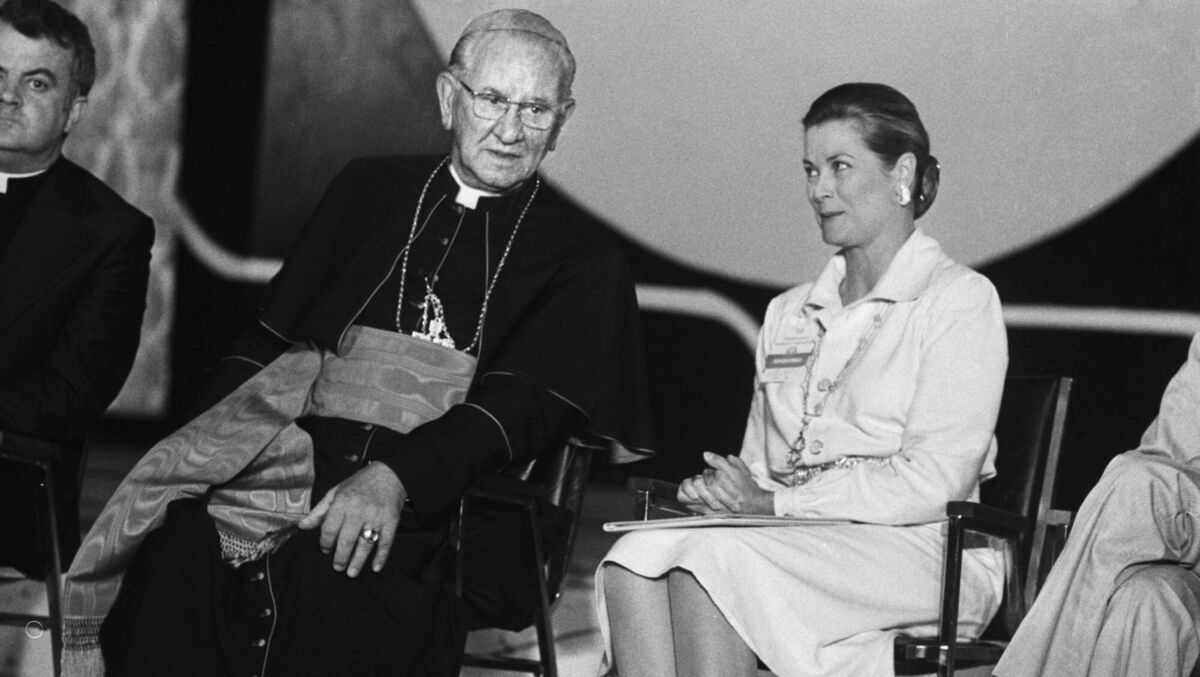
The setting was Philadelphia in August 1976 — the year of the American bicentennial. The audience included president Gerald Ford, Karol Wojtyla (who would take on the papacy with the name John Paul II in 1978), Mother Teresa, and Monaco’s Princess Grace — after all, Philadelphia was Grace Kelly’s hometown.
Dozens of cardinals and bishops were also present. Pope Paul VI was too ill to attend. It was the 41st Eucharistic congress, being held to coincide with the bicentennial celebrations.
The 78-year-old woman who rose to speak admitted afterwards that she was very nervous (“I’m terrified at the prospect of crowds,” said Dorothy Day).
This was August 6, the final day of the congress, and also the anniversary of the dropping of the first atomic bomb on Hiroshima in 1945.
Day had founded the Catholic Worker Movement (and a newspaper of the same name) in New York in 1933, thereby finding a way of integrating her Catholic faith with her passion for social justice. She was a noted advocate for peace, but now she was angry.
She discovered the organisers of the congress had arranged a Mass for the US armed forces, forgetting the Hiroshima anniversary. August 6 was an inappropriate day to honour the military, and peace activists later staged a protest outside the city’s cathedral.
Read More
I was covering the congress for the I had gone to Independence Hall earlier that week, where the was adopted on July 4, 1776, and the US constitution was signed on September 17, 1787.
Both are revered documents in the “land of the free and the home of the brave”, and there will be much focus on them and much hype about them this year to mark the 250th anniversary of the , but they are not all they’re cracked up to be.
They are both flawed documents. The constitution dates from the Age of Enlightenment — a fossil. The declaration, drafted by Thomas Jefferson, states that “all men are created equal” — but women and slaves were not included. Significantly, a passage indicting the slave trade was struck out.
Of the 55 delegates who gathered in Philadelphia in May 1787 to write a constitution, 22 were slave owners — including such luminaries as James Madison and George Washington. And Jefferson himself, serving in 1787 as ambassador in France.
Both documents speak of rights — the US constitution has a “bill of rights” — but the efficacy of these “rights” is highly questionable.
In much the same way, one might look at the constitution of the old USSR and marvel at the fact that it contained no less than 16 specific articles in the chapter on “fundamental rights and duties of citizens” .
By way of contrast, our 1937 Constitution, contains just four articles in the section on “fundamental rights” .
All these rights — whether enshrined in charters, declarations, constitutions, or even papal encyclicals — are theoretical at the time of their framing (just words written on parchment or paper) and remain so unless certain other conditions are met.
Perhaps the most fundamental condition was spelled out by an esteemed American judge and legal scholar named Learned Hand in his book The Spirit of Liberty in 1960: “Liberty lives in the hearts of men and women: When it dies there, no constitution, no law, no court can save it.”
But it does need a constitution, laws, and courts to preserve and protect it.
Without these safeguards, the gateway to tyranny is open. Some would argue that in the Trump era, even in this special anniversary year, some of these safeguards and guardrails of democracy have been blatantly breached by a president with scant regard for constitutional restraints.
We have even reason to doubt if the doctrine of human rights has any relevance in the world of 2026.
In January, Trump told his sole restraint was “my own morality ... it’s the only thing that can stop me”.
His decision to go to war with Iran is yet another example of his untrammelled use of power. This “war of choice” violated the UN Charter and international law.
America’s two foundational documents spawned a system of government whose leaders convinced themselves that America was an exceptional nation, having an eternal mission to spread freedom and democracy around the globe.
This belief in American exceptionalism led to the tragedies of Vietnam, Iraq, and Afghanistan. It led president Harry Truman to convince himself that it was morally justifiable to drop atomic bombs on two Japanese cities in August 1945.
The notion of American exceptionalism has religious roots. It was president Ronald Reagan who famously extolled the US as a “shining city on a hill” — harking back to a promise contained in a sermon by John Winthrop (composed on board the Arbella as it approached the coast of Massachusetts in 1630) to build a Christian settlement in the New World that would be a “city upon a hill”, (itself a phrase from Matthew’s gospel), which would serve as a model for the world.
In a commentary on Winthrop’s sermon, historian Lawrence Towner wrote of the understanding that “America is the stronghold of democracy, a ‘city upon a hill’, which, if it should fail, would carry mankind with it down into the darkness of despotism”.
This sense of “manifest destiny” with its religious origins has haunted, bewitched, and bewildered American politics since independence.
Despite the fact that the first settlers, the so-called “pilgrim fathers” who sailed from England on ships like the Mayflower and the Arbella, were fervent Bible-carrying Christians, their faith would prove no prophylactic against ethnic-cleansing of the native Americans or the enslavement of black Americans.
The society that evolved after independence combined, in the words of Mark Mazower of Columbia University, “the language of freedom with the reality of slavery”.
The latter, far from being ameliorated let alone eradicated by either the or the US constitution, flourished until Abraham Lincoln’s emancipation proclamation of January 1, 1863, issued in the midst of a bloody civil war on which the confederacy had embarked to uphold the institution of slavery.
Even today, race is still a very divisive issue in the US.
On February 5 last, a racist video depicting former president Barack Obama and former first lady Michelle Obama as animated apes was shared on Donald Trump’s social media. Afterwards, Trump refused to apologise for posting it.
Later in February, Democrat Al Green from Texas, a black member of congress, was ejected from the chamber after holding up a “Blacks Aren’t Apes” sign during Trump’s State of the Union address.
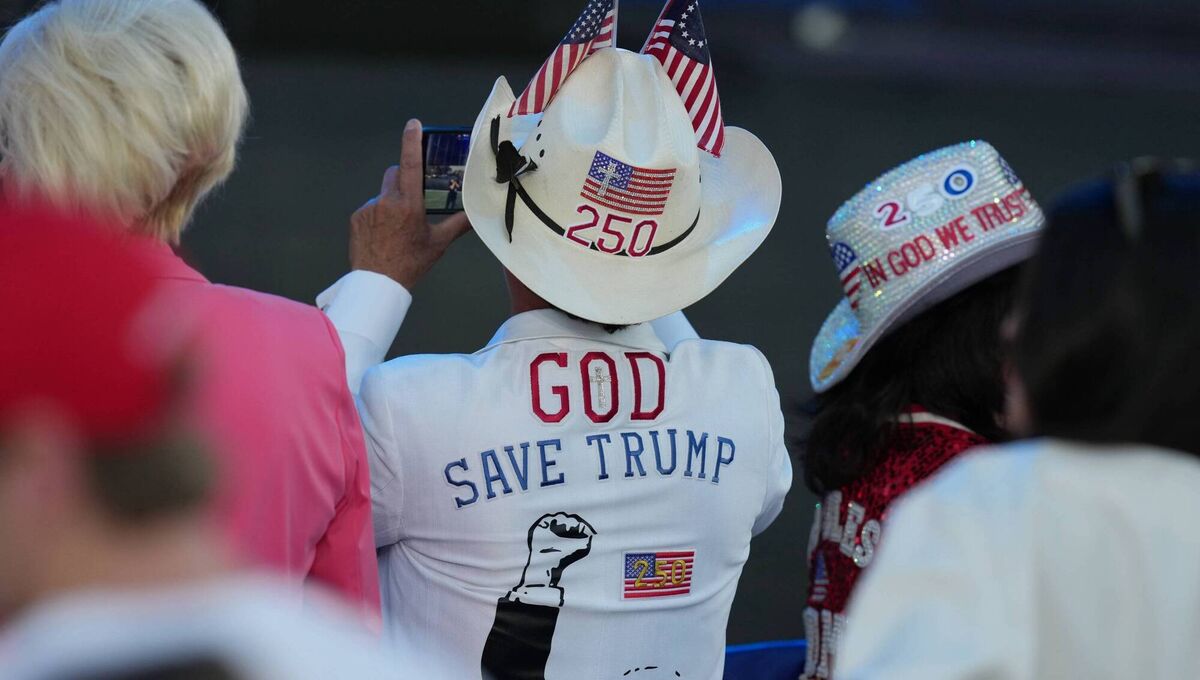
The Christian nationalism being fostered by Trump and his Maga supporters extols white supremacy and rejects diversity, equality, and inclusion.
The belief in “manifest destiny” has long since been a danger to the world and the US itself. The textbooks tell us that democracy allows people a voice in politics, a say in how — and by whom — they are governed.
But the reality in the 21st century is very different — as Trump is demonstrating in America.
That’s why when senator Bernie Sanders told the CBS television network that the United States was now a “pseudo-democracy”, he was not exaggerating.
All the outspoken politician was doing was accurately describing how the influence of big money has seriously corrupted American politics. In short, money buys influence.
Asked by CBS’s Robert Costa if the US was not “a full democracy”, Sanders replied: “Look, you get one vote, and Elon Musk can spend $270m to help elect Trump. Does that sound like democracy to you?”
Twenty-six years ago, then tánaiste Mary Harney claimed that Ireland was spiritually closer to Boston than Berlin.
How many of us in the age of Donald Trump would share that view today?


CONNECT WITH US TODAY



Be the first to know the latest news and updates