John G Dwyer: Sheep could have helped prevent Slievenamon fires
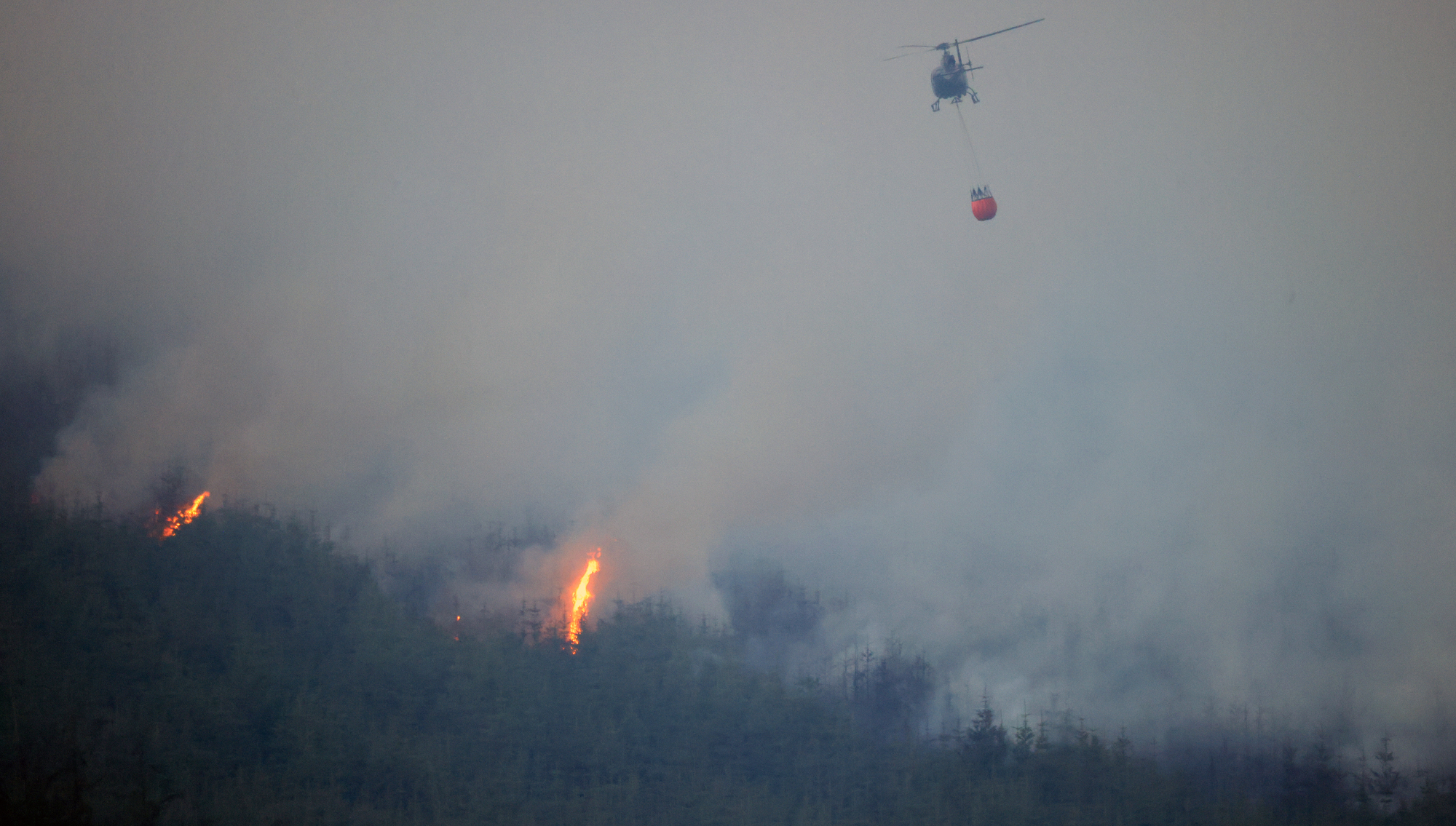
A helicopter dropping water on the wildfire in Slievenamon, Co Tipperary, last month. Photo: Eamonn Farrell / © RollingNews.ie
With its gentle slopes and beguiling mythology, Slievenamon was once one of my favourite uplands to ramble.
On this quintessential Tipperary mountain, I greatly enjoyed exploring its broad, sheep-strewn flanks and abundant mythological associations before writing about “the mountain of women” for my guidebooks.
Then, I began to notice a change. There seemed to be fewer sheep on the mountainsides, while the vegetation was becoming increasingly luxuriant and difficult to negotiate. Many of the trails, away from the main summit route and used by past generations, were beginning to disappear into a thicket of bracken, heather, gorse and fern.
Some time ago, I led a group on what had once been one of my favourite outings: up to the summit of Slievenamon, on to Killusty High Cross and back along the edge of the Coillte forestry. On this occasion, I had to apologise to my companions.
We struggled through waist-high heather and gorse, unable to see where we were placing our feet on knee-twisting terrain. I ruefully resolved never to lead this walk again.
Read More
It has recently been suggested that the main problem contributing to wildfires on Slievenamon is overgrazing by sheep, a suggestion I find difficult to understand. In my opinion, it is not the presence of sheep, but their absence, that is a major part of the problem.
According to the Irish Farmers Association, the number of sheep on the Irish uplands has been in steep decline for decades. These small but hardy animals, with their light footfall, can be ideal stewards of the uplands, helping to maintain biodiversity by controlling the spread of heather and other vegetation.
Which leads to the question: what would happen if the present trends were to continue and hill farming disappeared from the Irish landscape? Without grazing livestock such as sheep and goats, along with farmer interventions to keep vegetation under control, scrub would spread and increasingly dominate the hillsides, with many of our upland areas transformed into an inaccessible jungle, beyond the reach of recreational users.
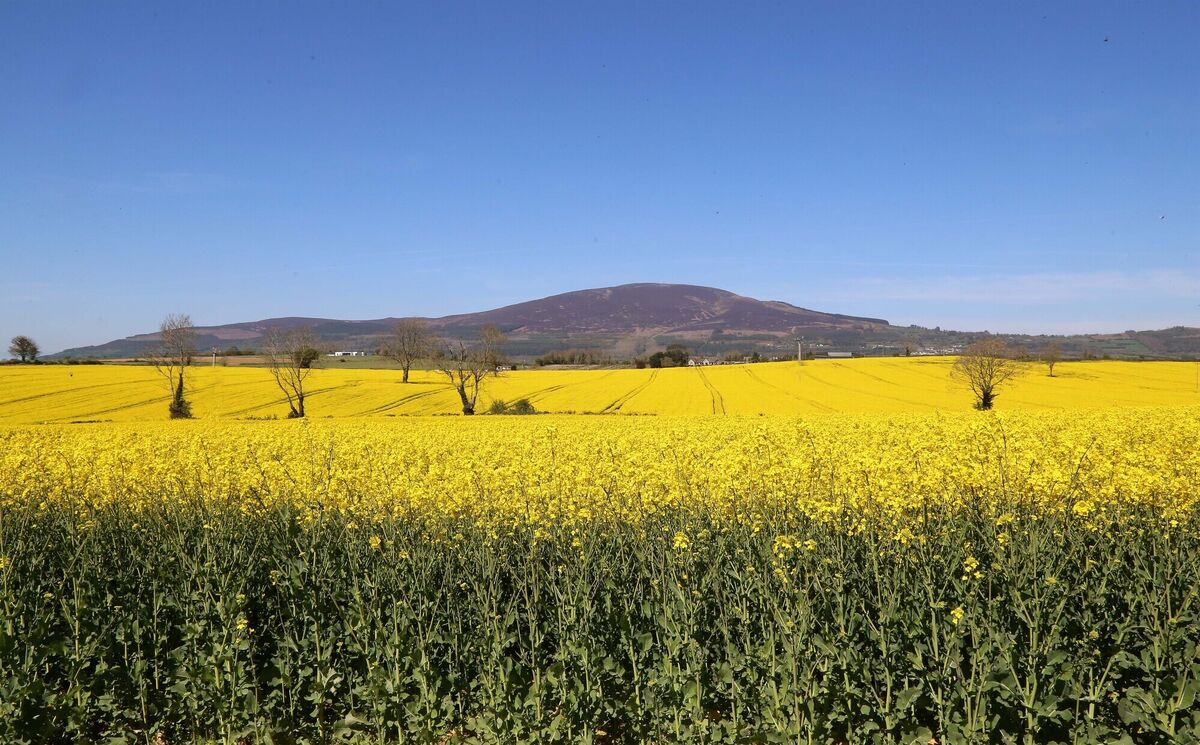
In the past, the opposite was the problem. Headage payments from the EU — subsidies paid for every animal maintained on disadvantaged land — meant that, in some places, there were far too many sheep on Irish mountains. Where this occurred, overgrazing led to soil compaction, erosion and habitat loss.
Then came the decoupling, in 2005, of farm payments from agricultural output, when subsidies were no longer directly linked to the number of animals kept. This removed much of the incentive to maintain flocks of sheep on the mountains: an unforgiving environment where these animals are difficult to manage profitably without direct support.
One welcome consequence was a reduction in ecological damage in many areas. However, the poor returns from sheep farming are now contributing to the withdrawal of agriculture from many uplands.
This includes much of Slievenamon, where very few sheep now remain.
There is now a lack of grazing flocks and farmer-led management in controlling overgrowth, not only on Slievenamon, but also on many other Irish hillsides.
This means that dead and decaying vegetation can accumulate in layers over the years, becoming a tinderbox in dry conditions.
Local people from the Slievenamon area, whom I have spoken to, have identified this as one of the most important factors contributing to the recent fires.
Climate change and the lack of maintenance of firebreaks have also exacerbated the problem.
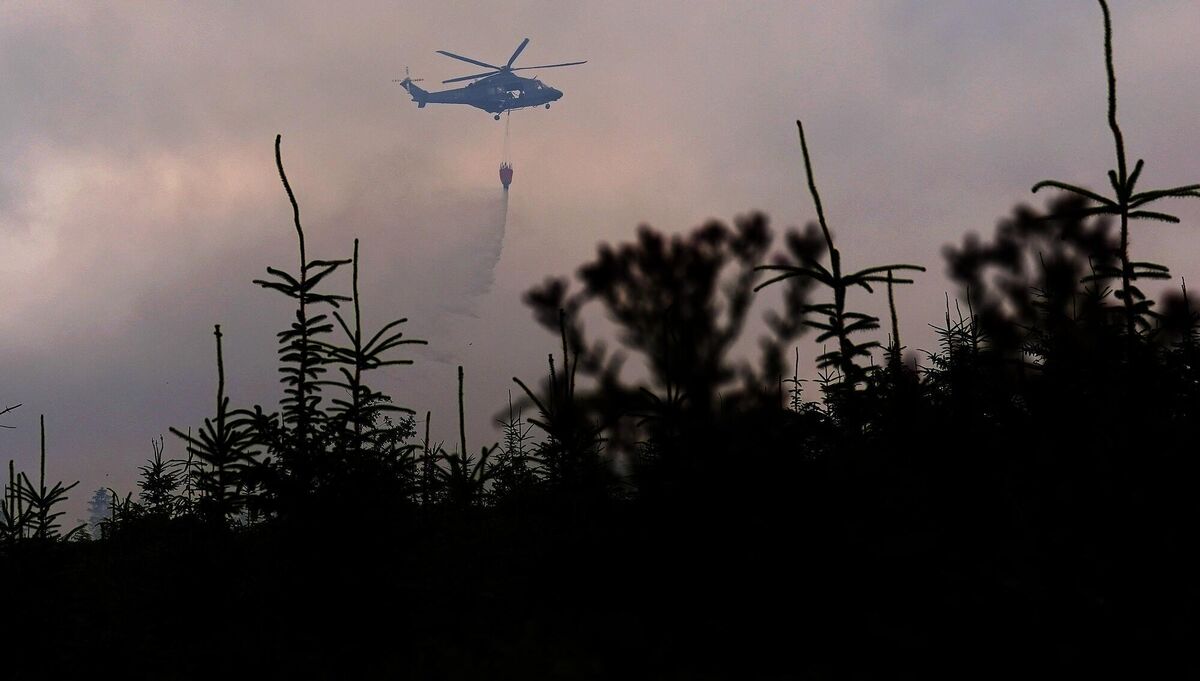
They also pointed that the traditional practice of controlled burning on Slievenamon has declined hugely in recent years, because of increasing tight regulation.
Whatever the ecological arguments surrounding this practice, there is no doubt its reduction has altered the pattern of vegetation management on the mountain, with less active intervention and potentially greater accumulation of combustible material.
One local farmer described the recent wildfire as “an accident waiting to happen”.
If our uplands are to continue as sustainable environments and recreational areas, the continuation of hill farming is essential to maintaining the natural environmental balance, as it has done in the past. To achieve this, we need investment in the hills to support and maintain communities.
Agriculture in our upland areas must be encouraged, with hill farmers appropriately compensated for maintaining optimum grazing levels, as is now being done for cattle farmers in the Burren area of County Clare.
Alongside this, there must be greater investment in infrastructure. As an example, the main path to the summit of Slievenamon has to be one of the busiest Irish trails without dedicated off-road parking.
Walkers are forced to park on the roadside, with the result that agricultural machinery is sometimes unable to pass. Unsurprisingly then, the potential of Slievenamon as a tourism asset for South Tipperary has never been fully exploited.
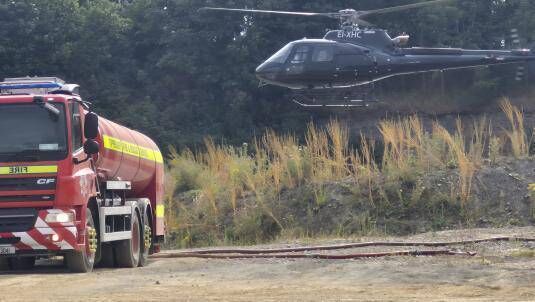
The provision of adequate off-road parking at the main trailhead should now be a priority. Waymarked circular walking trails on the mountainside should also be created, as Slievenamon could be a splendid location for hillwalking and other forms of outdoor recreation.
In doing this, we can support hill farming by compensating farmers for allowing recreational access to their land and protecting them against legal liability arising from recreational use. Those farmers who undertake the construction and maintenance of trails should be further rewarded, providing them with an additional source of income.
In 2026, the community around Slievenamon was fortunate: nobody was injured and, thanks to the heroic efforts of local farmers who transported water into the early hours, no homes were damaged.
What happened on Slievenamon is, however, an expensive lesson on what can occur in other upland areas. with potentially severe consequences in more heavily populated localities.
We now need a national conversation about how best to manage our uplands in the face of global warming, with hill farmers recognised as the custodians of these landscapes and as important stakeholders in their future.
If we are serious about protecting our uplands, we now need to recognise that farming, conservation, fire management and recreation are not competing interests. Working together, they can be part of the same solution.
- John G O’Dwyer is a mountain leader and guidebook author. His next book is published next November


CLIMATE & SUSTAINABILITY HUB
CONNECT WITH US TODAY



Be the first to know the latest news and updates