Kate Durrant: Raleigh's demise is bad timing, but cycling joys are forever 
Cycling enjoyed a resurgence during the pandemic and now Cork City's Bike Library Scheme is introducing us to new options 
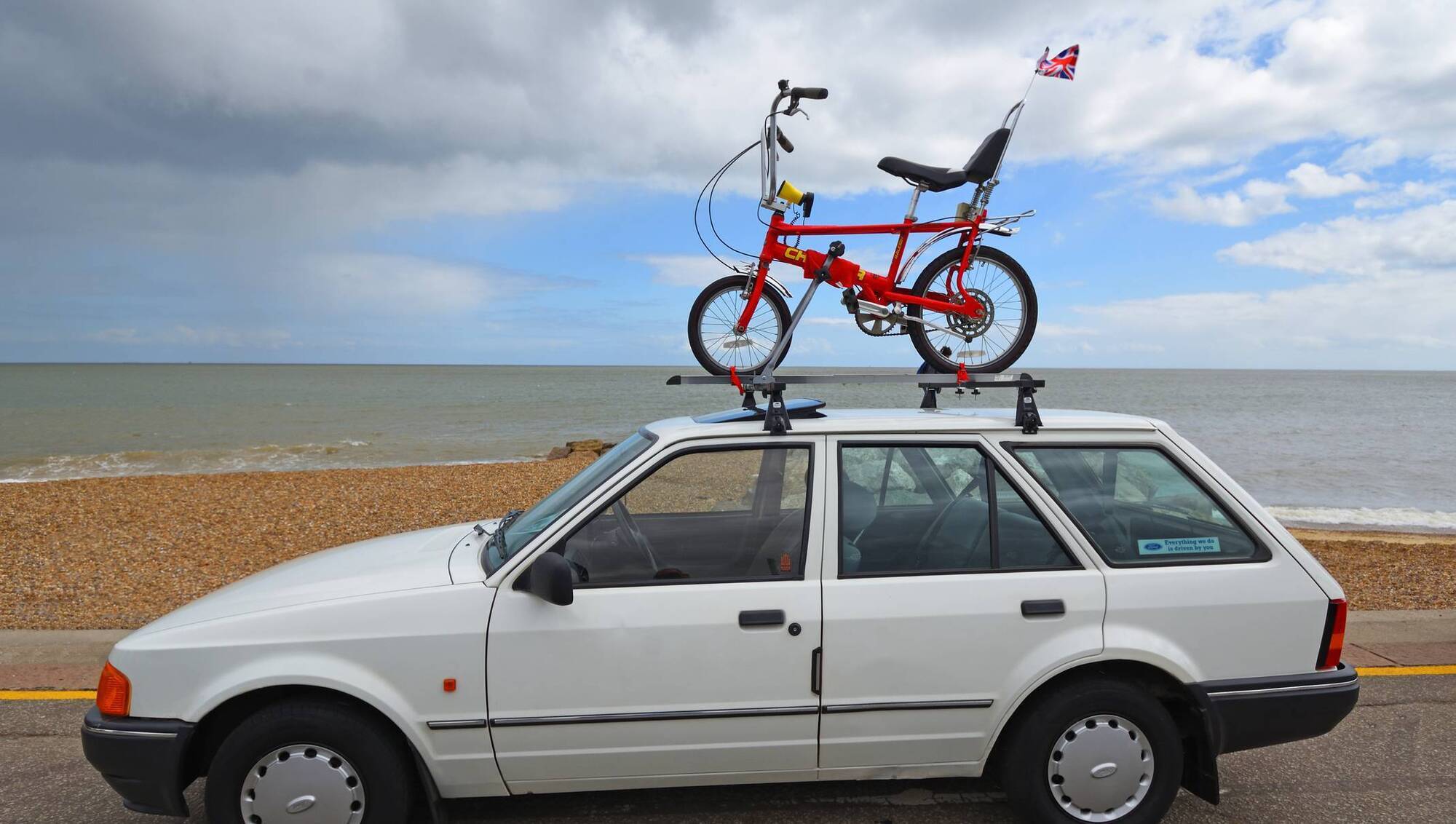
A classic Raleigh Chopper bike sits atop the roof of an old Ford Escort. Many Irish children learned to cycle on these bikes. File picture


A classic Raleigh Chopper bike sits atop the roof of an old Ford Escort. Many Irish children learned to cycle on these bikes. File picture

The news that Accell UK & Ireland, which owns Raleigh in Britain, has filed notice of its intention to appoint administrators brought back memories of skinned knees, hands covered in oil and muck from putting the chain back on (why did it come off so often?), and freewheeling down hills that were far too steep, with predictable consequences.

Raleigh may have been born in Nottingham, but it belonged to Irish childhoods too. From around 1936, its bicycles were first assembled and later manufactured in Dublin, with Irish production continuing during the war years while the Nottingham factory turned much of its attention to munitions.

I grew up in the early 1970s in post-war industrial Nottingham, a city whose working life was shaped by the great industrial triumvirate of Boots, Raleigh, and Player’s Cigarettes.

These three household names employed tens of thousands of people, often several generations of the same family. The fortress-like Player’s bonded warehouses dominated the skyline alongside the sprawling Raleigh works and its famous chimney, with whole neighbourhoods living in the shadow of factories that provided secure employment from one generation to the next.

More than employers, Boots, Raleigh, and Player’s shaped family and community life too, providing sports clubs, welfare facilities, and social activities.

There was always a Raleigh bicycle in our house and as the second child, my bikes came ready-scraped, having already survived my brother as I first inherited his Chipper and then his Chopper.

But one birthday, I received a bicycle of my own — a brand-new turquoise Raleigh Shopper, with a carrier on the back and a basket on the front which I packed with sandwiches and a bottle of diluted orange before disappearing for the day, cycling up hills and through fields that have since become housing estates and golf courses.

And I wasn’t alone. Generations of Irish children learned to cycle on Chippers, Choppers, Shoppers, and Triumph 20s too, many of them made in Ireland before being handed down through families, gathering scrapes, stories and multiple owners along the way.

Raleigh has long since become detached from the city that created it, after its British production line closed in November 2002, but its name lives on, while Boots retains its Nottingham headquarters, although it no longer manufactures there, and Player’s cigarette production has disappeared from the city altogether.

These great industries that shaped Nottingham’s skyline — and so many childhoods — have been replaced by university buildings, student accommodation, and redevelopment. Where thousands once clocked in at the factory gates, a new generation is being prepared for a working world their grandparents could scarcely have imagined.

Raleigh’s latest difficulties are partly a hangover from the pandemic cycling boom, when demand soared as we searched for ways to exercise outdoors and avoid public transport — and each other. Manufacturers increased production to keep pace, but demand fell sharply when life returned to something approaching normality, leaving the industry with warehouses full of unsold bicycles just as costs and borrowing began to rise.

A  Raleigh Chopper bicycle from the 1970s. File picture

Yet bicycles themselves appear to have lost none of their appeal, although the way we use them may be changing. I love Cork City Council’s new pilot Bike Library Scheme, which allows people to borrow an e-bike for three months, allowing them to incorporate cycling into their daily lives without the considerable cost of investing. With hubs across the city, perhaps it hints at a move towards borrowing or sharing rather than owning. It is a world away from the childhood bicycle that was yours until you outgrew it, before being passed down to your younger sibling or neighbour.

There is still hope that Raleigh’s famous name may be saved, with Irish businessman and former semi-professional cyclist Mel Sutcliffe possibly assembling a consortium to bid for its insolvent parent company.

Perhaps, then, it is only au revoir, rather than goodbye to this iconic brand, depending on how the wheels turn during the insolvency process.

Whatever happens, one small piece of Raleigh’s Irish story remains: an immaculate Dublin-built Chopper dating from 1978 is among the memories preserved in Ireland’s online National Treasures archive, and somewhere in my own memories, I am still freewheeling on that turquoise Shopper, a basket of sandwiches in front of me and the whole day ahead.

x

More in this section

Revoiced

Newsletter

Had a busy week? Sign up for some of the best reads from the week gone by. Selected just for you.

Cookie Policy Privacy Policy Brand Safety FAQ Help Contact Us Terms and Conditions

© Examiner Echo Group Limited