Mick Clifford: Contrasting reactions to drug use and Traveller health reports shows our prejudices
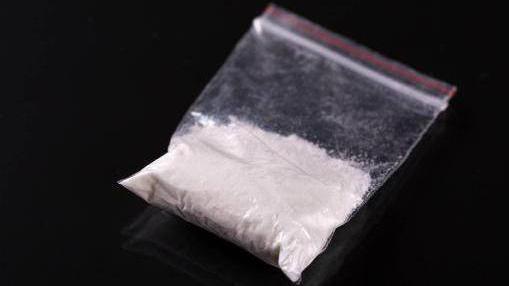
The Oireachtas Joint Committee on Drug Use recommends the decriminalisation of drugs for personal use. file picture: iStock
Two major Oireachtas reports referencing how we live and how we might want to live were published last week.
One of the reports attracted plenty of comment and debate, while the other, which dealt with immediate issues of life and death, was largely ignored. Let’s deal first with the report that had everybody within the political and media eco-system talking.

The Oireachtas Joint Committee on Drug Use published its final report. In broad terms, it recommends the decriminalisation of drugs for personal use.
“The committee has concluded that the personal possession of drugs for one’s own use should cease to be treated as a criminal matter and should instead be met with a health-led approach,” the report set out.
This would be a major policy shift within the state. There was much debate on the airwaves, online and in newsprint over whether it would be positive or not.
Whether crime would increase of decrease was one talking point. Another was the role of the middle-class casual drug user in the chain of crime and degradation associated with the vast profits that are made from illegal drugs.
Opinion was canvassed from frontline politicians. The Taoiseach and the minister for justice Jim O’Callaghan both expressed serious reservations about implementing such a policy.
Cabinet colleagues James Lawless and Jennifer Carroll MacNeill say they favour decriminalisation. And on it goes, and will continue to go.
There is enough opinion out there on the pros and cons, but with all the interest generated it might be an idea to focus on one element of the report.
Central to the proposal is the idea that instead of drug possession being regarded as a criminal justice issue it should be treated as a health concern.

In reality, certainly unless or until there is a change of policy, there is no reason why these two approaches can’t both operate. In theory, that is the case but that doesn’t wash in practice.
For instance, as this newspaper reported last month, there are nearly 4,000 inmates in the state’s prisons with addiction issues yet there is not one addiction nurse employed in the system. Is the health-led approach applied only in certain instances, or is it all just too much hassle?
In Tuesday’s , health minister Jennifer Carroll MacNeill confirmed to Louise Burne that she favours decriminalisation.
“I believe in a health-led approach because we want people to be well and to recover from addiction,” she said. Really? Is the minister inferring that we can only have a health-led approach if drugs are decriminalised?
Are we to take it that there will be a massive investment in drug addiction-related issues if we decriminalise, but for some reason that can’t be done now as things stand?
Or is it just that this issue only becomes important when it affects those beyond the disadvantaged enclaves where drug abuse is worst felt?
The myopic and tortured tone of the debate over the Oireachtas drugs report is in complete contrast with the wanton silence around a far more urgent report published at the same time.
The Joint Committee on Key Issues Affecting The Traveller Community has presented its final Report On Traveller Health. It outlines how a group within our society is enduring health delivery and outcomes that would ordinarily be found in a developing country.

“Witnesses that came before the committee for this module on Traveller health painted a stark picture of a minority community facing extreme health inequality due to a variety of factors including systemic and social discrimination,” the report states.
For instance, evidence from UCD academics noted that among Travellers “suicide rates are six times higher and infant mortality is three and a half times higher than the settled population”.
Travellers have a “significantly lower life expectancy” than everybody else. The committee heard data showing that Traveller men’s life expectancy is 15 years below average and Traveller women’s is 11.5 years lower.
This lower life expectancy can contribute to feelings of fatalism among Travellers.
“It may be difficult for Travellers to take longevity-related health recommendations from medical professionals while knowing that there is an increased likelihood that they may not live long enough to see the impact of those recommendations,” the report states.
The committee heard from witnesses about “fear and distrust of medical professionals and of the health care system among Travellers, in part due to the historical prevalence of medical discrimination and mistreatment against Travellers.”

Also research had uncovered “racism and discrimination as root causes of the difficulties Travellers experience in adopting risk-reducing lifestyle behaviours, participating in screening and accessing healthcare.”
The committee, in its report, acknowledged that in a society that upholds the kind of values this one purports to, the report would represent a scandal. “This report does not simply outline policy failures; it exposes the human cost of those failures.
"The disparities in health outcomes, the disproportionate burden of mental ill health, and the lived experiences shared with the committee all point to a crisis that can no longer be met with incremental or symbolic responses. The status quo has already inflicted too much harm.”
Yet would anybody bet that anything will change? There have been numerous reports of a similar tenor over the years, but if the complete dearth of interest, the complete lack of acknowledgment that this is scandal, is anything to go by, the report will simply gather dust.
The chair of the committee, Labour TD George Lawlor, was interviewed on RTÉ’s on the day of the publication. He conveyed what he considered to be a scandal. And that was it.
No outrage on the floor of the Dáil, no screaming headlines, no performative rage on social media, no ministers portentously relaying their despair that human beings are forced to live like this today.
There are, in society in general, reservations about some mores among the Traveller community. Yet any issues around these fade in comparison to the prejudice that exists towards the whole community and the resultant fall-out in areas like health and housing.
The reality is that the plight of Travellers is ignored largely due to prejudiced attitudes among a cohort of the population.
That is amplified today in a political milieu where most politicians are scared stiff of advocating for any disadvantaged groups, such as Travellers or immigrants, in a manner that would attract opprobrium on social media.
So it goes that we can exhaustively discuss and debate a report over whether or not society is better served by decriminalising drugs, but there is precious little interest in examining why a group within society is forced to exist in quiet desperation, as if they were living in a different country.