Mick Clifford: Failure to provide addiction nurses in Irish prisons is further punishing vulnerable people
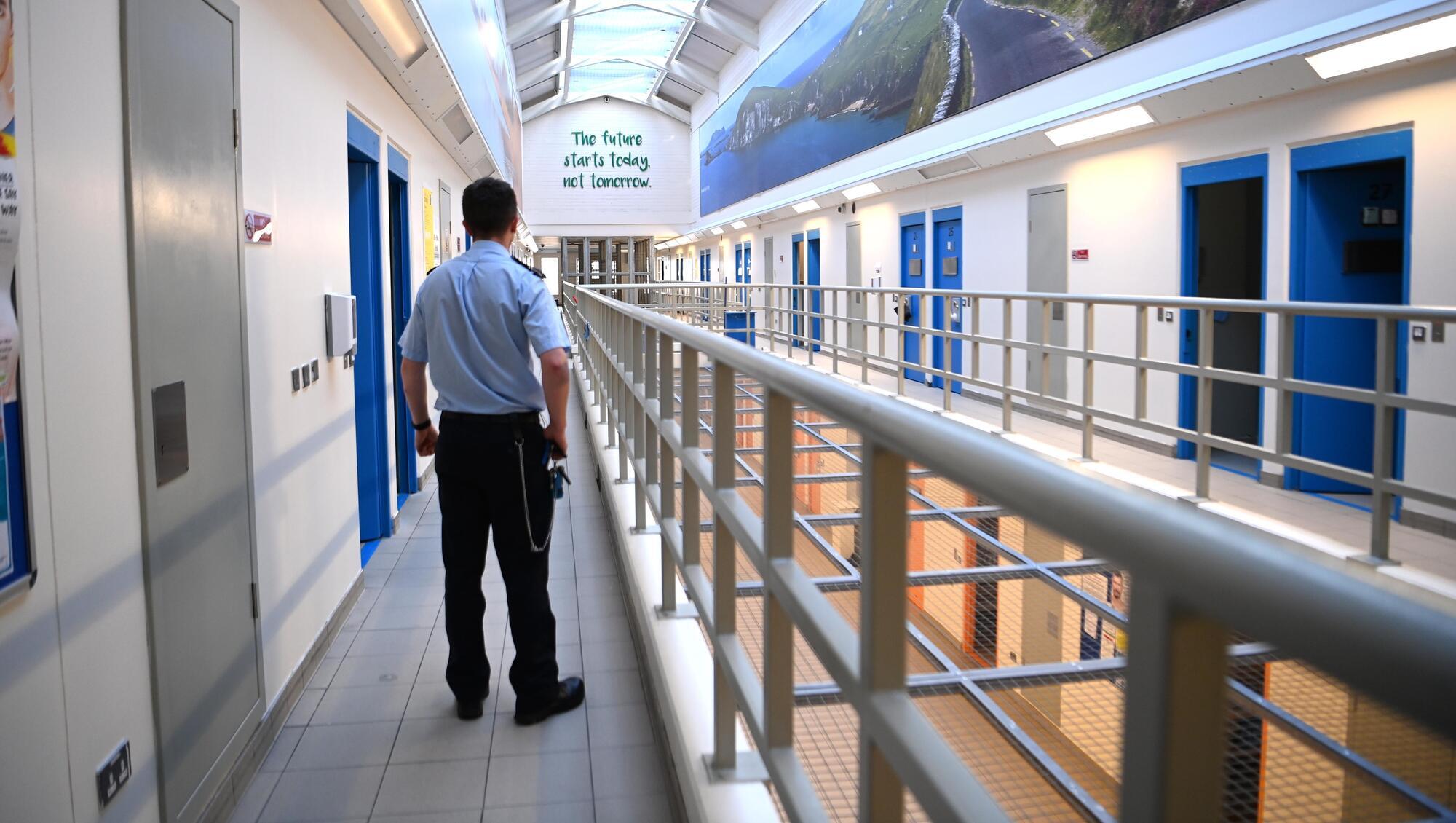
The requirement for addiction nurses is long been acknowledged by prison authorities, and up to a decade ago, they were employed across Irish prisons. Yet there are currently no addiction nurses working in prisons, and there have not been for some time. Picture: Dan Linehan
About seven out of every 10 people committed to prison have addiction issues, according to the justice minister. There are roughly 5,700 inmates in Irish prisons right now, which translates as just short of 4,000 prisoners who are addicted to one mood-altering drug or another.
Many of these prisoners can trace their ending up in the criminal justice system directly to their addiction. The exact cohort this might apply to is indeterminable, but what is quite obviously vital is that addictions get treated in prison.
Apart from a duty of care from the State, the most obvious benefit to society is that those who have completed their sentences are far less likely to reoffend if they have been treated successfully.
In this vein, one of the core personnel in treating addictions is addiction nurses. This discipline is utilised in health services and prison systems across the Western world. An addiction nurse does what it says on the tin, providing standard nursing care with the additional element of knowledge and training in the area of addiction. This is vital in any healthcare setting, but particularly in a system where the majority of personnel have addiction issues.
The requirement for addiction nurses is long been acknowledged by prison authorities, and up to a decade ago, they were employed across Irish prisons. Yet there are currently no addiction nurses working in prisons, and there have not been for some time.
This has been confirmed by successive ministers for justice in recent years. In 2024, Helen McEntee responded to a parliamentary question stating: “The Irish Prison Service does not currently employ full-time addiction nurses.”
Read More
She then alluded to efforts at substitution. “There are, however, a number of primary care nurses who are assigned the function of carrying out specialist addiction assessments when this is feasible, taking account of the operational demands of the prison.”
Last year, the current minister, Jim O’Callaghan, confirmed this shortcoming still existed.
“The programme for government commits us to establishing high-dependency units within the Irish Prison Service to address severe mental health and addiction challenges and to hiring more therapeutic and medical staff, including psychiatric and addiction nurses, GPs and psychologists,” he stated in a Dáil reply.
Saoirse Brady, executive director of the Irish Penal Reform Trust, says the lack of personnel in this discipline leaves a gaping hole.
“The collapse in addiction nursing capacity in our prisons, from several posts a decade ago to effectively none today, is not a minor staffing gap,” she says.
There is a long history of acknowledgement that addiction nurses are a vital component in prison healthcare. Nursing as a general discipline was first introduced to the prison system in 1999. It was quickly noted that specialists would be required to properly ensure addiction was treated.
In 2003, the IPS and the Health Research Board carried out a needs assessment survey in the system. Among the recommendations were that “substance misuse specialist nurses” should be appointed where required and there should be pathways for nurses to develop specialist roles. This didn’t happen.
By 2007, the Government had retained the Merchants Quay project to provide 24 addiction counsellors to service needs in the State’s prisons. There were also “seven nurse officers and five prison officers” allocated to the drug dependency unit within the service, according to a parliamentary question at the time. But none of these had the specialist nursing training that is considered central to any body dealing with addiction.
Two years later, a report on nursing in Irish prisons entitled 'Working Together to Meet the Healthcare Needs of Prisoners' repeated the need to “expand nurses' scope of practice to meet the health needs of the prison population with particular focus on addiction and mental health".
No dedicated programme of training or recruitment followed.
The understands some addiction nurses were employed on an ad hoc basis to the point where up to six were working in Mountjoy by 2016. It is unclear when they left the service, but within a few years, there was once again nobody with this specialist training employed.
The most recent report on the health needs of Irish prisons is the Crowe Report, which was completed over the course of 18 months and published in 2022.
It recommended that as part of a review of the workforce within prisons, “it is strongly advised that consultation is completed to address the issues associated with the formation of specialist nursing resources in the majority of closed prisons”.
As of today, nearly four years later, any consultation that is happening is ongoing. In its introduction, Crowe points out the values inherent in the prison service include that “prisoners are kept safe and treated with dignity through secure custody, but also in terms of health services and resources they are provided with".
And then this. “The IPS seeks to ensure that prisoners receive the same standard of healthcare as members of the public, with care provided through a combination of doctors, nurses and other in-reach healthcare professionals”, which will oversee “specific initiatives on issues such as mental health services, addiction services, and care of older prisoners".
The report is full of good stuff like this, genuine recommendations and focus on the best practice. Unfortunately, a fair share of it, principally the elements that would require extra attention or particularly resources, ends up in the bin.
Saoirse Brady points out the failure to provide basic healthcare would appear to be policy.
“Prisons were never designed to manage complex addiction or mental health needs, yet they have become the default response because community services are under-resourced and people in crisis have nowhere else to go,” she says.
She says continuing to rely on prisons to manage untreated addiction is harmful, costly and counterproductive for individuals, families and society at large.
“If the Government is serious about rehabilitation, it must urgently restore addiction-nursing posts, expand specialist in-reach serves and ensure that people with addiction issues receive adequate and individualised healthcare, not be punished further,” she said.
A spokesperson for the Irish Prison Service said while historically six addiction nurses were employed by the service, they had all either left or moved into other roles by 2016.
“Addiction nurses play a role in managing drug and alcohol dependence, including providing assessments and care planning, evidence-based interventions, including support for opioid substitution treatment, detoxification, and overdose prevention, and helping people access community services on release to reduce relapse and reoffending,” the spokesperson said.
“Whilst the Irish Prison Service does not currently employ dedicated full-time addiction nurses, the prison primary care team, including GPs and nurses, addiction counsellors and psychologists, ensure that the key functions highlighted above are managed effectively for those in need.”

CONNECT WITH US TODAY



Be the first to know the latest news and updates