Elon Musk’s USAID cuts will cause 4.5m child deaths
‘The Lancet’ report shows that the US DOGE defunding of foreign aid has reversed decades of progress in child health worldwide, writes Dr Suzanne Crowe
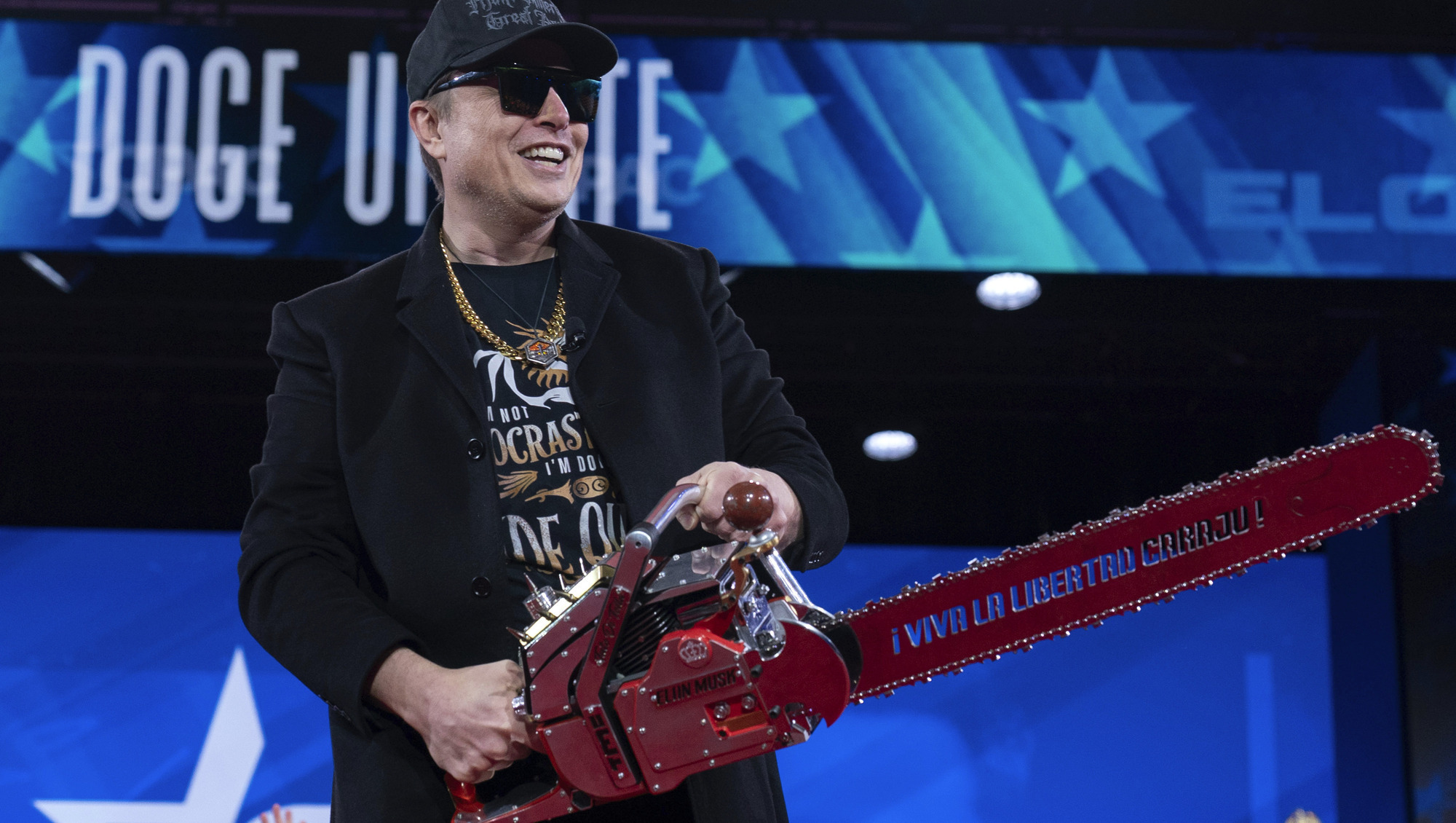
Elon Musk brandishing a chainsaw to celebrate his 'DOGE' budget cuts at a February 2025 conference in Maryland. File picture: José Luis Magana/AP

Elon Musk brandishing a chainsaw to celebrate his 'DOGE' budget cuts at a February 2025 conference in Maryland. File picture: José Luis Magana/AP

The last 25 years have been a momentous time to be working in child health. Child mortality was falling at the quickest rate in any period of human history. Deaths in children under five fell by more than half since the year 2000.

The legacy of malnutrition and oppression from successive world wars in the last century had dissipated, replaced by scientific discovery and shared ideals. The reasons why children died from common childhood diseases such as diarrhoea and pneumonia were now understood. International stability and the growing availability of global funding to tackle these illnesses, meant that more children globally were surviving into adolescence.


But the actions in early 2025 of one unelected man, Elon Musk, have reversed this monumental progress in child health. 

The man who recently became the world’s first trillionaire because of his SpaceX IPO, was brought in by US president Donald Trump to select programmes for federal cuts in spending. These cuts have resulted in the preventable deaths of children and are projected to cause further deaths within the next four years.

It’s worth restating: 

The trillionaire behind Tesla, X, and Starlink changed US policy, devaluing the lives of millions of children.

A landmark study published in The Lancet has calculated that, over a period of two decades, 30m young children survived due to the financial support provided to low- and middle-income countries by the US Agency for International Development (USAID). 

The research paper assessed the impact of total USAID funding, including support for healthcare, nutrition, humanitarian aid, education, and development, on mortality in poorer countries.

Babies and small children benefitted most from USAID-funded interventions. The aid also supported maternal education, which is an independent predictor of survival for infants. Support provided is basic and inexpensive, which is why donor funding has such a major impact. A hundred dollars buys a lot more healthcare in a poor country than it ever could in a wealthier country.

The US has been the largest donor to world aid programmes for the last 20 years and, in 2023, it had pledged to donate $55bn over three years.

Contrast between Elon Musk and Bill Gates 

Bill Gates, another tech behemoth and a significant donor to low and middle-income countries, donated almost bn.

In addition to long-term aid and sustained investment in communities, USAID funded the UN World Food Programme, which provided vital humanitarian relief during natural disasters. All these US programmes have been defunded without reason.

Worldwide, humanitarian organisations have raised serious concerns about the absence of adequate notice in this immediate cut in funding.

As Canadian prime minister Mark Carney said in Davos, where he referred to the global instability arising from Trump’s presidency, “this is a rupture, not a transition.”

Projections made by the researchers suggest that ongoing deep funding cuts combined with the potential complete dismantling of USAID could result in more than 4.5m deaths among children younger than 5 years by 2030.

One-year-old Aisha Mohamed with her mother Isniino Ali at Garowe General Hospital, Somalia, in 2022. The centre was supported by Unicef with funding from USAID. Cuts implemented by Donald Trump-appointed trillionaire Elon Musk mean children like Aisha will no longer receive aid. Picture: Unicef

Since Musk’s policy change, the substantial damage done to rural programmes of antenatal care and immunisations have already cut young lives short. Were the arbitrary cuts reversed, reinstating aid programmes would take years as staff have moved on and relationships with communities have foundered.

Undoubtedly, supporters of Musk and Trump will be quick to pick holes in the research methodology of this important paper. But other studies have similarly documented harm and loss of life arising from the 2025 policy changes. Uniquely, the study in The Lancet combines several data sources to produce forecasting models which project the effects of funding cuts on child mortality into the future.

To refine the accuracy of the forecasting models used, individual country-level analysis was carried out and validated. Two USAID scenarios were modelled: First, a business-as-usual scenario, keeping USAID funding at the levels of 2023; and second, a model of the 2025 termination of USAID funding.

The difference between the two groups was stark: The study authors state, “according to the forecasting models, the current steep funding cuts could lead to more than 4.5m avoidable deaths among children younger than 5 years”.

The conclusions drawn from this research are incontrovertible. For many of the poorer countries, the resulting increase in avoidable child deaths would be on the scale of those expected in a major war or the outbreak of a pandemic. But unlike a disease outbreak, this crisis stems from a conscious policy choice, with the burden falling disproportionately on children.

The consequences of these cuts will be felt for generations. The closest historical comparator we have in terms of a deliberate policy predictably causing the deaths of children is the extermination of 1.5m children during the Holocaust. 

 Elon Musk became the world's first trillionaire earlier this year when his SpaceX company sold stock to the public for the first time. He was appointed by Donald Trump to make budget cuts including to USAID, the US Agency for International Development. 	Picture: Erik Pendzich/Alamy
Elon Musk became the world's first trillionaire earlier this year when his SpaceX company sold stock to the public for the first time. He was appointed by Donald Trump to make budget cuts including to USAID, the US Agency for International Development. Picture: Erik Pendzich/Alamy

This is not a rash comparison; it is a stark reminder that, once again, we have allowed the voice of children to be lost to the wilful acts of a handful of men.

Children have not had their chance to protest about the withdrawal of food aid or vaccines. Nor will they voice their objections, because the cuts have been made, the programmes which offered hope to millions of children have been slashed, and lives have already been lost. The magnitude of deaths in under-fives since the cuts, combined with the death projected to occur, is a catastrophe in global child health.

USAID funding has had a crucial role in improving global health, particularly by reducing mortality from poverty-related diseases and saving the lives of millions of adults and children. Cuts to aid, along with the probable ripple effects on other international donors, have abruptly halted and reversed one of the most important periods of progress in child health.

Other high-income states must step up

To mitigate the effects of USAID defunding, high-income countries must dramatically increase their contributions to global health. Even if there is a change of administration, it is unlikely that foreign aid programmes will ever be funded by the US to the same extent again. 

It is an opportunity to correct the global funding imbalance, sharing the responsibility of making policy decisions which value each child, no matter where they are born.

Our individual choices can feel inconsequential when faced with the enormity of millions of infant deaths. 

The Greek slave and philosopher Epictetus suggested that, in a crisis, we should focus on what we control. 

With that in mind, we can support increased aid from the Irish state to low- and middle-income countries and lobby for additional EU assistance.

We could go further; as internet choice expands, pension funds are allocated, online platforms evolve, and sales of EVs increase, we can choose not to support the trillionaire intent on devaluing humanity.

  • Dr Suzanne Crowe is a consultant in paediatric intensive care

More in this section

Revoiced

Newsletter

Had a busy week? Sign up for some of the best reads from the week gone by. Selected just for you.

Cookie Policy Privacy Policy Brand Safety FAQ Help Contact Us Terms and Conditions

© Examiner Echo Group Limited