Pride gains are real, but LGBT+ rights in Ireland cannot be taken for granted
It would be a mistake to presume hatred of the LGBT+ community has gone away
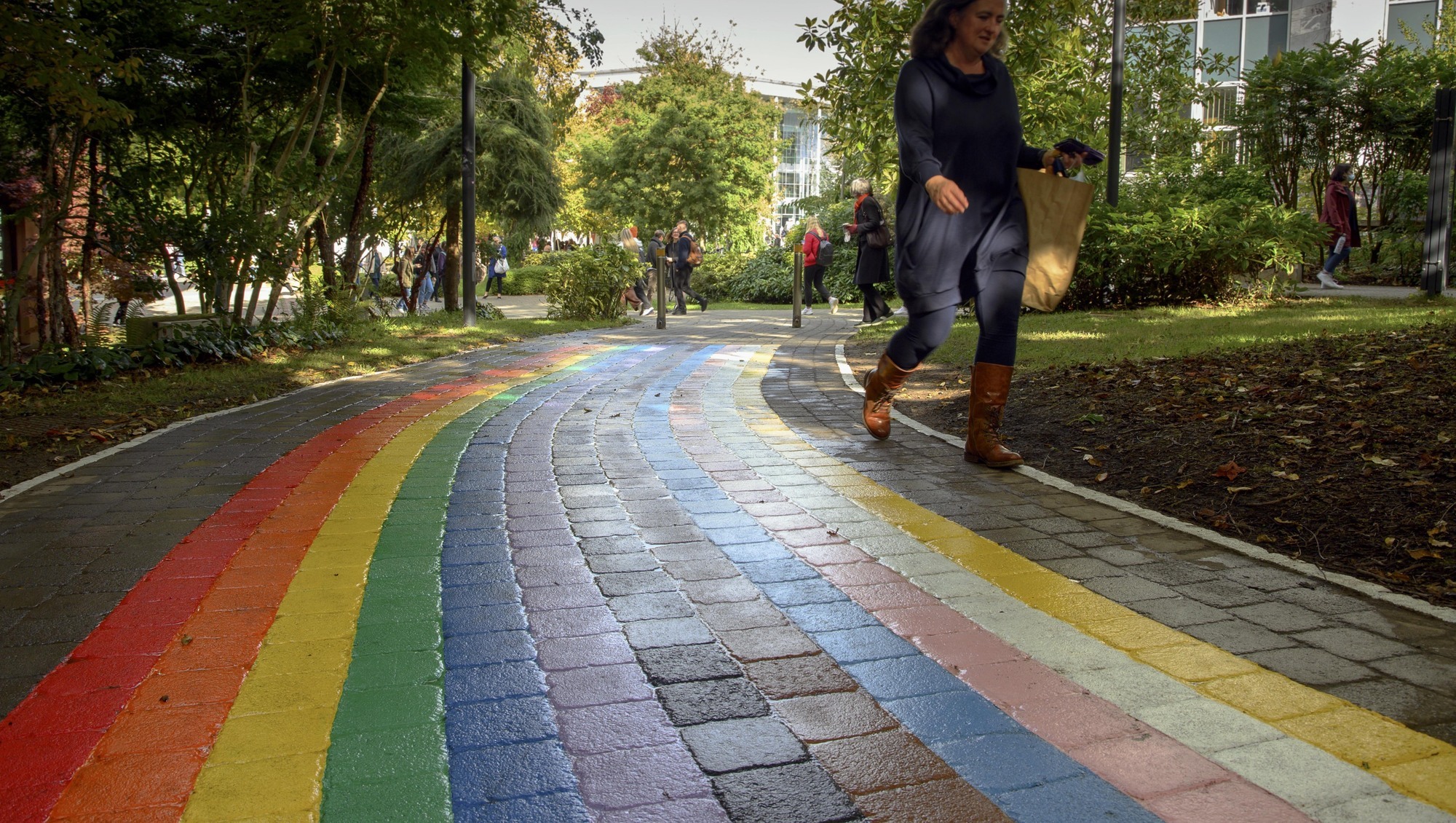
‘When staff, students, and visitors approach UCC campus via its Rainbow Walkway, they know that they are in a safe place for LGBT+ people.’ File picture: Daragh Mc Sweeney/Provision

‘When staff, students, and visitors approach UCC campus via its Rainbow Walkway, they know that they are in a safe place for LGBT+ people.’ File picture: Daragh Mc Sweeney/Provision

As we come to the end of Pride month, it is heartening to see the tremendous work of activists and allies in Irish schools and universities, workplaces, and supportive environments for the LGBT+ community.

Earlier this month, University College Cork (UCC) launched its LGBT+ Action Plan 2026-28: the first such plan in a higher education institution in Ireland. This plan is not about vague aspirations: it commits UCC to specific actions in support of its LGBT+ staff and students. When staff, students, and visitors approach UCC campus via its Rainbow Walkway, they know that they are in a safe place for LGBT+ people.

But it would be a serious mistake to think that hatred of LGBT+ people belongs to the past, and current freedoms and security are permanent and irreversible.

Until 1993, LGBT+ sexuality was criminalised in Ireland. In 2015, Ireland became the world’s first country to legalise same-sex marriage by popular vote. It may seem that the Irish LGBT+ experience went from shame and rejection to pride and inclusion in the blink of an eye.

Exploring Irish LGBT+ history, however, suggests a more complex and less comfortable reality, all the more important to understand when anti-LGBT+ discourse and violence are resurgent across the globe.

Some 40 years ago, the first book written by Irish LGBT+ people about the Irish LGBT+ experience spelled out the realities of life before decriminalisation. 

Out for Ourselves: The Lives of Irish Lesbians and Gay Men was put together by members of the Dublin Lesbian and Gay Men’s Collectives in 1986. Its opening statement is stark: ‘The media censors us, the churches condemn us, the law outlaws us, and all decent right-thinking people know that we are perverts, child-molesters, genetically damaged, hormonally imbalanced, and generally disgusting’.

This statement does not exaggerate the extent of hostility and exclusion. Consider the Irish Supreme Court’s majority judgement in 1983, rejecting David Norris’s constitutional case against the criminalisation of homosexuality. 

Chief Justice Tom O’Higgins ruled: “On the ground of the Christian nature of our State and on the grounds that the deliberate practice of homosexuality is morally wrong, that it is damaging to the health both of individuals and the public and, finally, that it is potentially harmful to the institution of marriage, I can find no inconsistency with the Constitution in the laws which make such conduct criminal.”

These laws were a colonial inheritance and after independence in 1922 the Irish State continued to enforce them. Under British rule, “the detestable and abominable vice of buggery” became punishable by death in Ireland in 1634. The Anglican bishop of Waterford and Lismore, John Atherton, and his self-accused sexual partner John Child were hanged under this law in 1640 and 1641 respectively.

James Pratt and John Smith were the last men to be executed for consensual, adult same-sex activity in Britain and Ireland. They were hanged in England in 1835, and the death penalty remained the theoretical punishment for sodomy until 1861, when the maximum sentence was changed to life imprisonment.

Oscar Wilde (1854-1900) was the first prominent Irish victim ‘the blackmailer’s charter.’ File picture: Hulton Archive/Getty

This change did not indicate toleration of LGBT+ sexuality. In fact, the policing and prosecution of gay men intensified after 1885, when UK law criminalised ‘gross indecency’ (undefined) between consenting adult men. 

Oscar Wilde was the first prominent Irish victim of this legislation, bitterly known as ‘the blackmailer’s charter.’ In 1895, he was sentenced to two years hard labour and his life was ruined for “the love that dare not speak its name.”

That famous phrase originated in the poem Two Loves, written by Wilde’s lover Lord Alfred Douglas, and it evokes an old legal term that framed homosexuality as literally unspeakable. In Douglas’s poem, when the figure of same-sex love identifies himself as ‘Love’, the figure of heterosexual love retorts: “He lieth, for his name is Shame.”

Nearly a century later, the shame imposed on Oscar Wilde still blighted Irish lives. In 1987, Phil Chevron performed Under Clery’s Clock at an Aids benefit concert in Dublin. It was perhaps the first song about the Irish LGBT+ experience to be written and performed by a gay Irish person: “Ten minutes more/I know will bring my love to me/The love that does not have a name.”

The song references Burgh Quay; its public toilets were a men’s cruising area at a time when there were very few places for gay people to meet. A sense of yearning, desire, loss, and alienation pervades the lyrics: “All I want is to embrace/By the streetlight/Just like other lovers do/Without disgrace.”

Today's Ireland

Six years later, Ireland decriminalised homosexuality. This was the result of some 20 years of LGBT+ activism, supported by friends and allies and the 1998 judgement of the European Court of Human Rights that criminalisation put Ireland in breach of the European Convention on Human Rights (following 14 years of legal challenges against the Irish State by the pioneering activist David Norris).

In 2018, marking the 25th anniversary of decriminalisation, the Taoiseach Leo Varadkar made a formal apology on behalf of the State for those convicted of same-sex sexual acts and indeed the wider LGBT+ community. 

His own identity as a gay man gave added force to his remembrance of “men and women of all ages” who “were aliens in their own country for their entire lives because they felt that love that dare not speak its name.” The taoiseach’s reference to women was vital.

They were not officially criminalised, but they suffered as much as men, and sometimes more, in a society where they had fewer rights. Lesbian contributors to Out for Ourselves outlined the fearful experience of married women with children, who risked losing custody of their children if their sexuality became known.

Physical, verbal, and online violence and intimidation against LGBT+ people of all ages are real issues in today’s Ireland. The most vulnerable are often the youngest and the oldest.

Children and young people should not be frightened and bullied in their schools. Older people should not be forced back into denial when seeking care: the first generation of out LGBT+ Irish people are now in their 70s and early 80s. Trans people are particularly at risk. The dehumanising language and silencing once directed against the entire LGBT+ community are now directed at them in countries formerly considered progressive and protective. It could happen here too.

  • Dr Diarmuid Scully is a lecturer in the School of History, UCC, a member of the LGBT Staff Network, and a contributor to UCC’s LGBT+ Action Plan.

More in this section

Revoiced

Newsletter

Had a busy week? Sign up for some of the best reads from the week gone by. Selected just for you.

Cookie Policy Privacy Policy Brand Safety FAQ Help Contact Us Terms and Conditions

© Examiner Echo Group Limited