Irish tech workers at Meta and Covalen can turn to unions to help fight AI replacement
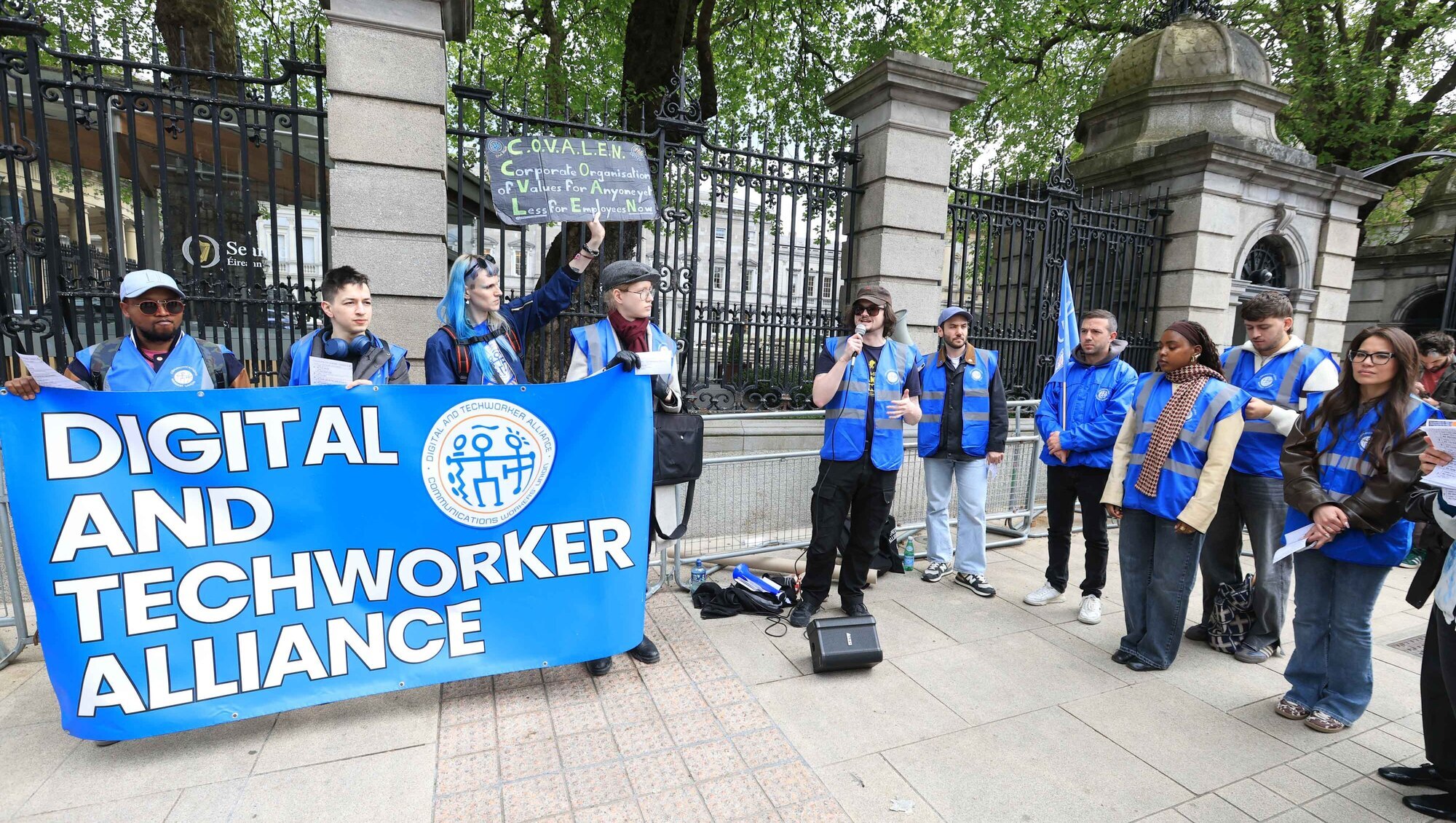
Covalen workers protest outside Leinster House earlier this month. Photo: Sasko Lazarov / © RollingNews.ie
The IMF is warning that Artificial intelligence (AI) could affect more than 40% of jobs in Ireland. The report, in a worrying tone, notes that Ireland is “relatively more exposed” than other advanced economies to AI-related risks.
This is down to the fact that the most recent wave of foreign direct investment has been in the tech sector, which is at the coalface of the AI revolution, both in its evolution and in its implementation.
Read More
However, the development of AI is complex, involving a ‘chain’ of engineers, contractors, cloud workers, data annotators, and content moderators spread across firms.
Meta, the tech giant behind Facebook, WhatsApp and Instagram, publicly said it wants to reduce its reliance on human workers through third-party companies and rely more heavily on its own AI systems.
The company is rumoured to plan on reducing global headcount by 10% with plans to spend a dizzying $600bn on data centres by 2028. Data centres are critical to AI’s functioning, but their link to tech employment is tenuous at best.
In a slick and entertaining farewell video he posted internally in the company's chat groups, David Frenk, a Meta software engineer in the US, used his musical skills to lambast Meta’s (ab)use of AI.
Although the parodying post was clever and amusing, surely tech workers have better options? Put differently, could the conditions produced by AI generate a class consciousness?
In the right hands, AI could offer immense opportunities for improving work and workplaces, but it poses significant risks to workers — who are not without options.
As part of a “just technological transition” to an increasingly digitised workplace, workers must remember the power of organising within unions. They can demand notice about the introduction of AI, as well as the possibility of becoming ‘AI literate’.
Workers should have the right to refuse to train their AI replacements. When workers do face dismissal, they need training to ensure future employment opportunities.
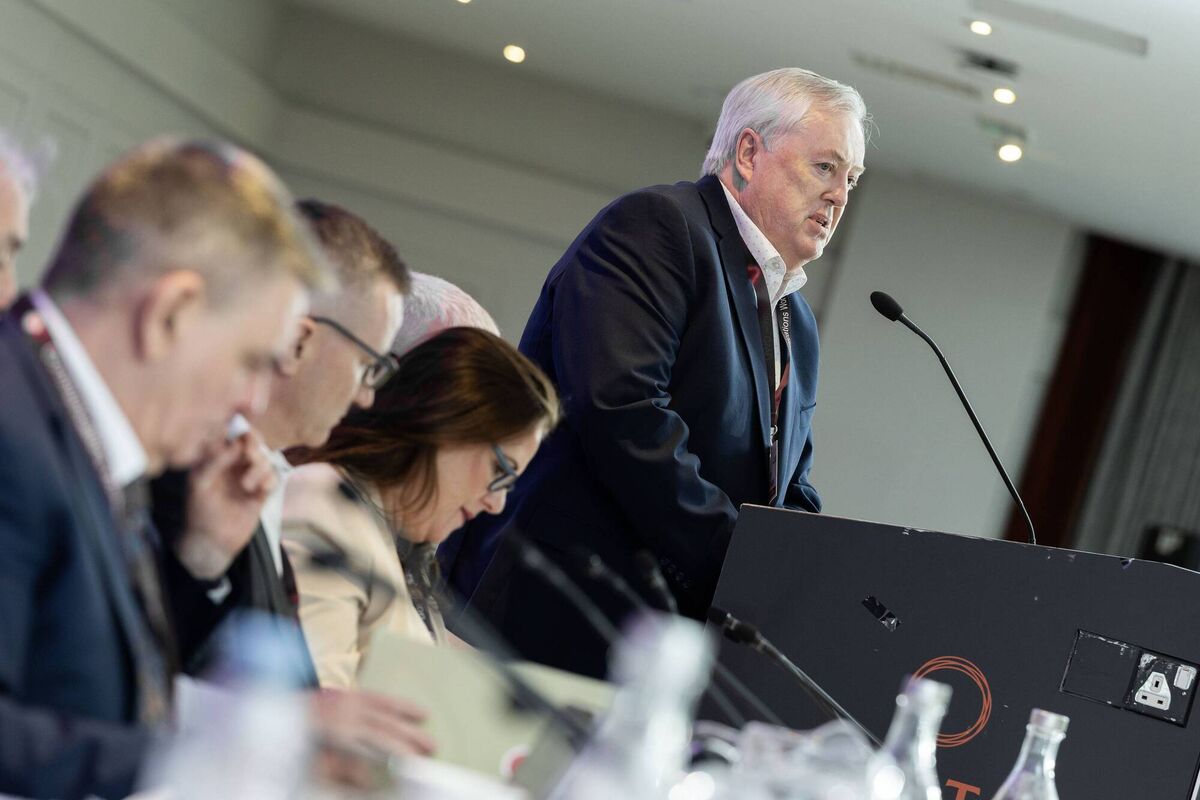
Two hundred union leaders from across Europe met in Copenhagen April last to discuss AI, algorithmic management and digital business models that are reshaping the world of work at an unprecedented pace.
European trade unions are seeing unfair automated dismissals, known as robo-firings, intrusive workplace surveillance, opaque algorithmic decision‑making and rising workloads driven by digital management tools.
Unlike the US, where there are no federal rules or limits regarding worker surveillance, the practice would likely be considered a violation of the EU’s General Data Protection Regulation. Yet, enforcing these protections can be more difficult in the absence of a union.
Without regulation, social dialogue and collective bargaining, AI risks undermining job quality and trust at work. Speaking at the conference, Professor Valerio De Stefano said: “AI at work is not only about innovation and productivity.
"It is also about power: who directs, monitors and disciplines workers. Without strong worker voice and collective representation, these technologies risk reinforcing unilateral managerial control and weakening democracy in the workplace.”
In April, Meta announced that changes were afoot regarding AI, with the consequence of affecting tens of thousands of employees.
Henceforth, what workers typed into their computer, how they moved their mouse, where they clicked and what they saw on their screen would now be tracked to train Meta’s artificial intelligence models, which would then replace the workers.
To denounce this dystopia, Meta workers in the US launched a petition questioning management’s motives “because it is the right thing to do” and “Meta believes in empowering individuals”.
Recently, Meta began laying off workers in Ireland, the UK and US, and it is often in moments like these that workers (belatedly) turn to trade unions.
In anticipation of dismissals, a group of Meta employees in the UK launched an effort to unionise with the United Tech and Allied Workers (UTAW). The workers set up a membership recruitment website using the URL “Leanin.uk”, a reference to former Meta COO Sheryl Sandberg’s 'motivational' book for women in the workplace, .
The idea is that once enough workers join the UTAW, they will apply to the UK Government's Central Arbitration Committee for statutory recognition.
In Ireland, Covalen provides content management services to Meta. Covalen content moderators, who perform distressing but important work, have actively trained Meta AI tools.
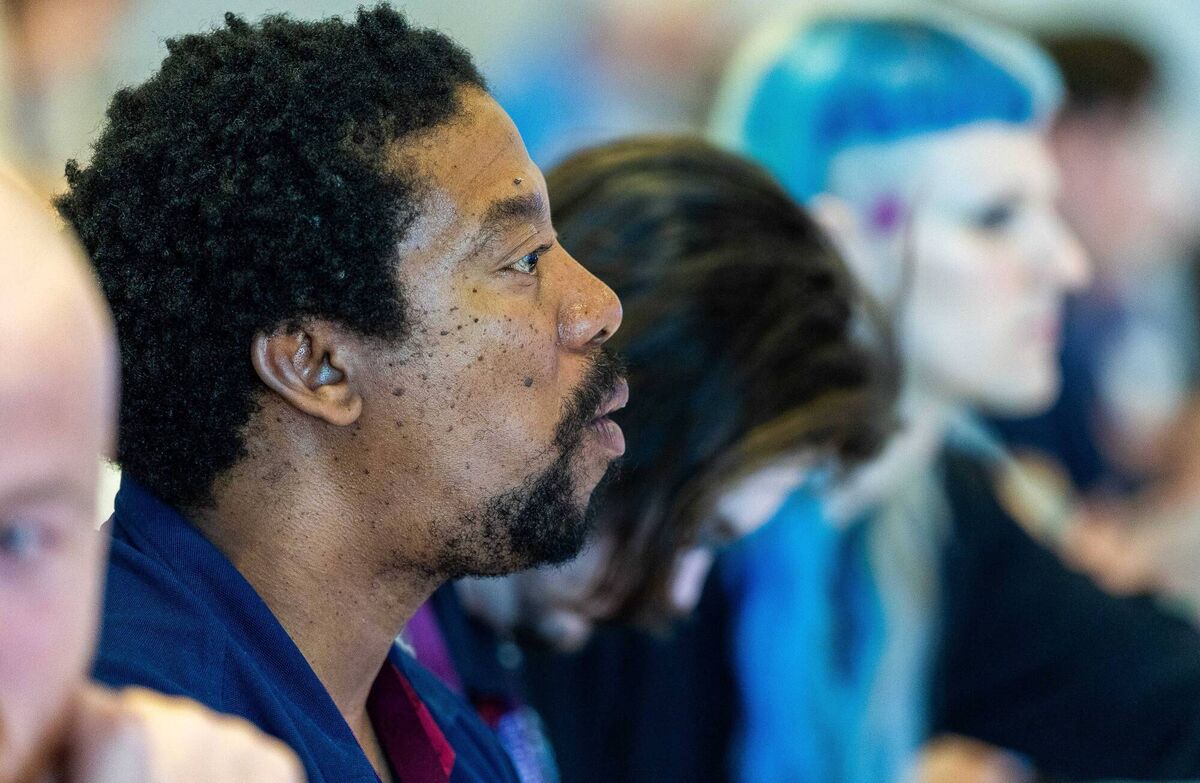
Now their jobs are at risk, with over 700 Covalen staff facing redundancies, mostly due to AI. Over the past months, these workers have been organised by the Digital and Techworkers Alliance, a branch of the Communications Workers Union (DATA-CWU).
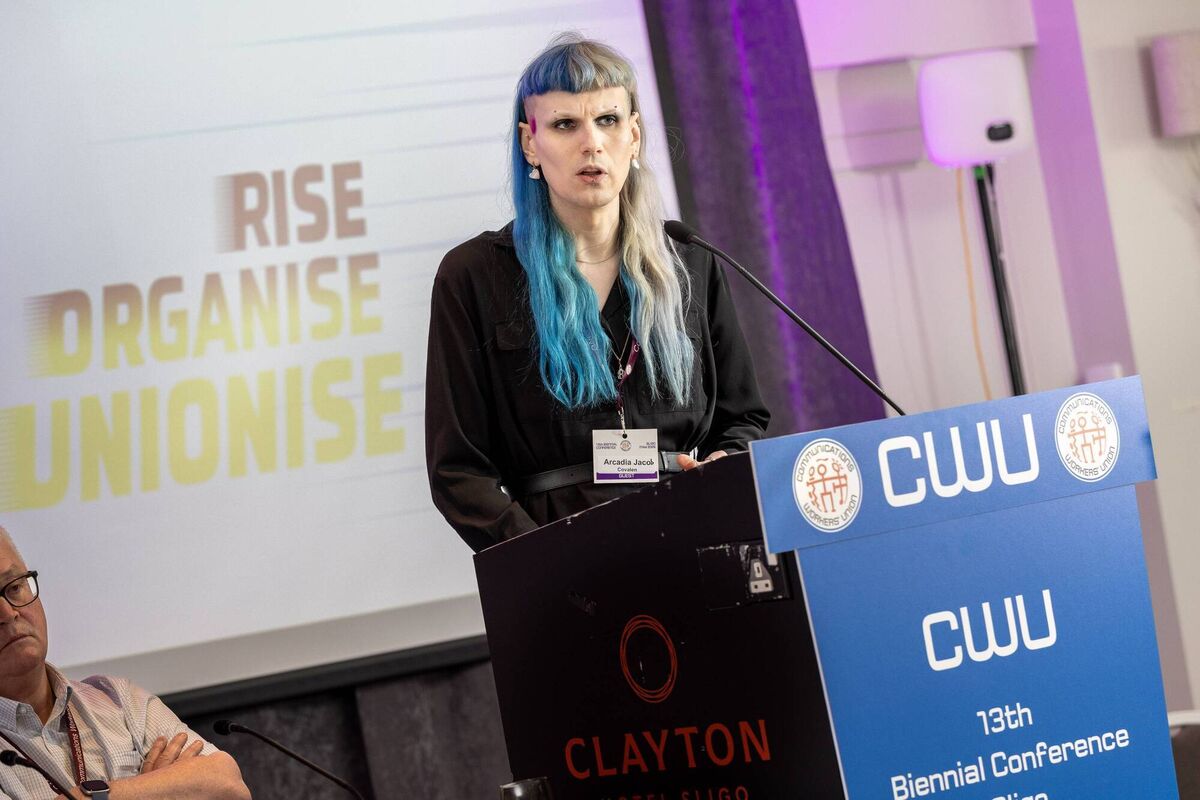
In an open letter, Covalen workers state: “This situation was not created by workers. Covalen staff met targets, adapted to constant change, moved between roles and projects when required, and delivered value under difficult and often unstable conditions.”
In January and May, DATA-CWU members went on strike, demanding that Covalen enter into formal collective bargaining and meaningfully engage with elected employee representatives.
This would ensure that workers have greater involvement in matters relating to working conditions and the implementation of AI systems. Unlike in the UK, there is no statutory recognition here, and the company can ignore their demands.
The effects of AI will be varied and diverse, but AI should not negatively affect workers’ fundamental rights. Tech workers are the most vulnerable but due to generous compensation, in-work perks, and high labour market power, have largely remained un-unionised — until now.
Historically, trade unions have provided some answers to industrial revolutions and technological changes. It appears the same holds for the AI revolution. Before lawmakers or the public, tech workers have a better understanding of AI and the direction we are all travelling in.
By unionising, they are insisting that those working on AI should have a say in how it develops. This development exposes the ephemerality of techno-utopia, which disguised the divide between workers and management.
This techno-utopia was reflected in Google’s founding motto: Don’t Be Evil.
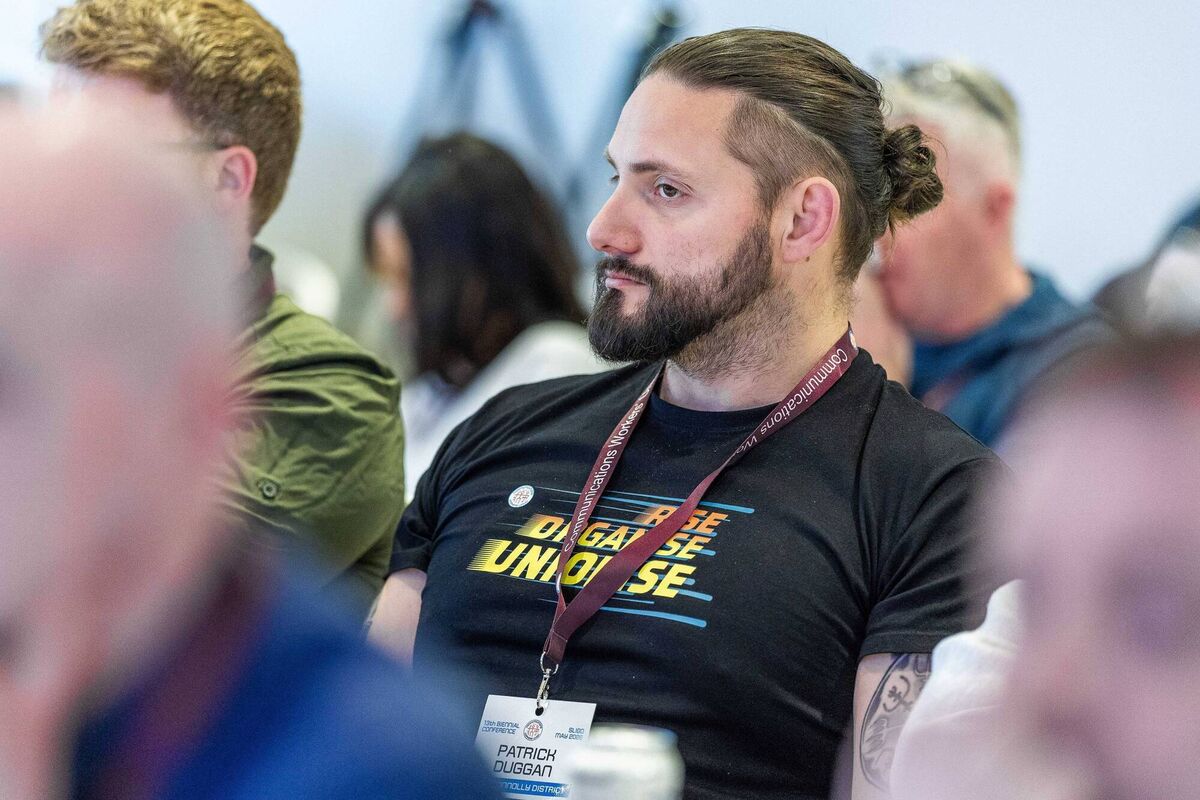
Recently, however, the worker-management divide has come to the fore with the advent of AI, resulting in a rise of labour activism amongst tech workers, many of whom say they work in the area for ideological reasons like technological advancements benefitting broader society.
US researchers have found that labour activism can do more than manage the disruption of AI to individual workplaces. It can also reshape how the tech industry serves the broader public.
For instance, Googlers in the US penned an open letter denouncing Project Maven, which used AI surveillance captured by military drones. The protest resulted in Google agreeing not to seek further contracts with the US Pentagon.
If tech workers are more likely to use their careers as platforms for expressing social or political beliefs, then we would expect to see a rise in unionisation.
How dissatisfaction with AI is managed by the likes of Meta and IT service providers remains an open question, but how the Covalen workers are being treated certainly does not bode well for tech workers in Ireland.
Most likely, it'll be more of the same — we will hear government politicians offer platitudes about “protecting jobs” and “re-training” while at the same time feverishly promoting the construction of more data centres.


CONNECT WITH US TODAY



Be the first to know the latest news and updates