Joyce Fegan: Nothing artificial about centuries of hard work that led us to AI
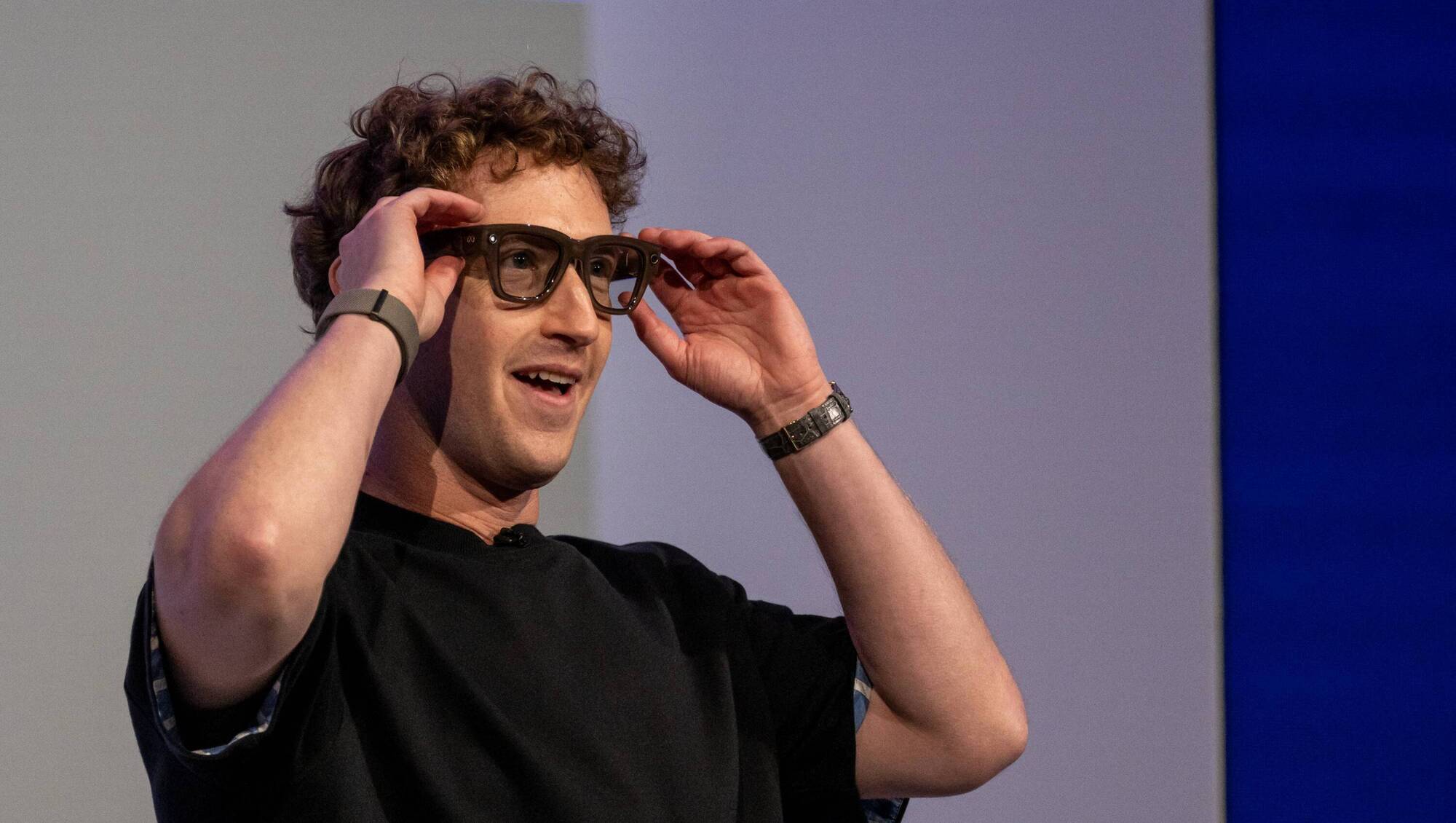
Mark Zuckerberg's recent online essay paints a utopian picture where 'everyone will have an exceptionally capable personal agent that understands you, your goals, and everything you care about'. That sentence did not read 'everyone can have' or 'everyone could have access to' one of these agents. File photo: David Paul Morris/Bloomberg via Getty Images
In 2008, Queen of Soul Aretha Franklin was asked what her biggest challenges were. She pauses, scratches her head, and, in absolutely no rush, declares it in earnest to be "what to cook for dinner nightly, you know? Just night after night".
The resurfaced clip went viral in recent years — the mundane monotony of what it takes to live a life strongly resonating with millions of people. This intimacy with her own humanity, this rootedness in the day-to-day domesticity of most people's lives, was probably a contributory factor to her own global success.
What probably won't go viral is Facebook founder Mark Zuckerberg's 6,549-word essay published online this week — .
Of course, the future is for everyone; why wouldn't it be? But in his world, the future he specifically speaks of is an AI one, painting a utopian picture where "everyone will have an exceptionally capable personal agent that understands you, your goals, and everything you care about".
Read More
That sentence, one of his many hundreds, did not read "everyone can have" or "everyone could have access to" one of these agents. Our involuntary onboarding, and obedient use of this latest tool, affirmed and asserted as fact.
Another thing asserted as fact was AI as a "superintelligence", this term was repeated 55 times in his lengthy essay. Repeated theory becomes fact, whether or not that fact holds any truth or not, an unhelpful quirk of human psychology.
But what is the truth of AI? AI, a term ushered involuntarily into our vocabulary, an abbreviation of "artificial intelligence". That's factually incorrect.
A far more truthful abbreviation for AI would be aggregated information or archived intelligence. For there is nothing artificial about the centuries of labour, study, education, creativity, intellect, invention, and scientific endeavour that led to the vast mountains of information that fuel these tools.
There is no AI without us. Just like there is no social media without us. Social media, as a highly lucrative industry, was built on our willingness to share our public information online — photos; thoughts; emotions; locations; moments of heartbreak, and exaltation.
AI is our labour, and not just our studies through the ages, but the labour of our parents and grandparents, ancestors who toiled and sacrificed, so their children could access the education system they never did.
There are layers of labour, as Angela Garbes argues in — there is the invisible infrastructure of care that supports all productivity. To this point, Zuckerberg chimes in and says just look at the wonders of the Industrial Revolution.
"In many ways, this (AI) is a continuation of historical trends. Before the industrial revolution, 90% of people were farmers growing food to survive. Advances in technology steadily freed much of humanity to focus less on subsistence and more on the pursuits we choose.
"At each step, people used our newfound productivity to achieve more than was previously possible, as well as spending more time on creativity, culture, relationships, and enjoying life," he enthuses.
What would the infants and mothers of the Industrial Revolution say to us about that? Large populations of working-class mothers were suddenly thrust into 12-14 hour days in mills and factories, creating severe infant feeding crises.
There was no childcare system in place, and there was certainly no alternative infant-feeding methods. Wet nurses, women who lactated and nursed other women's children, were the preserve of the wealthy, not the working class.

The babies of the Industrial Revolution were fed animal milk or "pap", a mixture of a grain boiled in water, and so started feeding bottles; only these came with hard-to-clean tubes that housed lethal bacteria.
And to this, Zuckerberg's essay would argue, well, of course, there will be a bit of turbulence en route to this positive future.
"Of course some aspects of the way we work will change — just as it did with computers, the internet, and any new technology. This means people will have to adapt, and this will be challenging.
"But the more that everyone has a personal agent that is superintelligent at teaching us new skills and helping us adapt to change, the smoother this will be," says Zuckerberg.
Instead of us adapting, perhaps these AI companies, that will herald so much change in our lives, could provide us with just transition loans from their dividends.
How did a man, who started out with a "prank" website (FaceMash) allowing users to rate the attractiveness of two women side by side, end up in the position where he is telling hard-working people around the world they "will have to adapt", should the career they have worked their whole life to develop, and which supports a livelihood, and a home, become redundant?
A future shaped by AI, is not fact, is not inevitable, it is not like a river running its natural course over which we have no control. AI is an industry being created by a very small number of people, who really seem utterly desperate to convince us we must adopt their tool and adapt, and show neither dissent, nor critical thinking.
I'm not sure if it was the girls sitting side-by-side with headphones in Starbucks in Dundrum one Sunday, transcribing Shakespeare's off their phone's AI app for their Leaving Cert study that did it for me when it comes to this "superintelligence", or maybe it's the up-close-and-personal witnessing of how almost everyone I know is living a life filled with challenges that AI has no hand, act, or part in even touching.
AI, our long-toiled-for gathering of information, is now being sold back to us as this externally created "artificial intelligence" that will change lives.
But will this AI that they speak of ever be able to change a nappy? Will it be able to mind your sick child when creche calls, and you're too afraid to tell your boss? Will it be able to hold a five-month-old baby, before it can ever sit up for itself, and allow you to take a shower?
Will it visit your ageing parent in the care home that's two hours away in evening traffic, after you finish work and before you get the dinner?
Will it visit you when you're feeling a bit lonely? Will it get your adult child out of the box room and into their own housing? Will it reduce your health insurance costs or get you further up the public waiting list?
Maybe they're terrified they created another Segway — the 2001, two-wheeled electric transportation device that was launched to similar world-changing-type hype. Segway failed because it solved no actual problems.
Of the real problems of our daily lives, which does AI tangibly solve for you?