Patrick Holloway: Uncanny devotion to Harry Potter's Dobby shows power of fiction
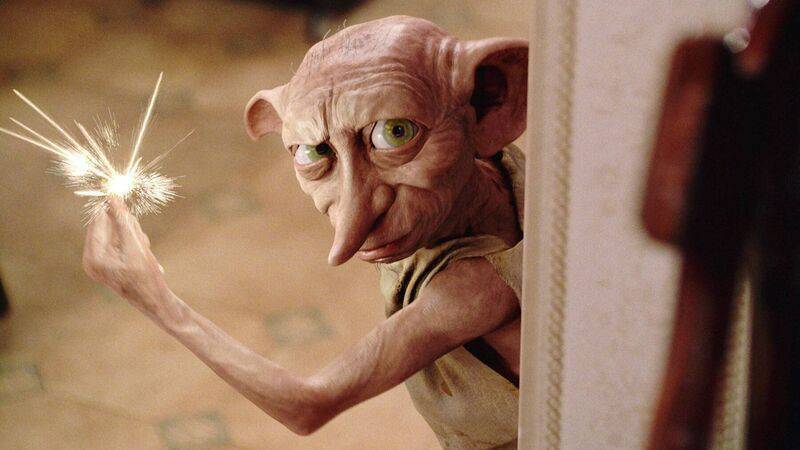
Dobby the house elf from Harry Potter. We know almost everything about Dobby. We know almost nothing about the people who were actually buried at Freshwater West in Pembrokeshire in the Bronze Age. Photo: Warner Bros
My eight-year-old daughter is currently reading Harry Potter for the first time and, like millions of children before her, has become completely obsessed with it. She is late to breakfast, has set up a reading spot in her room, and at night I read chapters to her, longer than I should, also getting (re)lost in that world.
I know how she feels. I was addicted to Harry Potter myself, queuing in the early hours to get the next book on the day it was released, desperate to get home and disappear back into that world.
I have always been susceptible to fantasy. I spend an unhealthy amount of my life somewhere inside my own head, in thoughts and stories and imagined places; my feet rarely seem to touch the ground for very long. So I am not coming to this story as someone who thinks Harry Potter is ridiculous.
But moving the route of a £430 million electricity cable because people don't want it to pass near the grave of a fictional house elf is, frankly, demented.
There is something wonderfully absurd about the whole thing: an enormous infrastructure project, engineers and planners, millions of pounds, and somewhere in the middle of it all somebody has to stop and say, hang on, lads, what about Dobby?
Hundreds of people contacted the company responsible for the Greenlink interconnector after learning that the proposed route would pass close to Freshwater West in Pembrokeshire, where Dobby's death and burial were filmed. The route was subsequently changed.
You can understand why people would be upset if a real place of historical or cultural significance was threatened. But Dobby isn't real. And, to make the whole thing even stranger, this isn't even the place where Dobby dies in the Harry Potter books.
In the novel, Dobby dies at Shell Cottage, the fictional home of Bill and Fleur Weasley on the Cornish coast, and Harry buries him in its garden. Freshwater West isn't Cornwall. It isn't Shell Cottage. It isn't even a location Rowling imagined. It is a real beach in Wales which the filmmakers chose to stand in for the fictional place.
So we have already travelled several steps away from reality. Rowling imagined Dobby. The filmmakers created a physical version of that imagined world. They chose a real Welsh beach to represent it. Millions of people watched the film and saw Dobby die there.
Then some of those people began travelling to the real beach to mourn him. The film has effectively given the imagination a postcode.
And perhaps this is where the story becomes more interesting than simply a story about Harry Potter fans being completely bananas. Because the extraordinary thing about fiction is that we know it isn't real and believe in it anyway.
We spend enormous amounts of money doing this. The Harry Potter industry has become vast: theme parks, studio tours, shops, hotels, merchandise, wands, robes, Butterbeer, the lot.
People travel across countries and continents for the privilege of spending a few hours inside a world they know perfectly well does not exist. We pay to experience a temporary illusion.
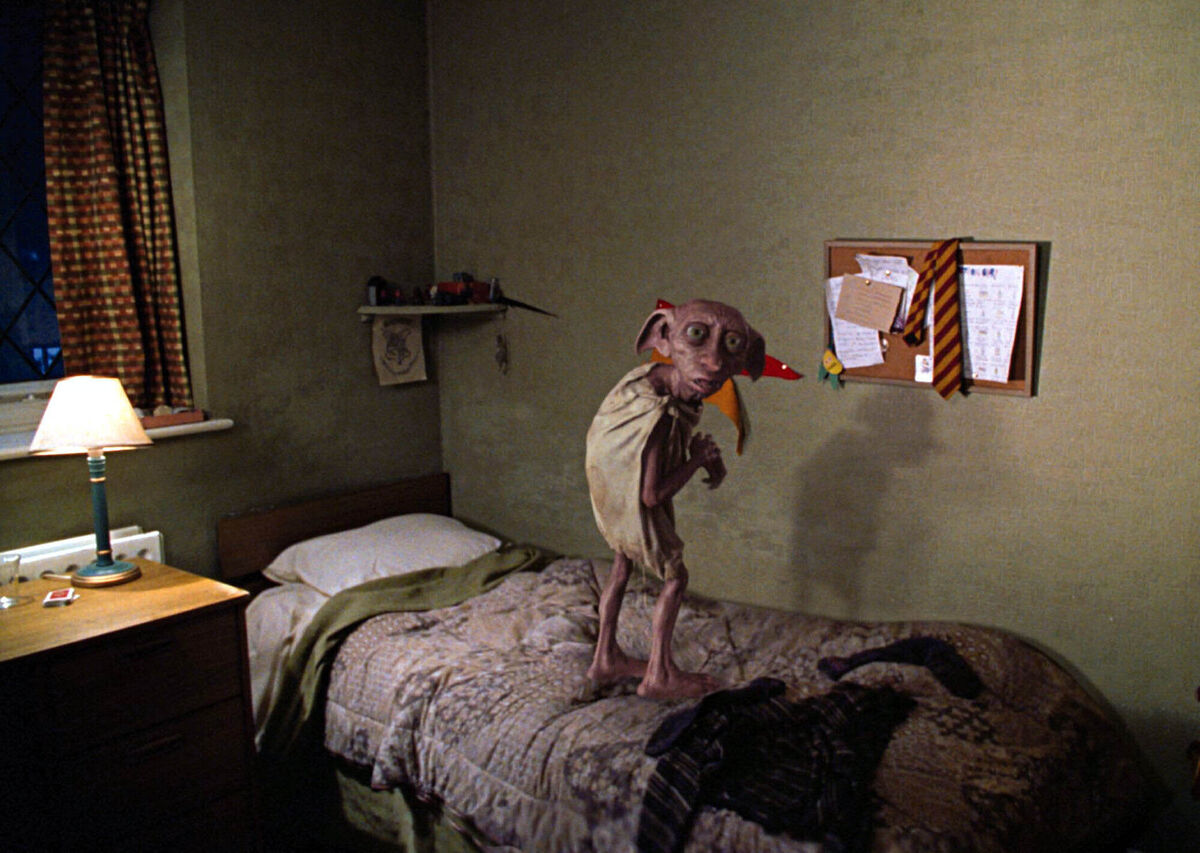
There is a certain level of beauty in this derangement. And most of the time, I’m there for it. I’m in the queue spending money I don’t have on a phoenix feather wand and a Marauder’s Map notebook.
We do all this because stories give imaginary people real emotional lives. Dobby never existed, but his death was devastating. We know Hogwarts isn't a real school, but generations of children have wanted desperately to go there.
We know the characters are invented, but we worry about them, get frustrated with them, love them and miss them in a real, tender way. The emotion is real even when the object of it isn't.
Perhaps that is one of the great tricks of fiction: it asks us to suspend disbelief while never quite asking us to forget that we are doing so. We know Dobby isn't real.
The people leaving stones at his grave presumably know this too. They are not necessarily deluded in the literal sense. They are participating in the fiction, extending it into their own lives because it meant something to them.
But there has to be a line somewhere, doesn't there? And this is where the Bronze Age comes in. The revised cable route passes quite close to genuine Bronze Age remains, including burial urns.
These aren't the remains of imaginary people created by JK Rowling and given a backstory by Hollywood. These were actual human beings. They lived here thousands of years ago. They had families. They had names. Somebody loved them. Somebody buried them.
There were hundreds of calls about Dobby. I wonder how many there were about the people in the Bronze Age graves? I don't mean that as a cheap gotcha. The archaeological remains were considered in the planning process, and there is no suggestion that the project simply ignored them.
But the contrast is hard to resist. We know almost everything about Dobby. We know his face, his voice, his story, who killed him, who held him when he died and what Harry did afterwards. We know almost nothing about the people who were actually buried there.
The Bronze Age dead are real, but they have become strangers. Dobby is imaginary, but millions of people know him. That is the strange power of fiction. It can make someone who never lived feel more immediate than someone who did.
And perhaps that is why I don't really want to dismiss the people who wanted to protect Dobby's grave. Their response may be demented, but it is also evidence of something extraordinary: the ability of a story to escape the page and enter the physical world.
A fictional character has altered a real landscape. He has made people travel, spend money, leave offerings, create rituals and, now, apparently, move an electricity cable.

The danger is only when we forget that there is a real world underneath all those stories, full of people who actually lived and died and whose stories have been lost.
My daughter will continue reading Harry Potter. I will continue reading it to her at night, probably for longer than I should. I hope she continues to care about Dobby. I hope she is empathetic and feels the hurt at his death. I hope she gets completely lost in Hogwarts and learns about others and herself.
I just hope she remembers that he isn't real. And that, somewhere beyond the pages, there are real people worth caring about too.
Fiction may be a kind of delusion. I suspect I have spent most of my life happily participating in it. But perhaps the trick is not to stop believing. Perhaps it is simply to know when to come back.
Preferably before you chain yourself to a railing to save a house elf.

BOOKS & MORE
Check out our Books Hub where you will find the latest news, reviews, features, opinions and analysis on all things books from the Irish Examiner's team of specialist writers, columnists and contributors.
CONNECT WITH US TODAY



Be the first to know the latest news and updates