Nuclear option is back on the table — but politicians and the public will take some convincing
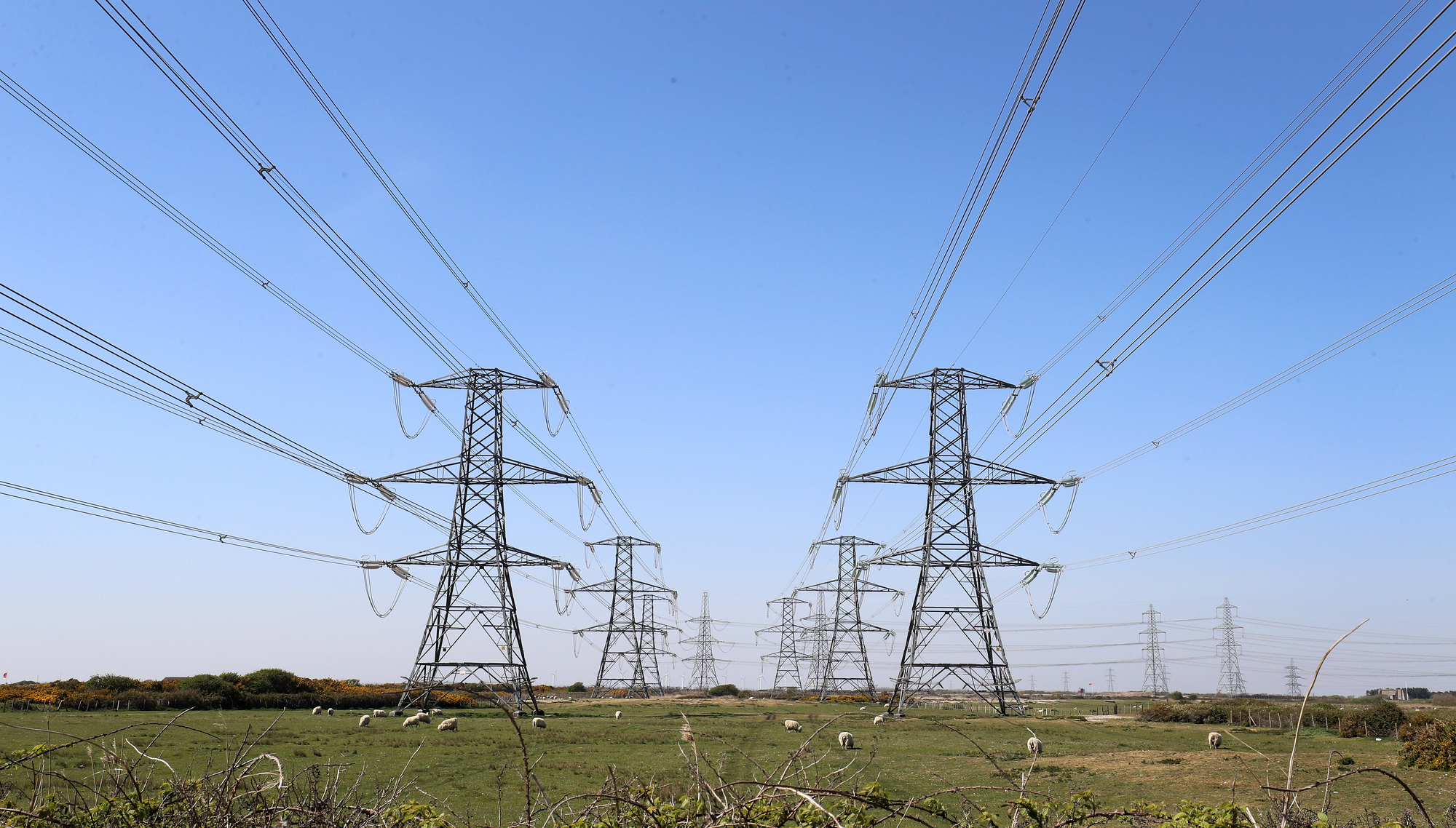
Nuclear energy has been discussed by Cabinet members for a number of weeks as the war in Iran focuses minds on Ireland's high energy costs. File picture
In 1999, the government of then taoiseach Bertie Ahern enacted the Electricity Regulation Act.
The bill is largely technical in nature and focuses on energy licensing, the establishment of a Commission for Electricity Regulation, and access to networks.
A line in section 18 of the text has led to much debate in the last week.
It reads: "An order under this section shall not provide for the use of nuclear fission for the generation of electricity."
That ban has stood since and was reiterated in 2024's Planning and Development Act, which states: "Nothing in this Act shall be construed as enabling the authorisation of development consisting of an installation for the generation of electricity by nuclear fission."
This article is part of the analysis (in print and online, here) on proposals to overturn Ireland's ban on nuclear energy, and opposition to it
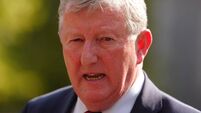
However, James O’Connor, Fianna Fáil TD for Cork East, has now drafted legislation that would legalise nuclear energy by repealing those sections.
The bill will be debated in the coming months, but the issue of nuclear energy is already back on the table, having been discussed by Cabinet members for a number of weeks as the war in Iran focuses minds on Ireland's high energy costs.
In the last week alone, EU statistics agency Eurostat published research which showed that Irish households are now paying around €480 a year more for electricity compared to the EU average.
The root of high prices in Ireland was discussed in an ESRI paper published last month, with a number of factors identified.
The paper says that while the Government had introduced energy credits in recent years, these have largely been sticking plasters and, when removed, residential Irish electricity was the eighth most expensive in Europe in 2024.
On top of that, the ESRI researchers said that network costs have risen in recent years, particularly in 2022 and 2023, as the "procurement of emergency generation was financed by increased network charges".
The researchers also said that future network investments will, in fact, increase costs to consumers.
"While notable, the magnitude will be less than that experienced in recent times," states the ESRI report.
"The CRU predicts that annual household bills may rise by €59-€106 by 2029/30. The way in which network tariffs are recovered may require reform to incentivise efficient system development."
To ward these rises off, the paper says that renewable generation "increasingly acts as a hedge against high wholesale prices due to changes in the design of renewable support schemes which came into place in 2019".
"Under this scheme, renewable generation pays a rebate back to consumers when market prices are high. In 2022/23, these rebates were greater than the cost of the scheme overall, meaning households received a credit of €89 via the 'PSO' item on their electricity bill."
The bottom line is that Ireland's energy production and importation is tied in large part to gas.
Gas accounts for about 40% of Ireland’s electricity generation, according to Gas Networks Ireland — a share matched by renewables, based on figures from the Central Statistics Office. Overall, around 37% of homes use gas for heating.
“Irish energy costs are higher than average and particularly exposed to the international price of natural gas,” said researchers.
“This has imposed a considerable additional cost on consumers.”
The rising cost of gas over recent years and the repeated increases by energy providers have become a recurring pattern in the Irish news cycle, but it was not until last month's fuel protests that minds were focused on the link between a lack of energy self-sufficiency and high prices, with many asking why nuclear energy was not higher on the agenda.
Indeed, at the time of the 1999 ban, serious proposals for nuclear energy in Ireland had not been made in a generation.
On the back of Mr O'Connor's bill, Taoiseach Micheál Martin has said that discussions need to be had.
"We should explore all avenues," he said.
"We've witnessed over the last 50 years periodic moments of volatility and energy insecurity because of our over-reliance on imported fossil fuels.
"We certainly should look at and examine options like nuclear power seriously, simply examine the advances in technology that have occurred."
Many of those advances are outlined in a report published last year by the International Energy Agency, entitled .
The report said that while 2025 was expected to be the largest year on record for nuclear power generation, momentum behind a new wave of reactor construction was “unbalanced”, driven largely by emerging economies using Chinese or Russian reactor designs.
The IEA said the future of nuclear power lies largely in so‑called small modular reactors (SMRs), which it described as being able to act as a “catalyst for change”.
SMRs are compact nuclear reactors designed to produce less electricity than conventional plants — typically up to 300 megawatts per unit — and are built in factory‑made modules that can be transported and assembled on site, reducing construction times and costs.
They are designed with enhanced safety features and can be used for electricity generation as well as industrial heat, hydrogen production, and powering remote areas.
In 2024, the Czech power company CEZ signed a deal with Britain’s Rolls-Royce to form a strategic partnership to develop and deploy SMRs.
CEZ plans to build the first small modular reactor at the Temelin nuclear plant in the first half of the 2030s.
Last month, the British government announced that Great British Energy - Nuclear signed a contract with Rolls‑Royce SMR, formally commencing technology design activities that will enable the delivery of the UK’s first SMRs which will power 3m homes for 60 years.
Rolls Royce will be paid nearly £600m (€694m), for delivery of SMRs at Wylfa on the island of Anglesey (Ynys Mon in Welsh).
Speaking in the Dáil last week, Taoiseach Micheál Martin doubled down on his seemingly new-found support for nuclear.
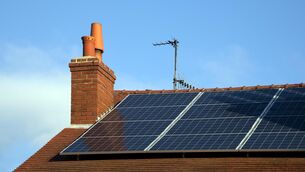
“Our first priority,” he said, is “renewables, both wind and solar and also anaerobic digestion. We’ve made a lot of progress on those fronts, solar in particular”.
He added: “I do believe we should have a serious examination of nuclear because we do need to work out costs [and] timelines.”
UK Labour has embraced nuclear energy in the hope it can generate electricity without carbon dioxide emissions, while also offering the chance for a large new export industry in SMRs. But, even with advancement in technologies, those reactors are not expected to be online until the middle of the next decade.
That is why the Irish Government's sudden interest in the technology is "hare-brained", a "distraction", and "far-fetched", according to opposition parties.
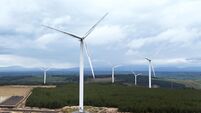
For the Social Democrats and Labour, the criticism is less about nuclear power's pros and cons and more about the fact that the Government — and its predecessor — has talked up offshore wind as Ireland's gamechanger in energy, without a single turbine as yet being built.
There is little belief on the opposition benches that, even if the 1999 ban were to be lifted, nuclear power would be delivered in anything like the next decade.
Mr O'Connor, for his part, is realistic about his proposal not being a short-term solution, saying that it is about future demand and demographic growth.
Labour leader Ivana Bacik on Wednesday called Mr O’Connor’s bill “a hare-brained notion”, pointing out that “in countries with a planning system that actually works, nuclear still takes years and years”.
She described Fianna Fáil as the “Don Quixote of Irish politics”, stating: “You’re frightened of windmills.”
Jennifer Whitmore of the Social Democrats said the idea of nuclear was simply to "distract" from a lack of progress in offshore wind.
“The Government’s sudden interest in nuclear energy is a distraction tactic to mask their huge failures in developing this country’s biggest natural resource — off-shore wind.
“As an island nation, we should be a world leader in off-shore wind and a net exporter of energy.
"Instead, we are laggards because this and previous governments have failed to tap into this massive potential.
“We now have zero off-shore wind being generated off the coast of Ireland, a worse position than 20 years ago, with no prospect of any coming on stream for at least five or six years."
Mr Martin pointed to the establishment of an Offshore Wind Energy Clearing House last year, something he said former Green Party leader Eamon Ryan was reluctant to do.
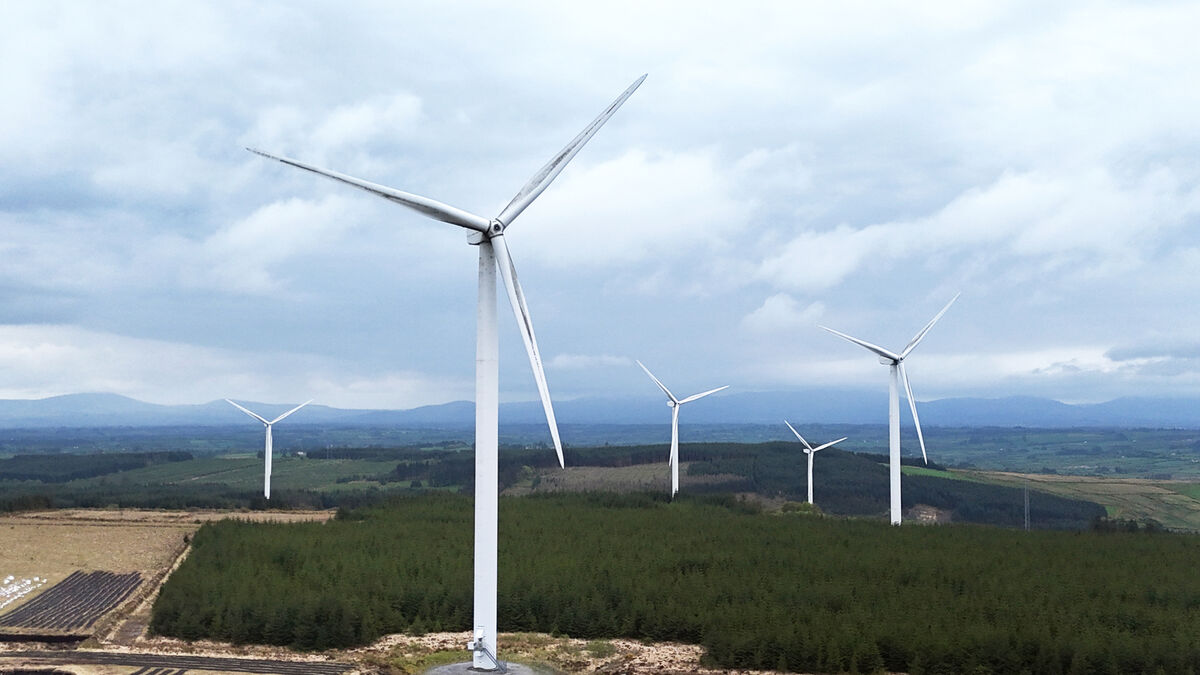
Mr Ryan, for his part, wrote in the last month that nuclear will "play a role" in Ireland's future, not least in helping the country avoid billions in EU fines for missing emissions targets.
Mr Martin said the clearing house would work with industry to see wind energy delivered.
"The one difference we have made here is to facilitate the engagement of industry to stop the them-and-us approach and work systemically at what the barriers are to successfully deploying offshore wind farms."
Aontú leader Peadar Tóibin pointed out one of the most political aspects of nuclear.
"I just don't think it's practical, in this political system," he said.
"I don't think any TD is the country is going to put their hand up for this. Wind power, solar farms, all these far less invasive technologies get major pushback. We can't build a Metro line, we can't finish a children's hospital. I think it's far-fetched, considering all this, to be talking about nuclear plants.
"We need to start with the easy wins. We need to be rolling out far more solar initiatives and renewables. Start there and prove you can do that."
In a country where windfarms are objected to by communities, is there anywhere that will readily accept nuclear reactors, safety advancements notwithstanding?
It is hard to see how government policy would translate to local communities being persuaded.
For now, Mr O'Connor's bill is set to be brought to Fianna Fáil TDs and senators in the coming days before a Dáil debate in the coming months.
At Cabinet level, ministers from both Fine Gael and Fianna Fáil have signalled a willingness to lift the ban, though energy minister Darragh O'Brien has that he wouldn't review the laws simply because there were other priorities.
The bill from Mr O'Connor, a Cork East TD, has opened a conversation which could, in the next decade and a half, see moves towards nuclear energy in Ireland.
But it will not be a short-term fix and it has many hurdles to overcome before then.


CONNECT WITH US TODAY



Be the first to know the latest news and updates