Cork commuter ferry dead in the water for now — but French connection will start in June
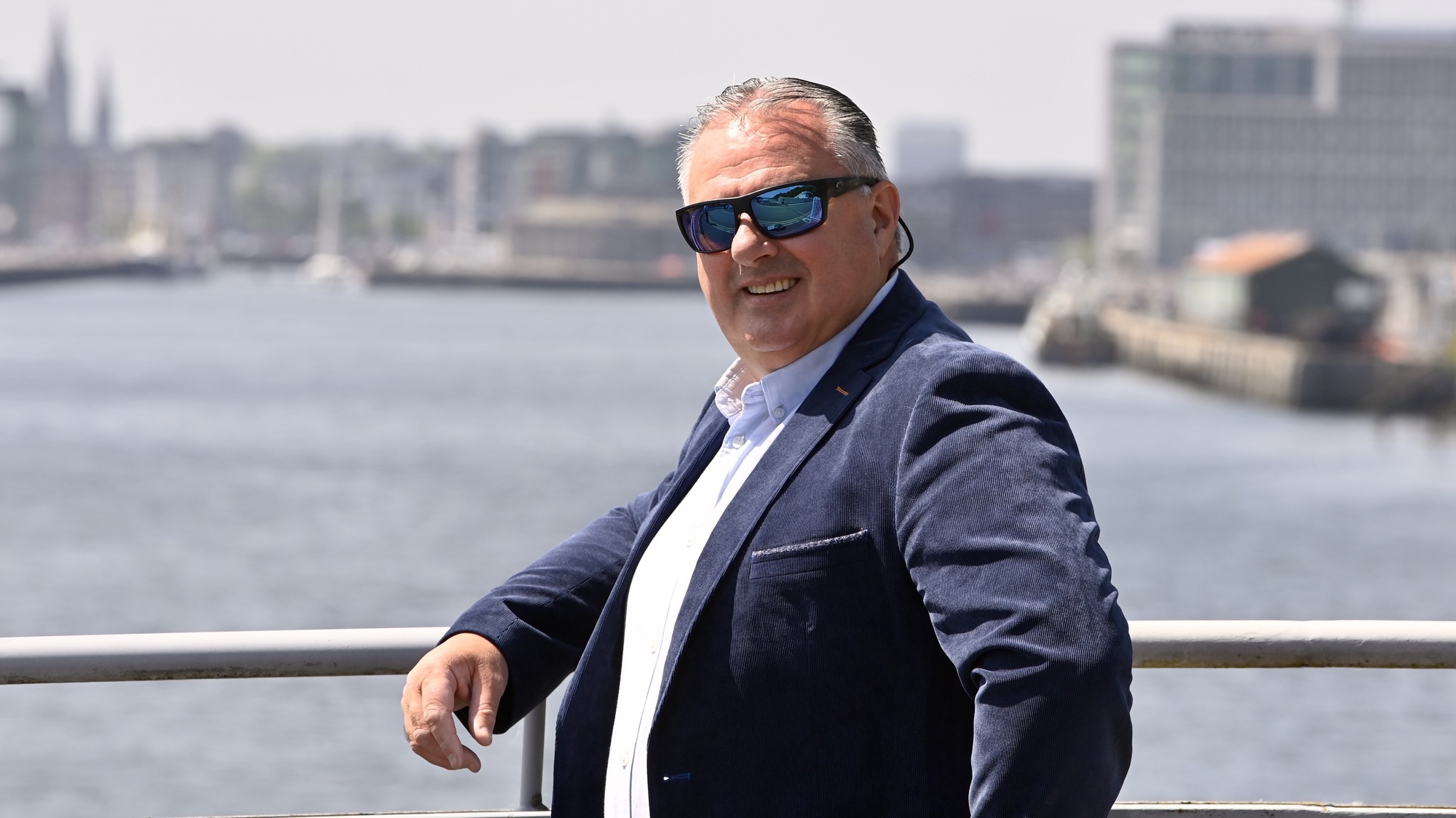
Aidan Coffey said the mooted Cork Harbour Link commuter service will not go ahead for now. However, the unrelated Hibernia Line Cork-Boulogne ferry is set to begin next month. Picture: Larry Cummins
An €80m zero-emissions passenger ferry service planned for Cork Harbour is — for now — dead in the water, the man who floated the idea one year ago has confirmed.
Aidan Coffey, the chief executive of Portus Greenway Ltd, trading as Harbour Link, said that the decision to halt the proposed all-electric ferry was caused by Cork City Council’s decision to commission a study into river usage in the city.

Read More

Mr Coffey also cited Cork City Council’s plan for the construction of three new bridges across the River Lee as a complicating factor.
Mr Coffey is CEO of the unrelated Hibernia Line ferry operator, which announced the launch of its its new service from Ringaskiddy to Boulogne-sur-Mer in France new service from Ringaskiddy to Boulogne-sur-Mer in France last week.

This time last year, Harbour Link said it was in the advanced stages of planning for the all-electric ferry project, which the company hoped would carry up to 1.5m passengers annually.
At the time, Mr Coffey said he hoped to submit planning applications within a year, with the first all-electric ferry envisaged to be carrying passengers by early to mid-2027.
Now, however, Mr Coffey confirmed that the proposed service — which would be Cork Harbour’s first passenger ferry service in more than 100 years — would not be happening any time soon.
Speaking to the , Mr Coffey said that he had decided he needed to devote his energy to the launch of Hibernia Line, but added he hoped to one day revisit the idea.
“Cork City Council … are doing a river usage study, although they’ve planned three bridges across the river, but now they’re doing a river usage study,” said Mr Coffey.
“We just have to take our time and let them do their due process and get the river usage study out of the way, and then of course we will look to maybe come back at that again.”
Mr Coffey conceded that he had not applied for a marine area consent (MAC) from the Marine Area Regulatory Authority (Mara), which would be the first step in the planning process.

Under the Maritime Area Planning Act 2021, a MAC granting the right to occupy a defined area of the sea and seabed for a designated purpose, must be secured before any planning application is made to An Coimisiún Pleanála or the coastal local authorities.
“Until we see the result of the river usage study, there’s just no point,” Mr Coffey said.
“One has precedent above the other, and even if we go to Mara now, they’ll just tell us wait for the river usage study.”
A council spokesperson said: “The publication of the [river usage study] does not affect the need for or prevent an MAC application through Mara.”
A spokesperson for Mara said that the authority does not discuss individual applications.
A collection of the latest business articles and business analysis from Cork.