Nuclear option: Could Ireland emulate Finland’s energy model?
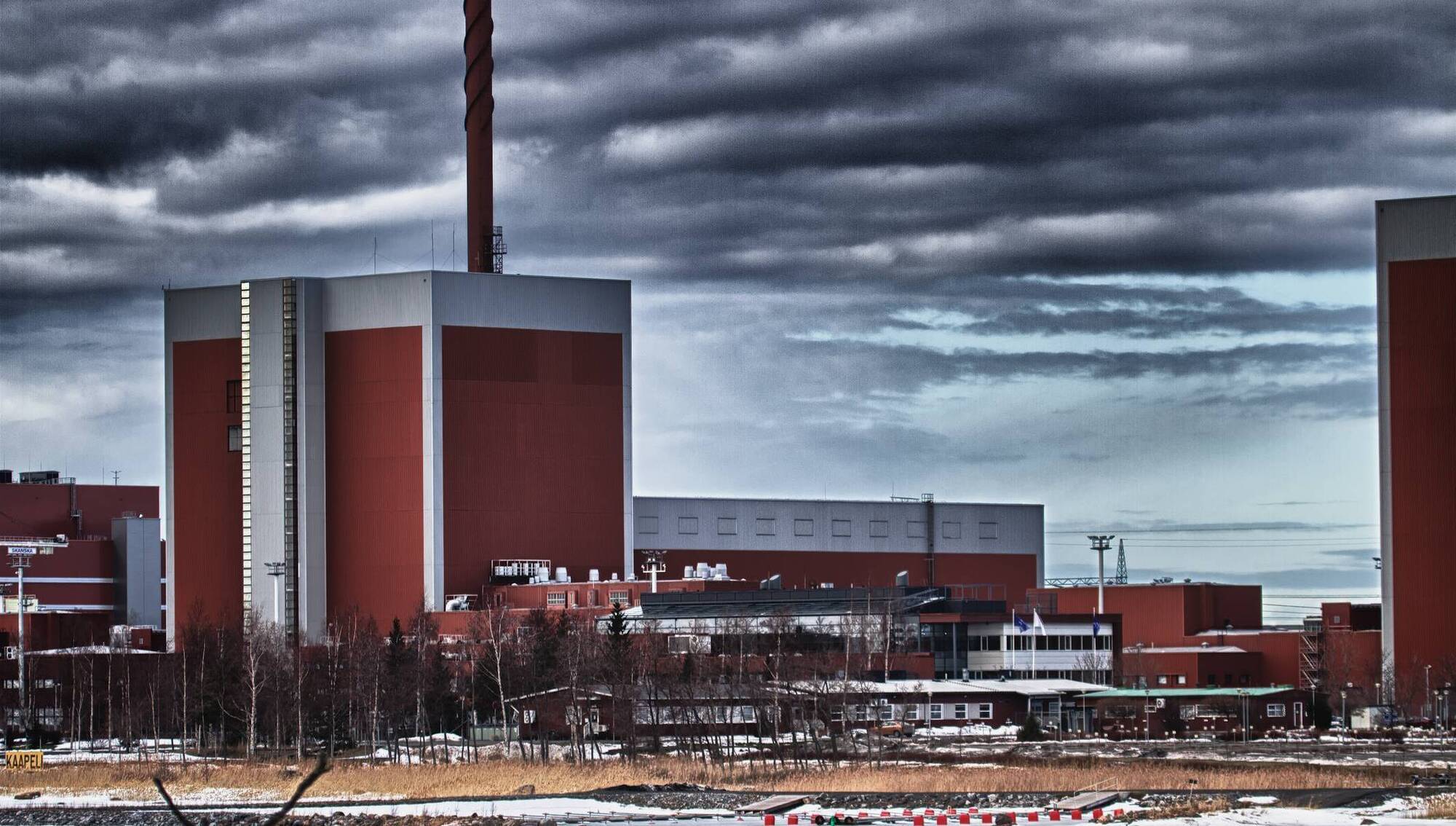
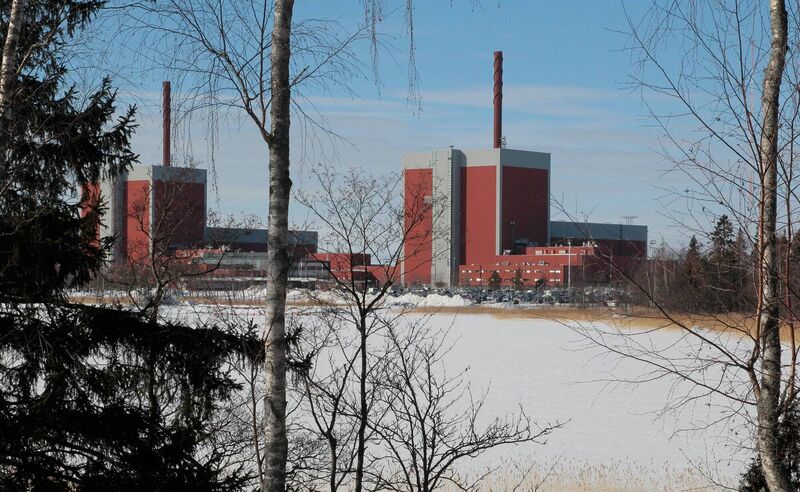
The nuclear power plant Olkiluoto in Finland. Curcially, their system is neither fully privatised nor fully state-owned. Its nuclear programme is underpinned by a model in which utilities and large electricity users co-invest in generation. File picture
When Taoiseach Micheál Martin said last week that Ireland should “seriously examine” the nuclear option, he reopened a question the State has largely avoided for decades: Could an island of 5m people realistically build a nuclear energy programme — and, if it did, what would that actually look like?
For years, the answer seemed obvious. Ireland had no nuclear tradition, abundant wind potential, and a political culture instinctively wary of atomic energy.
This article is part of the analysis (in print and online here) on proposals to overturn Ireland's ban on nuclear energy, and opposition to it
Nuclear power emerged most strongly in countries shaped by Cold War geopolitics, energy security concerns, and state-led industrial programmes rooted in military development. From these origins, nuclear energy became embedded in many global electricity systems.
Only more recently, under climate pressure and driven by resource availability, has Ireland shifted toward a renewables-led model. But the energy shocks of the past five years have changed the tone of the conversation.
Europe’s gas crisis after Russia’s invasion of Ukraine exposed the vulnerability of import-dependent countries.
Read More
Ireland’s dispersed settlement pattern means its electricity network is unusually extensive relative to its population, with long distribution lines serving relatively low demand densities — a structural feature that shapes how the system can evolve.
Data centres are driving a surge in electricity demand.
Offshore wind projects continue to move slowly through planning and grid bottlenecks. And, across Europe, countries once cool on nuclear are reconsidering it as a tool for energy security and decarbonisation.
Ireland’s electricity system is small and only loosely connected to neighbouring markets, sitting at the edge rather than the centre of Europe’s grid.
Finland is perhaps the most instructive European model. Nuclear supplies roughly a third of its electricity through reactors at Olkiluoto and Loviisa.
Crucially, Finland’s system is neither fully privatised nor fully state-owned.
Its nuclear programme is underpinned by the “Mankala” model, in which utilities and large electricity users co-invest in generation and receive power at cost, rather than relying on market-based returns.
Read More
That matters, because nuclear energy is not simply an engineering project. It is a financing project.
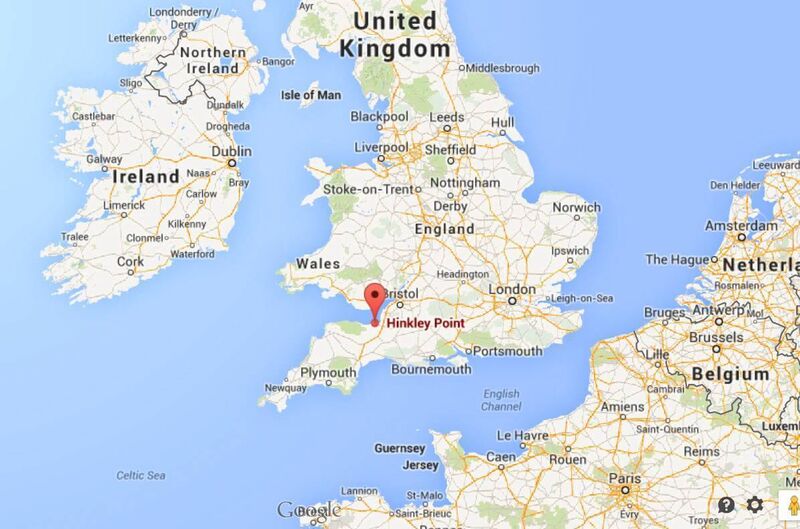
Modern nuclear plants are extraordinarily expensive to build. Britain’s Hinkley Point C is projected to cost tens of billions of euro.
Even small modular reactors — the much-hyped next generation of compact nuclear technology — remain commercially unproven at scale in Europe. That reality immediately raises the central Irish question: Who would pay?
Ireland’s system is structured very differently from Finland’s.
Rather than co-investing in generation, large users such as data centres and pharmaceutical firms typically secure power through long-term contracts.
In a liberalised market shaped by marginal pricing — where gas often sets the electricity price — electricity is bought, not built. That makes a Finnish-style, cost-sharing model for nuclear far harder to replicate.
It is difficult to imagine a fully privatised nuclear programme emerging in Ireland without substantial State guarantees. Private investors generally avoid assuming the enormous upfront risks of nuclear construction alone.
In practice, most successful nuclear programmes rely on governments underwriting costs, guaranteeing electricity prices, or directly owning stakes in projects.
The likely Irish model, if it ever emerged, would therefore resemble something semi-state in character — a partnership between the State, the ESB, private infrastructure funds, and possibly major industrial electricity users.
And that, in turn, would create a politically explosive debate over profit.
Would Irish taxpayers absorb construction risk while private investors reap long-term returns?
Would multinational tech companies — whose data centres are placing enormous strain on Ireland’s electricity system — become indirect beneficiaries of publicly backed nuclear investment?
While EU rules would not prevent State support, Ireland’s reliance on multinational energy users could invite scrutiny over whether public investment is indirectly benefiting private firms.
These questions explain why nuclear debates are never really about reactors alone: They are debates about the role of the State itself.
Supporters argue that Ireland cannot afford ideological resistance to nuclear if it is serious about climate targets and long-term energy independence.
Wind energy, while abundant, is intermittent. Large-scale storage technology remains underdeveloped. Interconnectors between Ireland and Britain and continental Europe improve resilience but also expose Ireland to external market shocks.
Nuclear advocates increasingly frame atomic energy not as a replacement for renewables, but as a stable complement to them.
Critics respond that Ireland would be entering the game decades late.
Then there is the issue that still dominates public perception more than any economic model: Safety.
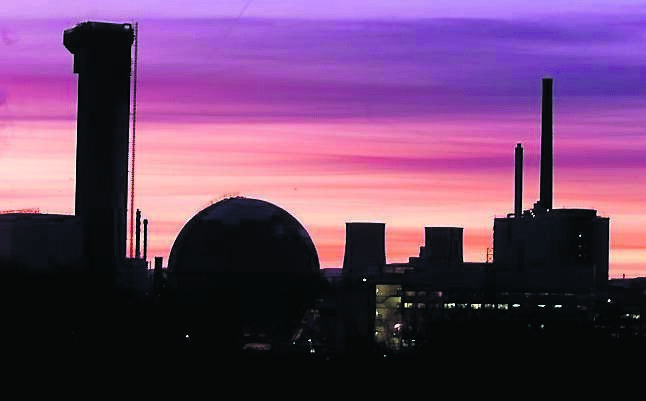
For many Irish people, the word “nuclear” still conjures memories of the Chornobyl disaster or Fukushima Daiichi nuclear disaster. Ireland’s anti-nuclear politics were shaped as much by fear of Britain’s Sellafield plant as by domestic energy policy itself.
Modern nuclear advocates insist today’s technology bears little resemblance to those disasters. Contemporary European reactors are designed with multiple passive safety systems and operate under far stricter international oversight.
In statistical terms, many energy analysts argue that nuclear has caused fewer deaths per unit of energy produced than fossil fuels. But, politically, nuclear safety is never judged statistically.
A single accident — however unlikely — carries consequences so psychologically and environmentally profound that public resistance remains powerful, especially in smaller countries with dense political cultures such as Ireland.
There is also a deeper philosophical divide underneath the debate. Ireland’s renewables strategy has long been decentralised and geographically diffuse — offshore wind farms, interconnectors, solar projects, and distributed generation.
Nuclear energy represents the opposite instinct — a highly-centralised system dependent on a small number of gigantic pieces of infrastructure requiring immense security, regulation, and capital concentration.
The question is whether Ireland’s largest electricity users would be willing to invest in power generation in the way Finnish industry has. So far, the evidence suggests otherwise.
While data centre operators are active in securing renewable energy through long-term contracts, they have shown little appetite for taking on the capital risk and long-term commitments associated with building power plants themselves.
Irish data centres hedge electricity prices — they don’t build power stations. But that seems different in the US.
That tension mirrors a wider European divide. Denmark rejected nuclear power in the 1980s and instead became a renewable energy pioneer, particularly in wind, but their system is well interconnected.
Finland embraced both renewables and nuclear.
Germany shut down its reactors entirely after Fukushima, while France continues to derive most of its electricity from atomic power, at significant economic costs.
Ireland now finds itself awkwardly between those models. Its vast wind potential suggests it could eventually become a renewable superpower.
Yet its electricity demand is rising so rapidly that policymakers increasingly worry renewables alone may not deliver stability quickly enough.
For now, the political reality is that Ireland remains a long distance from building any reactor.
The legal prohibition on nuclear fission for electricity generation would first need to be revisited. A national regulator would need to be massively expanded. Grid infrastructure would require redesign. Public consent would have to be won.
And perhaps most importantly, politicians would need to persuade voters that nuclear power is not a distraction from the renewable transition but part of it.
That may prove the hardest task of all.
But, for decades, Ireland’s answer was simple: Leave nuclear power to larger countries. For the first time in a generation, that assumption no longer looks guaranteed.


CONNECT WITH US TODAY



Be the first to know the latest news and updates