Nuclear option: Adi Roche says Ireland should commit to renewables rather than nukes
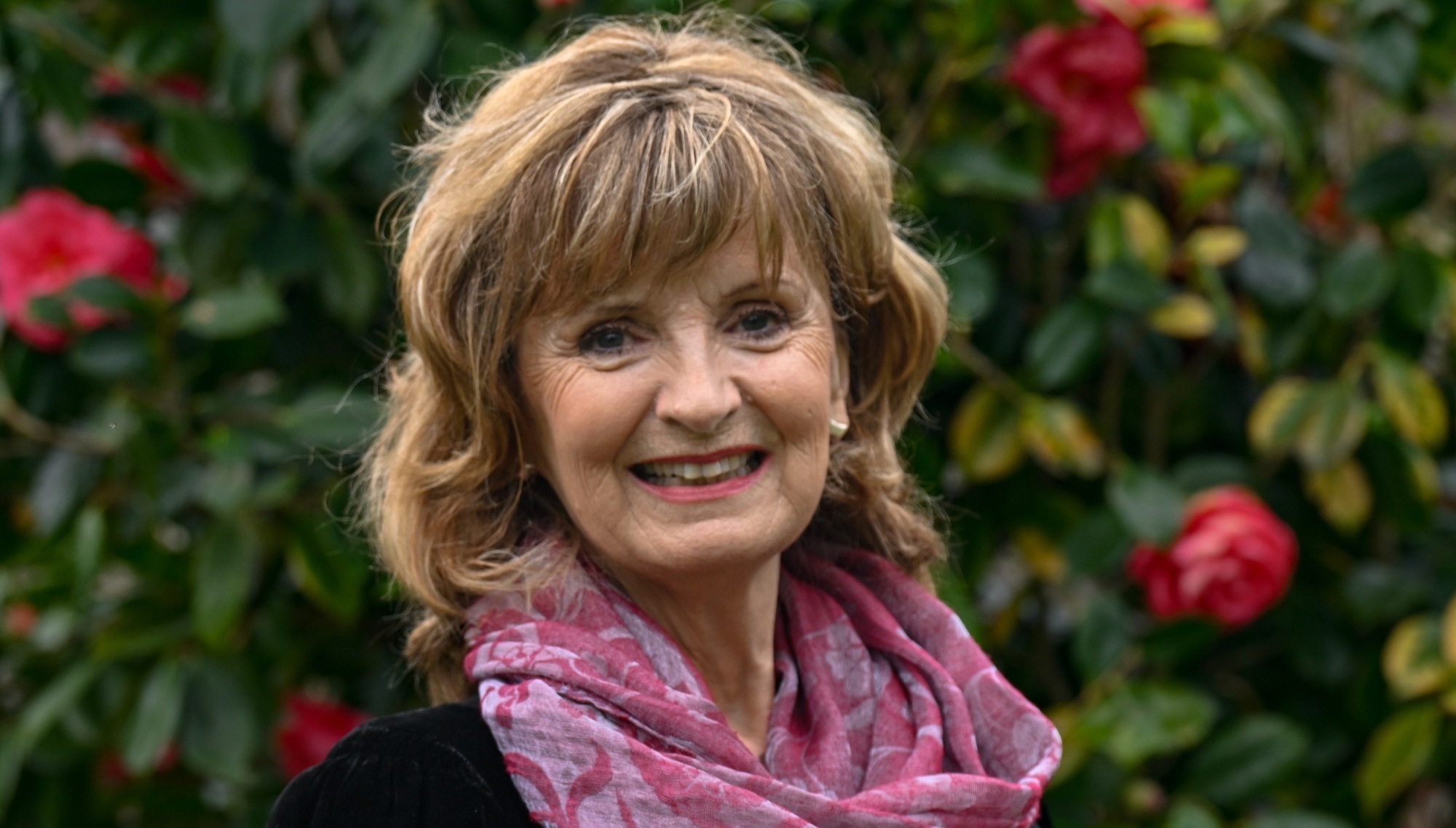
Adi Roche has been working with, and advocating for, the victims of the 1986 Chornobyl nuclear disaster for decades. Picture: Chani Anderson
I am a firm believer in the philosophy that “we do not own this Earth … we borrow it from our children and our children’s children” and that nothing is more important than the protection of our environment.
I constantly remind myself that this Earth is our common and only home, a beautiful grain of life spinning in the depths of the universe. But now, in a nuclear age, a time of grave mortal danger, with our very existence on the cusp, our planet has become so fragile in the hands of man.

This planet is our children’s inheritance, and we are only its custodians.
This article is part of the analysis (in print and online, here) on proposals to overturn Ireland's ban on nuclear energy, and opposition to it
Ireland had long and healthy debates on the subject of nuclear power in the late ’70s and ’80s, and the people concluded that the inherent and unique dangers that come with it were not worth the risk for future generations.
Those “future generations” are now young adults and have the privilege of inheriting a nuclear-free Ireland.
So, the discussion on nuclear power, once more, needs to focus on those that have yet to be born and what kind of world we want them to inherit.
In this 40th anniversary year of the greatest environmental catastrophe in the history of mankind, I am reminded that Chornobyl has become a symbol — a potent and enduring metaphor for catastrophe.
It is a cautionary tale we need to take heed of, making sure it never happens again. If we do not learn from the past, we will not be able to understand the present or make proper decisions for our future.
Chornobyl and Fukushima are stark reminders of what can go wrong, with consequences that endure for generations exposing the vulnerability of humanity to sudden, profound change — whether from nature or from human hands.
None of the original arguments questioning nuclear power have changed. If anything, the world we now inhabit has deepened and sharpened them.
When Russian troops invaded Ukraine through the “Chornobyl exclusion zone”, the most radioactive place on earth, the unthinkable became reality: A nuclear facility was transformed into an instrument of war with catastrophic potential. The invasion on February 24, 2024, marked a decisive turning point not only in geopolitics, but in how we must understand the true risks of nuclear energy.
This cavalier act made a nuclear threat without making a nuclear threat, and for the first time in the history of the atomic age, a nuclear power plant was weaponised not by firing missiles, but by occupying and controlling it.
The subsequent targeting and takeover of Zaporizhzhia demonstrated that, in modern warfare, nuclear facilities themselves can function as potential radiological weapons — “dirty bombs” whose consequences could be catastrophic without a single warhead being deployed.

We must re-examine how we look at energy through this deeply unsettling prism. The risks that once seemed theoretical are no longer abstract. They are immediate, real, and global.
Against this backdrop, Ireland must reject any drift towards nuclear power and instead commit fully to renewable, sustainable energy solutions.
Strong political will and sustained investment in research and development for renewable, clean energy, championed by pioneers such as Professor Brian Ó Gallachóir at UCC, represent the greatest gift we can offer to our world and to future generations.
Nuclear power depends on a highly radioactive finite resource, uranium, which, even when unmined, poses huge health damage risk. Studies suggest that, at current consumption rates, uranium supplies could be depleted within two decades. To invest heavily in a system reliant on a dwindling resource is short-sighted.
At a time when Ireland is striving to build a resilient and sustainable energy future, replacing one finite resource with another is a false solution.
True sustainability lies in harnessing what is abundant and enduring: Wind, solar, tidal, and other renewable energies that are native to our island and free from geopolitical volatility.
Perhaps the most enduring indictment of nuclear power is one that has never been solved — the safe disposal of radioactive waste, which becomes the raw material for nuclear weapons. Decades into the nuclear age, there is still no permanent, fail-safe method of managing this hazardous material.

There are hundreds of extremely hazardous nuclear waste silos dotted around the world.
Nuclear waste remains radioactive for centuries and the risk of contamination, whether through leakage, human error, or environmental change, cannot be eliminated. The possibility that radioactive material could seep into water supplies or ecosystems is a burden we would impose not only on ourselves, but on countless future generations. What an unbearable weight of destruction we are placing on the shoulders of those yet to be born.
Ireland stands at an important crossroads. We have the opportunity and the responsibility to choose a different path. Rather than investing in a technology fraught with risk and uncertainty, we can lead by example in the transition to renewable energy totally powered by nature.
All we need is political vision, courage, and foresight for energy independence on behalf of future generations, so we are no longer reliant on the politics on the international stage.
The existential threats we face today are all created by human decisions. That means the solutions are also in our hands. Through co-operation, diplomacy, and moral leadership, it is still possible to reverse our current trajectory towards catastrophe.
Our windswept coasts, powerful tides, and advancing solar capacity offer us a sustainable, secure, and peaceful alternative.
By embracing renewables, we not only address the climate crisis, but also safeguard our future from the escalating risks of nuclear power in an unstable world.
Our children are our nation’s treasure and true wealth. They are our hope for the future. In their name, let us pledge to nurture and protect that future investment in the knowledge that nothing in life is more precious than life itself. The best way to protect that investment is by leaving the world intact for them.

The technology of the future is already here.
Clean wind and solar energy, coupled with updated smart grids, expanded storage capacity, hydrogen technology, and demand-response strategies can work. Our energy systems of the future will look like a patchwork quilt, with diverse energy sources kicking in at different times during the day, and with the mix differing from one day to the next.
Given the risk of terrorism, waste storage, and finite “raw” material such as uranium, nuclear power should be bypassed by alternatives.
Instead of allowing ourselves to be held hostage by existential threats, this is our moment as a nation to speak and demand an end to the war driving the energy crisis.

Nuclear power’s track record is 50 years of failure. The industry still has no solutions to its fundamental problems. For the people and the planet, it remains a shockingly poor investment choice.
We can do better than trade one disaster for another.
The age of renewables has begun, and we owe it to future generations to not turn away from that truth.
I think in our willingness to protect the Earth, the reward will be great, for our children will someday inherit the Earth in all its mystery and wonder. And in their name, let it be so.
- Adi Roche is voluntary CEO of Chernobyl Children International
Frank Connolly knows only too well that the last State-run bid to open a nuclear power plant here ended in failure.
As someone who played a leading role in the opposition to it, the former head of communications at Siptu believes any new attempt to establish nuclear plants here will fail again.

“Given Ireland’s younger generations’ very vocal support for Palestine and their willingness to challenge official narratives, I cannot see widespread support for this,” Mr Connolly said.
“People who defeated moves to establish nuclear power in Ireland in the 1970s are still very much alive and more than able and willing to defeat this again. They were the 20- and 30-somethings of their day and today’s 20- and 30-somethings will do the same.
“Trying to deal with the energy crisis we are in now is one thing, but nuclear isn’t the way out of it, and it wasn’t when we had the 1970s energy crisis.
“The whole issue around what to do with nuclear waste was an issue back then, too.”
Mr Connolly referred to Fianna Fáil TD James O’Connor’s proposed bill to clear the way for nuclear power as a realistic solution to the increasing cost of energy.
The Cork East TD said Ireland has the most expensive energy prices in the EU, while Finland, with a similar population, has the cheapest, because 35%-40% of its supply comes from nuclear.
However, Mr Connolly criticised the lack of thought that has been put into the proposal.
“Given the inability — in an interview he gave RTÉ last Wednesday morning — of the TD behind the bill to lift the ban on nuclear plants to explain exactly what will happen to our nuclear waste, it is obvious the waste issue is still unresolved,” he said.
The touring exhibition, , currently in Limerick’s Ormston House, is a commemoration of the various music festivals in Wexford organised by the anti-nuclear movement between 1978 and 1981.
Plans to locate a nuclear plant at what is now the site of a windfarm at the southernmost point of the Irish Sea at Carnsore Point, may have originated in the late 1960s, but they were revived after the 1973 fuel crisis.
That was sparked by oil embargoes related to conflicts between Arab oil-producing states and Israel. And, in an attempt to reduce Ireland’s dependency on oil, Irish governments at the time wanted to establish an ESB-run nuclear power station at Carnsore Point.
But the protests, rallies, and festivals held in opposition ultimately helped scupper those plans.
While the protests played a large part in the downfall of the plans by governments of the time, the issues were amplified by the partial nuclear meltdown of a reactor in Pennsylvania’s Three Mile Island nuclear generating station in the US.

The March 1979 accident, which released radioactive gases into the environment, remains the worst accident in US commercial nuclear power plant history.
The Irish protests also came amid growing fears around leaking radioactivity from the UK’s massive Windscale nuclear power plant — later renamed Sellafield due to its notoriety — just 160km from Ireland’s east coast.
“Opposition was mobilised by very different groups,” said Mr Connolly, whose investigations into police and political corruption led to the establishment of the Flood, Mahon, and Morris tribunals.
“Friends of the Earth were one of the first groups involved, and then various political activists and environmental groups like Greenpeace met over 1978.
“In early ’78, we decided a good thing would be to occupy the site the ESB had earmarked for a nuclear plant. People like Christy Moore got involved early on, and he mobilised — with other musicians — a series of fundraisers in Dublin and other parts of the country.

“We had anti-nuclear groups in Dublin, Kildare, Belfast, Galway, and Cork.
"Some wanted a public inquiry, and others wanted a music festival as well as the continued occupation of the ESB site.”
The emphasis soon shifted to organising festivals, which ended up being attended by tens of thousands of people.
The first of a number of concerts was the three-day event held at Carnsore Point in August 1978.
As well as a host of Irish musicians, including Chris de Burgh, Christy Moore, and the late Moya Brennan, local landowners also helped out with parking and camping sites.
“Even local gardaí helped us to police the site, ” said Mr Connolly, who worked for RTÉ at the time.
“It was unbelievably civilised and democratic. We did the same four years in a row until the government said they were no longer going to build a nuclear power station.”