Tadgh McNally: It's no Green wave but the party hasn't suffered the feared wipeout
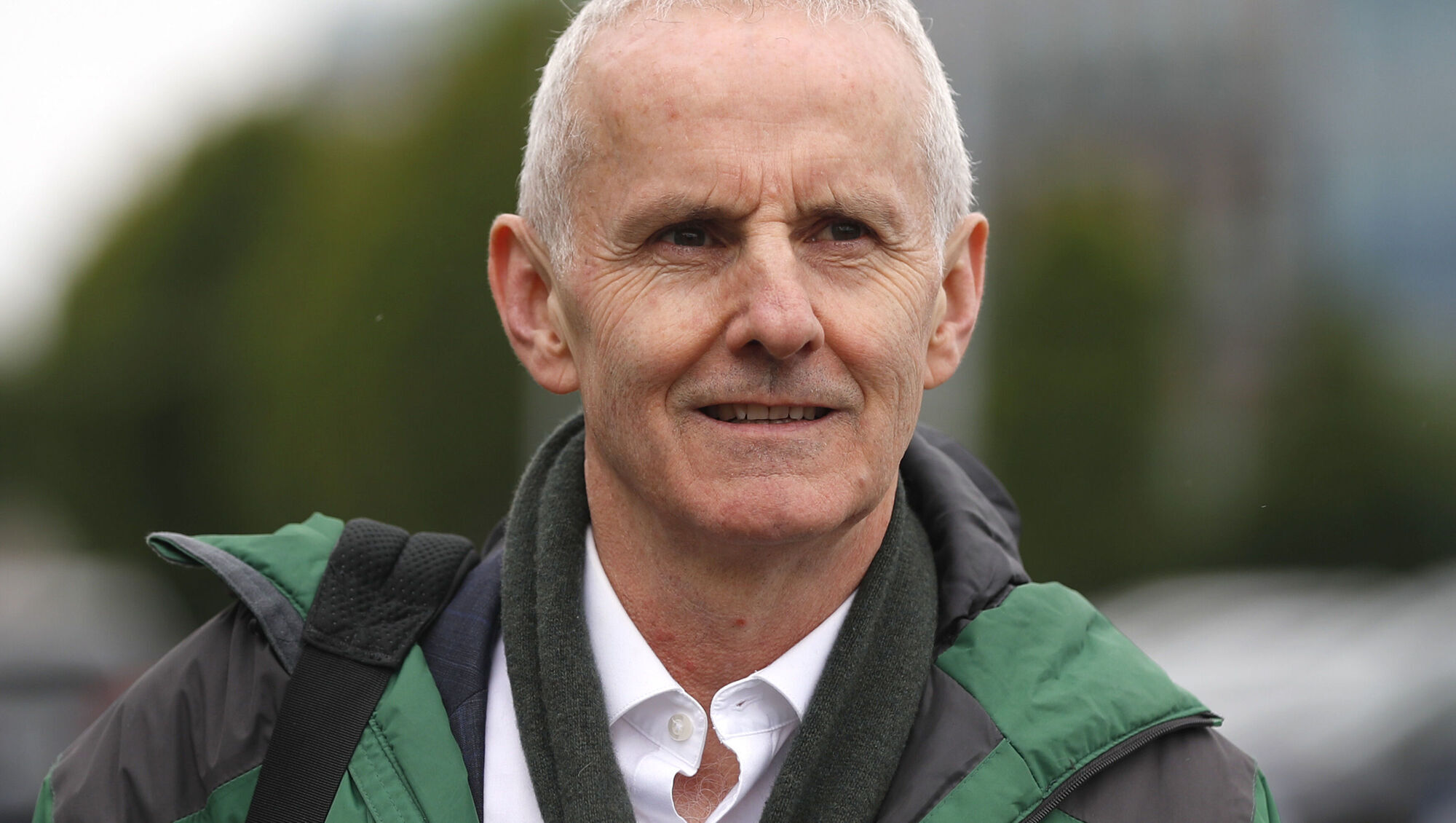
Green Party European election candidate Ciarán Cuffe topped the poll in Dublin in 2019 but this time round faces a battle with Aodhán Ó Ríordáin for the last seat. Damien Storan/PA
“It’s clearly not a green wave, but it’s not a wipeout either.” That is how Dublin MEP candidate Ciarán Cuffe described his party’s performance in the local elections, as it became clear that it was not a catastrophic day for the Greens as had previously been predicted.
Green Party members were in good form at the RDS, as some of their prominent councillors topped the poll or were elected on a first count.
While some at the count centre flagged that Hazel Chu’s own vote had dropped significantly from her 2019 result, the incumbent councillor still received 16.9% of first preferences, and was elected on the first count.
Party leader Eamon Ryan will be pleased that the councillors in local electoral areas within his own Dublin Bay South constituency have polled well, likely dispelling any concerns that the Green Party leader could have lost his own seat at a general election.
However, despite throwing down the gauntlet to the Healy-Raes, Mr Ryan will be disappointed that the Greens did not get over the line in Dingle, despite an increase in their vote. This is despite Mr Ryan’s clarion call in April that the “Kingdom is going green”.
The party fared best in Dublin, but results outside the city centre have been more mixed. Party activists flagged Fingal as somewhere losses will be felt heavily, with the party’s vote falling by 8.1% compared to the 2019 local election.
Waterford was also flagged as a place the party will lose out, five out of the six candidates out of the running entirely, and the remaining Green candidate’s chances said to be on a knife edge.
As counting continues, Green activists hope the party can keep up to 25 seats, almost half of the 49 it won in 2019. But as it is a junior party in government, Eamon Ryan can’t be too disappointed given the party’s previous brush with a wipeout back in 2011.
However, in the European elections, the picture is more gloomy. The party hit a high water mark in 2019, when two Green MEPs were elected in Dublin and Ireland South. In these two constituencies, it is all about hanging on after each and every count.
Mr Cuffe topped the poll in Dublin in 2019, but will not do so this time around. He is facing a battle for the last seat, in a shootout with Labour’s Aodhán Ó Ríordáin and coming under pressure from Independent Ireland’s Niall Boylan. He admitted that staying ahead of Mr Ó Ríordáin could improve his chances, but that the presence of Mr Boylan is the wildcard of the whole race.
“For the wildebeest, you just have to stay ahead of the lion and be the one that jumps first rather than last,” he said.
In Ireland South, Grace O’Sullivan picked up the fourth seat in a competitive constituency last time around. It’ll be no less competitive this time around, with the former Greenpeace activist vying with four other candidates for the final seat.
But in Midlands-North-West, the party admitted very early into the count that its candidate — Senator Pauline O’Reilly — was out of the running. It won’t come as much of a surprise, as the Greens were always going to struggle in a constituency where large swathes of its voters are from more rural areas.
She failed to make the same waves as Saoirse McHugh did in 2019, who skyrocketed to public prominence through her strong criticism of Peter Casey during a series of debates.
As counts continue, attention will inevitably turn to the upcoming general election and how the party might perform. It might not be wipeout for the Greens this time. The campaign to keep as many of their Dáil seats is well and truly on.