Tánaiste's trip shows Government has no plans to boycott US over its stance on Gaza
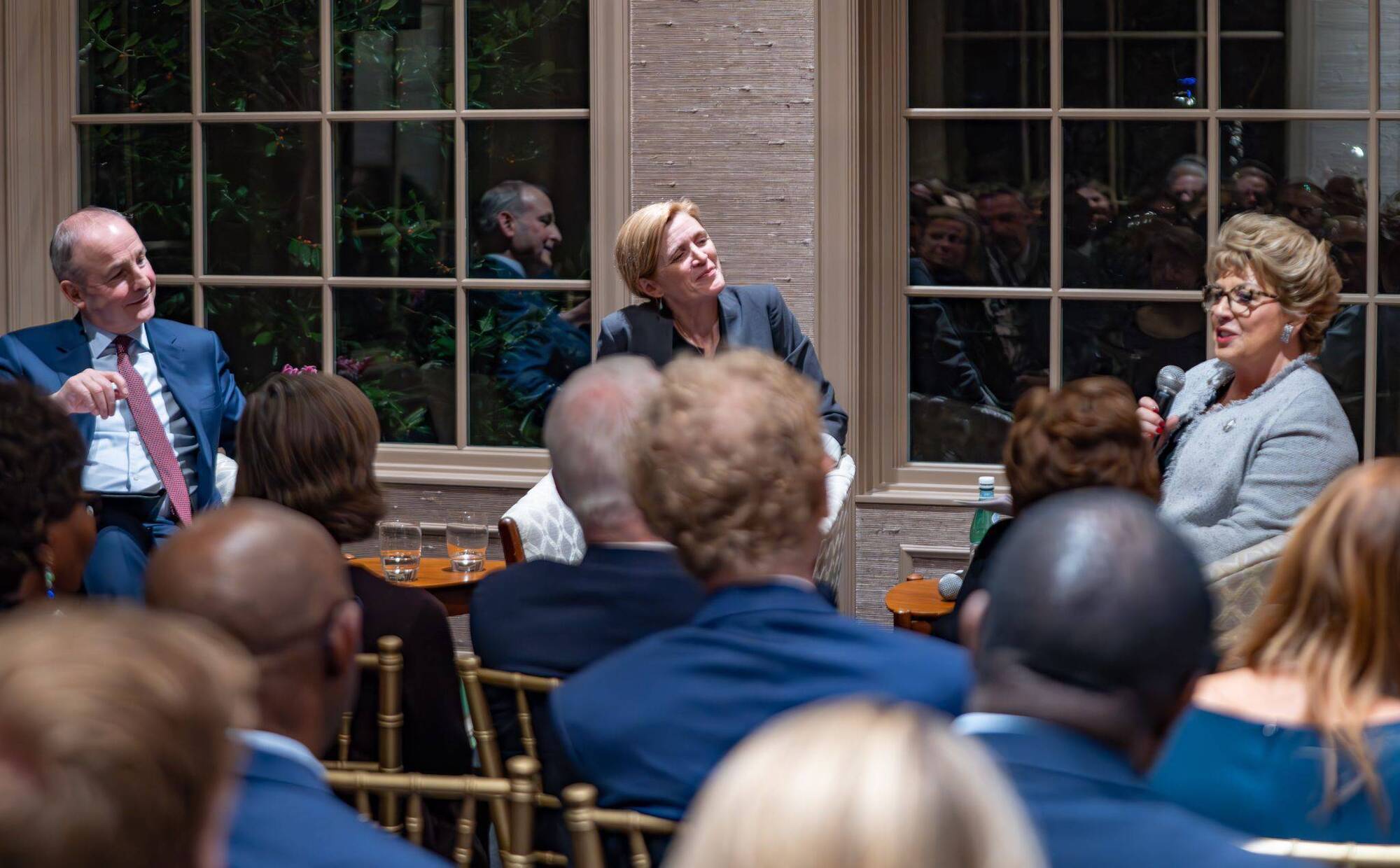
Tánaiste Micheál Martin with Samantha Power, administrator of USAid, and Irish ambassador Geraldine Byrne Nason, at a talk in the Irish Ambassador to the US's residence in Washington DC. Picture: USAid
On the face of it, the trip was to mark 100 years of Ireland-United States diplomatic relations.
"I look forward to returning to the United States this week to discuss ways of further strengthening our excellent bilateral relations on the 100th anniversary of diplomatic relations between Ireland and the United States this year,” said Tánaiste Micheál Martin, in a press release issued to the media prior to travelling for a four-day visit of Washington DC and Chicago.
But in the decade of centenaries, marking the War of Independence and the Civil War, this wasn’t an anniversary that was particularly high on the agenda.
A month out from the traditional St Patrick’s Day exodus of Government ministers, where doors are opened to the Irish State in all four corners of the globe, this week’s visit was an exercise in Ireland’s soft power.
A trial run for the Irish Government to put forth its priorities in the much-cliched corridors of power in America during a time of great crisis, particularly in the Middle East.
While Taoiseach Leo Varadkar will have the customary White House reception with US President Joe Biden in March, the Tánaiste was this week invited to meet with some of the most senior US politicians on both sides of the aisle.
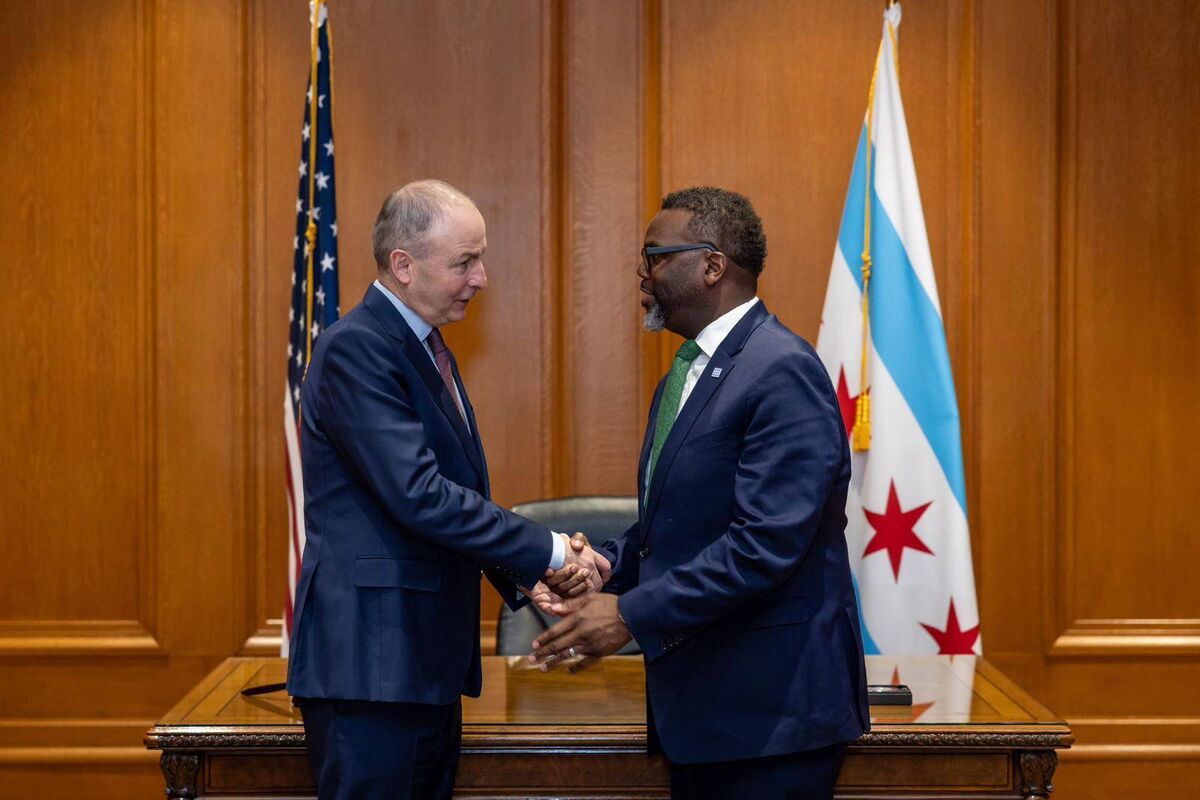
Sources stressed that both in Washington DC and Chicago, these doors wouldn’t be open for every senior European politician coming over.
The three topics atop the agenda were Northern Ireland, Ukraine and Israel-Palestine. Whether or not Ireland can really exert influence over these topics in the US is another matter, but it is nevertheless seen as a key opportunity to do that.
He stated clear aims on each. On the first, it was good news with the restoration of the Northern Irish Assembly, so that was a welcome update he could pass on, particularly to those members of Congress with a good knowledge of Ireland.
On Ukraine, it was also good timing for Ireland. The EU had finally agreed on a funding package to support Ukraine but the interminable wrangling between Biden’s Democrats and Trump’s Republicans has meant a key funding bill hadn’t yet passed Congress.
“What was made clear to me is that there’s a majority of people on both sides of the aisle that favours aid to Ukraine,” he said. “How that manifests itself in whatever particular legislative package remains to be seen.”
On Gaza, it was far more complicated. In Ireland, the US stance has been roundly condemned in many quarters as it initially did not back calls for a ceasefire. During his discussions, it was stressed to the Tánaiste that many of the politicians on both sides backed a ceasefire, even if they couldn’t express that publicly given the political sensitivities in the US.
An important point he frequently stressed was his support of the restoration of UNWRA — the UN aid agency based in Gaza. Countries including the US and UK have suspended funding after claims by Israel that members of UNWRA were complicit in the Hamas October 7 attacks.
“We've been very forthright in our views that UNWRA is essential in terms of facilitating aid at scale, and to make sure that it can happen at the level and the scale that will make a difference,” he said. “Because everybody, nobody disagrees, that the situation is dire, and is catastrophic.”
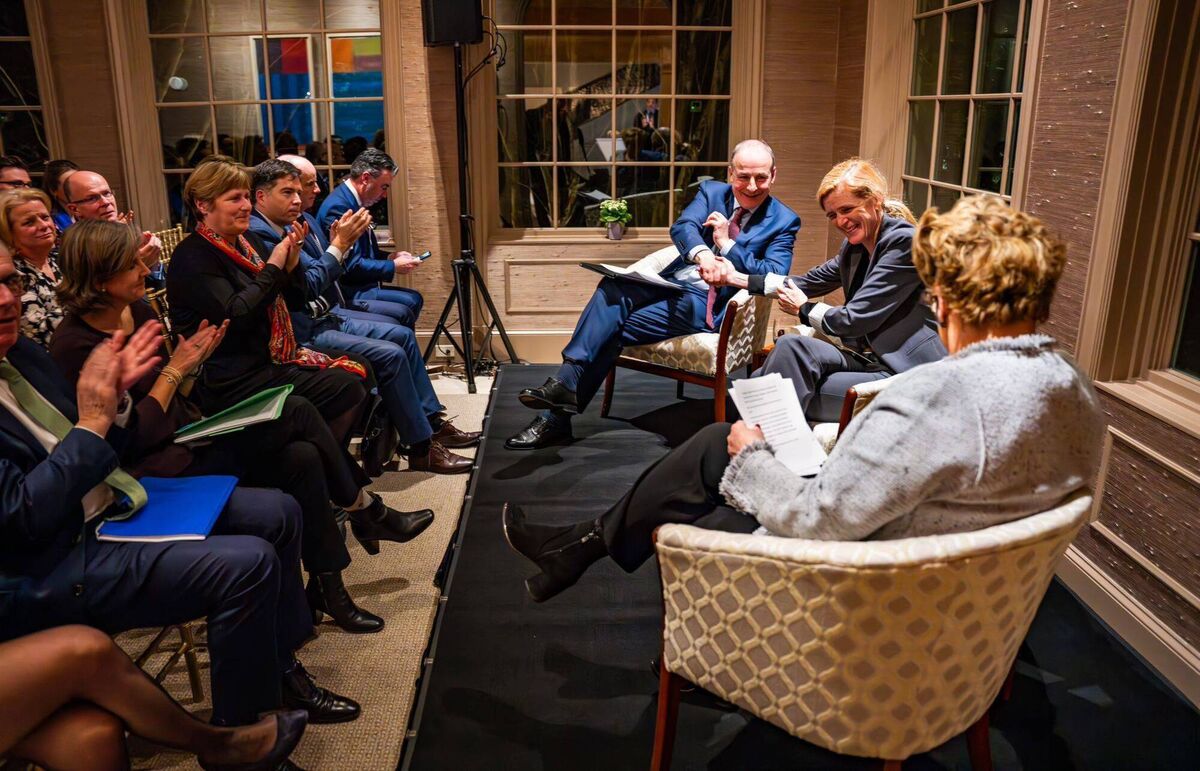
Dubbed a fireside chat with USAid’s administrator Samantha Power in the plush residence of the Irish Ambassador to the US on Tuesday, the event to announce a new aid partnership between Ireland and the USA to support food security in Zambia inevitably gave way to the situation in Gaza.
Mr Martin was clear again of his desire for funding to be restored to UNWRA, and it came at an interesting time given Ms Power was heckled at a recent event and urged to resign over the US policy on Gaza.
“You wrote a book on genocide and you’re still working for the administration: You should resign and speak out,” the quoted a staffer as saying at the event.
Mr Martin later said Ireland had been “very consistent as a country” in its approach to these conflicts as he again reiterated ceasefire calls.
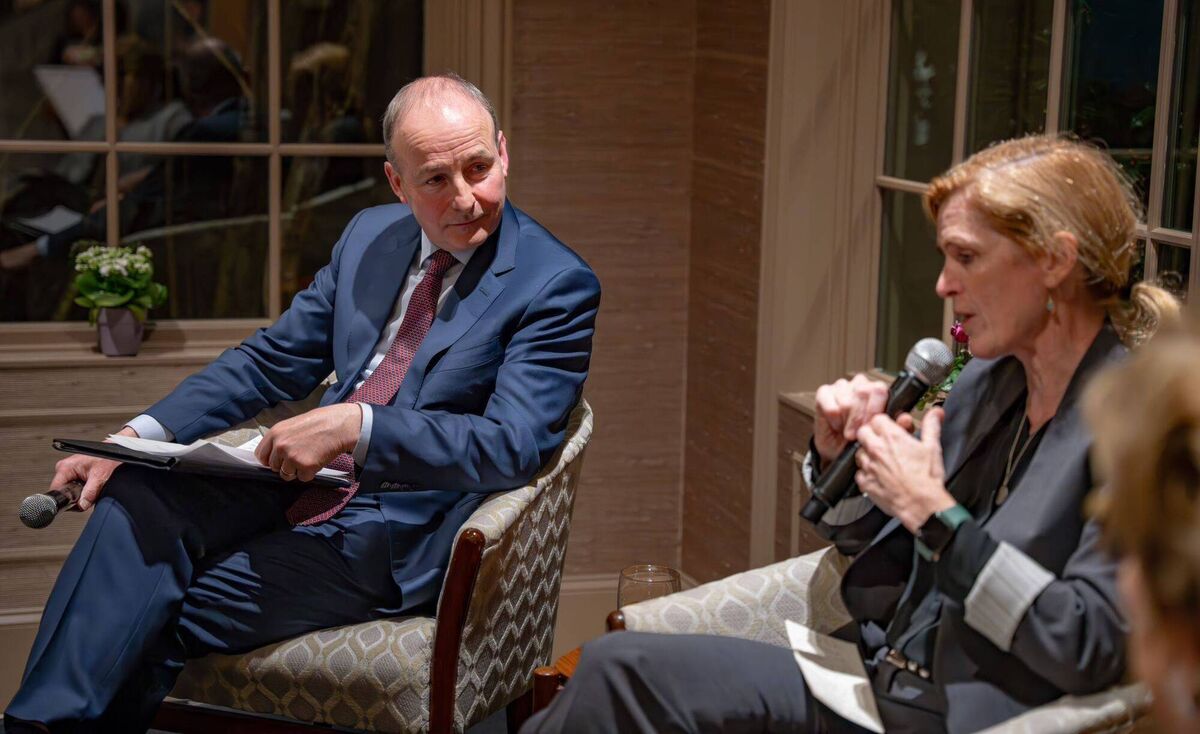
Even on the topic of the Zambia announcement, it’s certainly not a vote-getter back home, but it was also a sign of Ireland’s strategy again to secure that soft power. The US had proposed a further $1bn funding to address the global food crisis in the wake of the war in Ukraine and Ireland had come forth with €50m in funding to support the endeavour.
This new initiative in Zambia would be another way for Ireland to work with an ally to work on much-needed supports in the region.
Summing up the situation across many years of the world, the Tánaiste closed on a rather bleak note.
"We’re in a bad, negative spiral,” he said. “I’d really worry about where the world is heading. Lots of malign actors about the place. It’s sapping our energies, goals and ideals.”
He added that much work must be done to turn the tide on these issues.
Later, in Chicago, Mr Martin stayed in the Drake Hotel. It was this same hotel that Ireland’s first Taoiseach WT Cosgrave stayed in during his visit to the US in 1928.
“His message was repeated at each stop: Support Ireland. Visit Ireland. Buy Irish,” an account of the 1928 visit on the DFA website says.
During his 24 hours in the Windy City, the Tánaiste had a very similar message. And a message that was going both ways. In the Irish-American Heritage Centre, a remarkable building that was formerly a large elementary school, he saw a ballroom that Government funding had helped to build.
He also announced the opening of an “Ireland House” — an initiative that basically puts all the State agencies under one roof in a city — in Chicago, a move hailed by its mayor as a “testament to the enduring bond between Chicago and Ireland”.
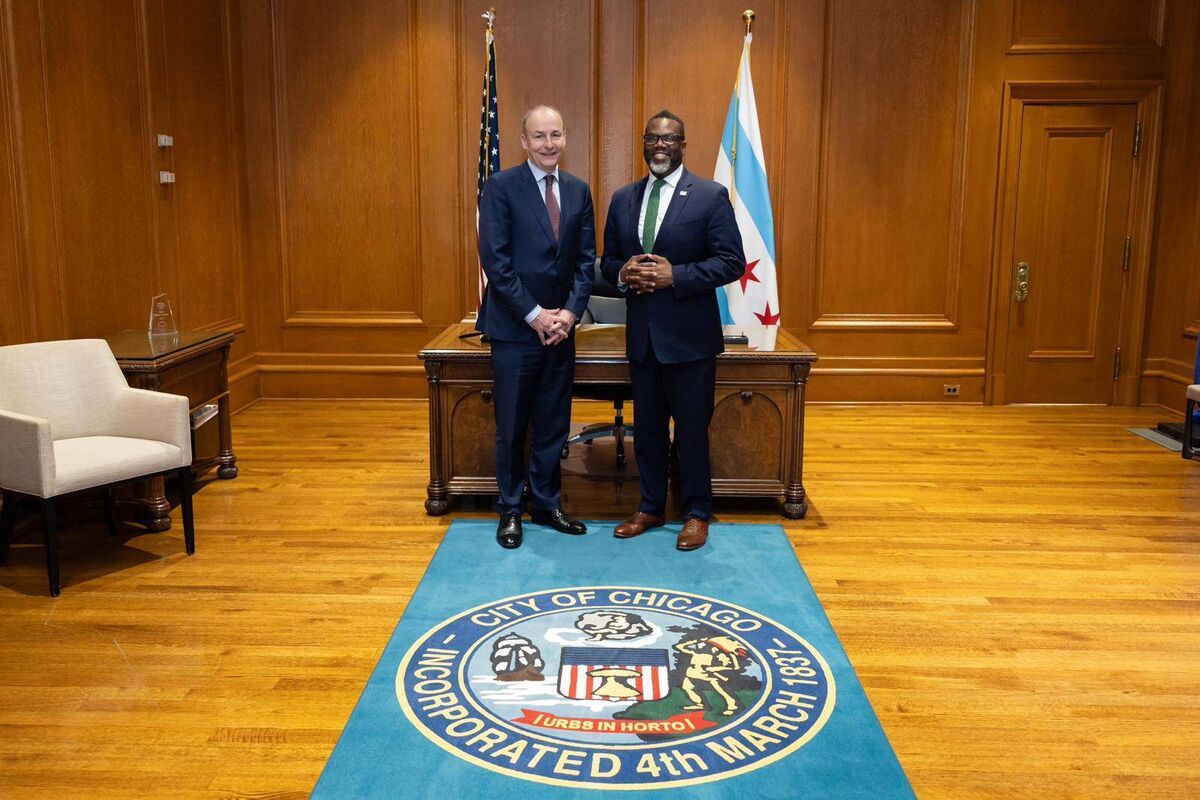
Mr Martin talked about the number of jobs created by Illinois-based companies in Ireland and vice versa.
At home, a focus of the forthcoming trip from the Taoiseach to Washington DC has been whether or not he should boycott the visit in light of the American stance on Israel and Gaza. It’s clear that among the Irish Government and its diplomats, such a boycott would be unthinkable.
These doors are open for the State to help achieve its objectives, whether it be on foreign policy, to try to boost the economy at home or whatever other aim it has in mind.
And this Government certainly has no plans to close them anytime soon.
CONNECT WITH US TODAY



Be the first to know the latest news and updates