Banking Inquiry: ‘What’s another year for someone who’s lost everything?’
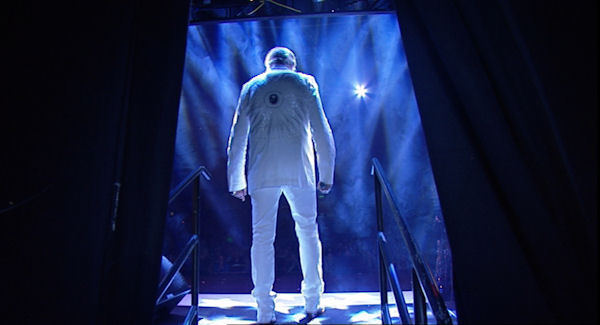
We could have done with the Eurovision’s finest, to serenade the nation through the darkest hours of the financial crisis, asking what’s another year of all this grief.
It turns out that Johnny was up to his oxters in the engine room of the government. Yesterday, the banking inquiry heard that the “Johnny Logan Working Group” was set up in the Department of Finance during the 2010 bailout.
Former top civil servant Kevin Cardiff told the inquiry that the group was set up to scratch around for an extra year’s funding for the exchequer. This was after the country had secured €67bn from the troika to keep the wolf from the door.
While the Department of Finance was found wanting in predicting the economic collapse, its denizens had obviously retained a sense of gallows humour. The working group was named in Johnny’s honour on the basis of his Eurovision winning hit, one line of which appropriately asks, “What’s another year for someone who’s lost everything that he owns.” Like, the Seán-Bhean Bhocht maybe? Well, these lads are such craic. If only they’d be able to do their sums.
What’s another day at the banking inquiry? Yesterday Cardiff returned for an encore. He did time in the department as both the man in charge of banking and the man in charge of the whole shebang. As befitting the whole thrust of the inquiry, his evidence added little nuggets of information but there’s still no sign of the smoking gun that some popular, political, and media opinion appears to believe lies beneath the mountains of paper generated by the economic collapse.
Cardiff did reveal a few secrets. He told the politicians that a small group within the department had at one stage been working on a contingency plan for exiting the euro. Previously, he had denied the existence of such a group before an Oireachtas committee, but he pointed out yesterday that he really had no choice.
“This was dynamite stuff,” he said. “The notion that you would sit down in a committee and declare that was just ridiculous.”
He’s sure Ireland wasn’t the only country making contingency plans for the end of the euro as we know it. He recalled speaking to an official from another jurisdiction. Both said to each other that their respective governments were not working on such a plan, and then Cardiff’s opposite number said: “Could you have who’s not working on it in your office telephone who’s not working on it in my office.”
He also revealed discreet inquiries had been made about entering an IMF programme in 2008, a full two years before it happened, and at a time when the government was sticking to its comical line, “the fundamentals are sound”.
Cardiff has disputed the evidence of the former head of the ECB, Jean-Claude Trichet, who claimed that Frankfurt had not bullied lil’ ole Ireland into entering the bailout programme in order to keep the euro ticking over.
He confirmed that the IMF was in favour of burning bondholders, which might have saved the country €10bn. The head of the IMF, Dominic Strauss Khan, was all set to fight Ireland’s corner, but then he was apparently slapped down by US treasury secretary Tim Geithner, who obviously saw a chance to sort out the bondholders at Ireland’s expense.
Poor old Dom later got himself in hot water over a n alleged advance at a chambermaid and all sorts of carry-on that only ended last week with his acquittal on charges of organisation prostitution. The lad must pine for the days when all he had to deal with was the impending collapse of the world economy.
Inquiry chairman Ciaran Lynch explored with Cardiff a vital question about Ireland’s loss of sovereignty on that cold November of 2010. Lynch wanted to know whether Cardiff concurred with the view offered by Trichet that if Ireland had not gone into the programme at that time, it would have been much more financially painful to do so months later.
“If we waited til March 2011 we might have had conditions that were stricter, or the money might not have been there,” Cardiff said. “It was better to start early than late.”
Once more a witness has confirmed that despite the waffle and spin put about since, the country was better off entering the bailout when it did. Certainly, Brian Lenihan and his officials were bullied. Certainly, the likes of Geithner saw Ireland as a handy fall guy. But the reality was this country had largely made its own bed by that point. Speaking of which, Brian Cowen and Charlie McCreevy are due in next week.
RELATED: Banking Inquiry: State bailout was mooted ‘as early as October 2008’

CONNECT WITH US TODAY



Be the first to know the latest news and updates