Ebun Joseph: Bertie Ahern's anti-immigrant comments are nothing new to black Irish people

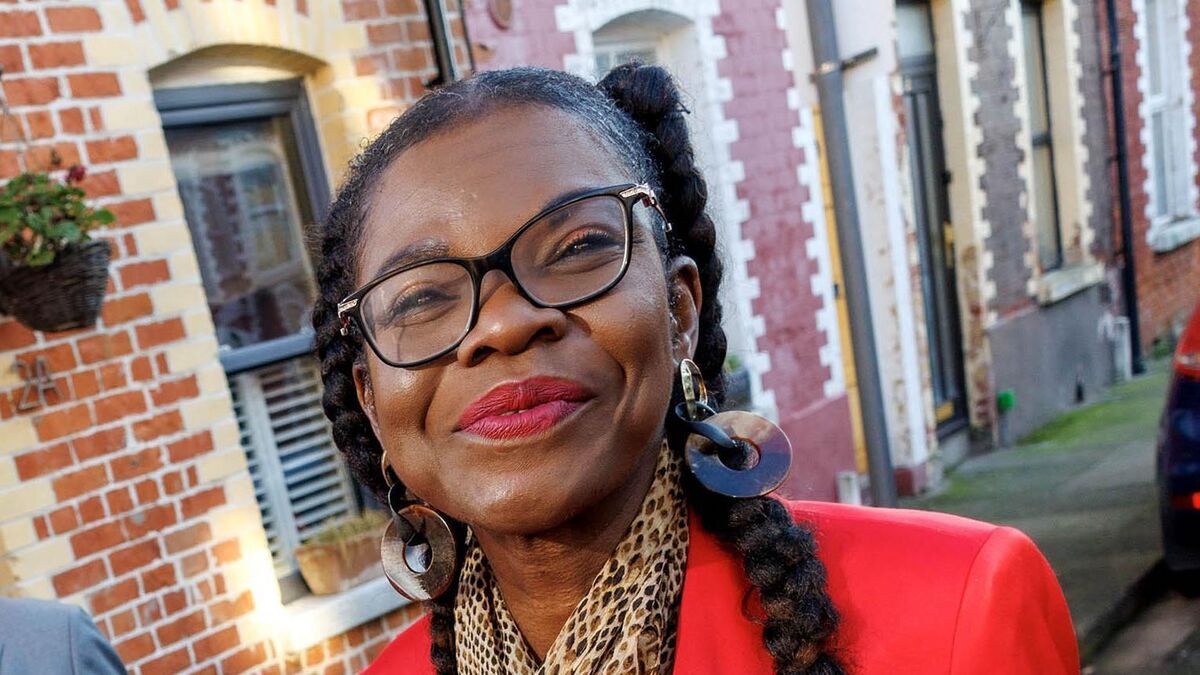
Labour candidate Helen Ogbu on the canvas trail in the Claddagh, Galway, with Sabina Higgins wife of former President of Ireland Michael D. Higgins. Picture: Ray Ryan
The anti-immigrant remarks by former taoiseach Bertie Ahern reported last week should concern anyone who values democracy, equity, and the future of Ireland. Not simply because of what was said, but because of who said it.
For years, black people and migrants in Ireland have been told that racism here is limited to “a few bad individuals”, anonymous trolls online, or fringe extremists with no real influence.
Yet when language that generalises people of African descent, Muslim, Indian, and migrant backgrounds as threats comes from someone who once held the highest political office in the State, it exposes a much deeper reality.
This is not just about one private conversation recorded for social media. It is about how anti-black racism and anti-immigrant sentiment can become normalised in political and public discourse under the softer language of “concern”, “culture”, or “protecting Ireland”.
Read More
Entire groups of people become reduced to demographic threats — threats to housing, identity, resources, or national belonging.
What struck me most was not even the comments themselves, but how familiar they sounded. Many black people in Ireland have heard versions of this rhetoric our entire lives.
We are discussed as burdens, risks, outsiders, or people whose presence must constantly be justified. The language changes depending on the decade, but the underlying message remains the same: that blackness and Irishness are somehow incompatible.
Bertie Ahern’s reported claim that he had been sharing these views directly with current justice minister Jim O’Callaghan should alarm all of us, because immigration rhetoric does not exist in isolation from policy. Political attitudes shape political decisions.
Within months of taking office, the current minister has overseen and proposed measures that many migrants and anti-racism advocates view as deeply regressive: the reintroduction of more aggressive deportation measures, significant delays in family reunification processes, and proposals around citizenship revocation that have generated widespread anxiety among migrant communities.
For many black migrants and their children, this feels disturbingly familiar. It feels like Ireland is drifting back toward the political atmosphere of the early 2000s — an era many remember for what were widely described as draconian immigration policies.
That period cannot be separated from Bertie Ahern’s own legacy as taoiseach. He led the government during the 2004 citizenship referendum, which removed the automatic right to citizenship for children born in Ireland.
The referendum fundamentally altered the lives of thousands of families, including black African families, many of whom suddenly found themselves navigating insecurity, exclusion, and the threat of deportation, despite building lives in Ireland.
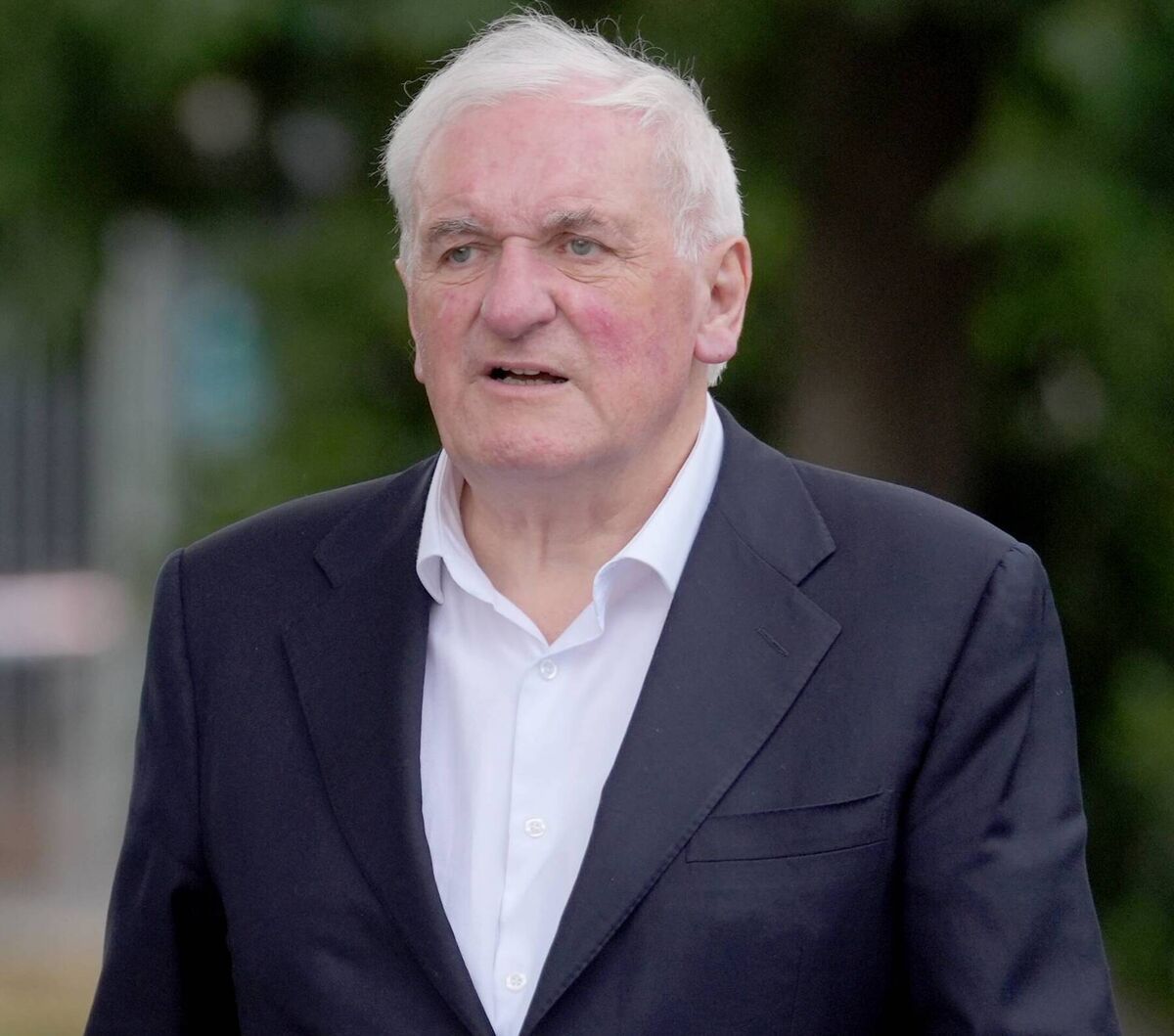
Public criticism at the time was largely directed at then-minister for justice Michael McDowell, who became the face of deportations and restrictive immigration policy. Yet major constitutional changes and immigration policies do not happen without the support and approval of the Taoiseach.
It is impossible to separate that era from Bertie Ahern’s leadership. Perhaps what we are witnessing now is not simply a private conversation becoming public, but a revealing insight into political attitudes that may have shaped one of the most consequential immigration periods in modern Irish history.
This reality is explored in our documentary , which examines the long-term impact of the citizenship referendum more than two decades later. One of the most painful truths highlighted in the documentary is that some young people born and raised in Ireland are now adults — in some cases over 21 years old — and are still struggling with citizenship uncertainty, belonging, and acceptance.
These are young people who know no other home but Ireland, yet continue to live with the consequences of a political moment many in wider Irish society have long since moved on from. The consequences of these attitudes are not confined to policy debates. They also shape public reactions to who is allowed to visibly represent Ireland.
The racist abuse directed at Suad Mooge following her selection in the Rose of Tralee is a clear example. What is striking is that Suad is by no means the first black woman associated with the competition. Ireland has had black Roses and contestants before, many of whom were embraced warmly by the public.
Part of the answer lies in the transformation of online spaces. Social media platforms have become accelerators of outrage, identity policing, and racial hostility. What might once have remained on the fringes is now amplified to hundreds of thousands of people within hours.
Algorithms reward provocation. Influencers build platforms by feeding fear and resentment. Human beings become content. But another uncomfortable truth is that Ireland’s inclusivity has often been conditional.
I am not arguing that Ireland is not inclusive. Ireland has welcomed migrants, refugees, and diverse communities who have contributed enormously to the social, cultural, and economic life of the country. But inclusivity becomes conditional when some migrant groups are embraced more easily than others.
Even within Bertie Ahern’s reported comments, he expressed sympathy and warmth toward Ukrainians alongside 'worry' directed at Africans and Muslims. That distinction matters. It reflects something many black people and people of African descent in Ireland have been saying for years: that acceptance is often racialised.
Some forms of migration are viewed as more culturally compatible, more acceptable, or less threatening than others. When black activists, academics, and anti-racism advocates raise these concerns, we are often dismissed as divisive, accused of exaggeration, or penalised professionally and socially for speaking openly.
Yet moments like this expose exactly what many of us have been trying to articulate for years.
Another dimension Ireland still struggles to confront honestly is the intersection of racism and misogyny directed at black women. We saw it in the online abuse aimed at councillor Helen Ogbu during her campaign for election in Galway, and we are seeing it again with Suad Mooge.
I know this personally. In recent days, I have been targeted online with edited images labelling me “not Irish” beside images of white Irish women marked as “Irish”. My education has been questioned. My father has been dragged into discussions. I have been tagged alongside racist commentary from strangers across the world.
The issue is never simply politics, beauty pageants, or public office. It becomes about who is permitted to visibly represent Ireland. Who gets to embody Irishness without challenge. Who is seen as naturally belonging, and who is treated as permanently conditional.
This is why telling people to “ignore social media” misses the point entirely. Online racism does not stay online. It shapes public attitudes, emboldens hostility, and affects people’s real lives. Every time influential figures frame migrants or Africans as threats, it legitimises further abuse.
Black people in Ireland carry that burden emotionally, psychologically, and socially every day. We absorb the hostility, the questioning of our identity, the attacks on our intelligence and belonging, and the fear that our children may inherit the same conditional acceptance.
Ireland today is undeniably multi-cultural, multi-racial, and diverse. The question is no longer whether that reality exists, but whether the country is prepared to fully embrace it.
Because if black people can be celebrated when they entertain, contribute, succeed quietly, remain grateful and uncontroversial, but become targets the moment they visibly represent Irishness, then the issue is not immigration per se. The issue is acceptance.
And unless Ireland is willing to confront that honestly, moments of outrage will continue to come and go while the deeper problem remains unresolved.
- Dr Ebun Joseph is CEO of the Institute of Antiracism and Black Studies, Ireland’s special rapporteur on racial equality and racism, co-ordinator and lecturer in Black Studies at University College Dublin, and host of

CONNECT WITH US TODAY



Be the first to know the latest news and updates