As clocks go back this weekend, meet the enthusiasts fascinated with time
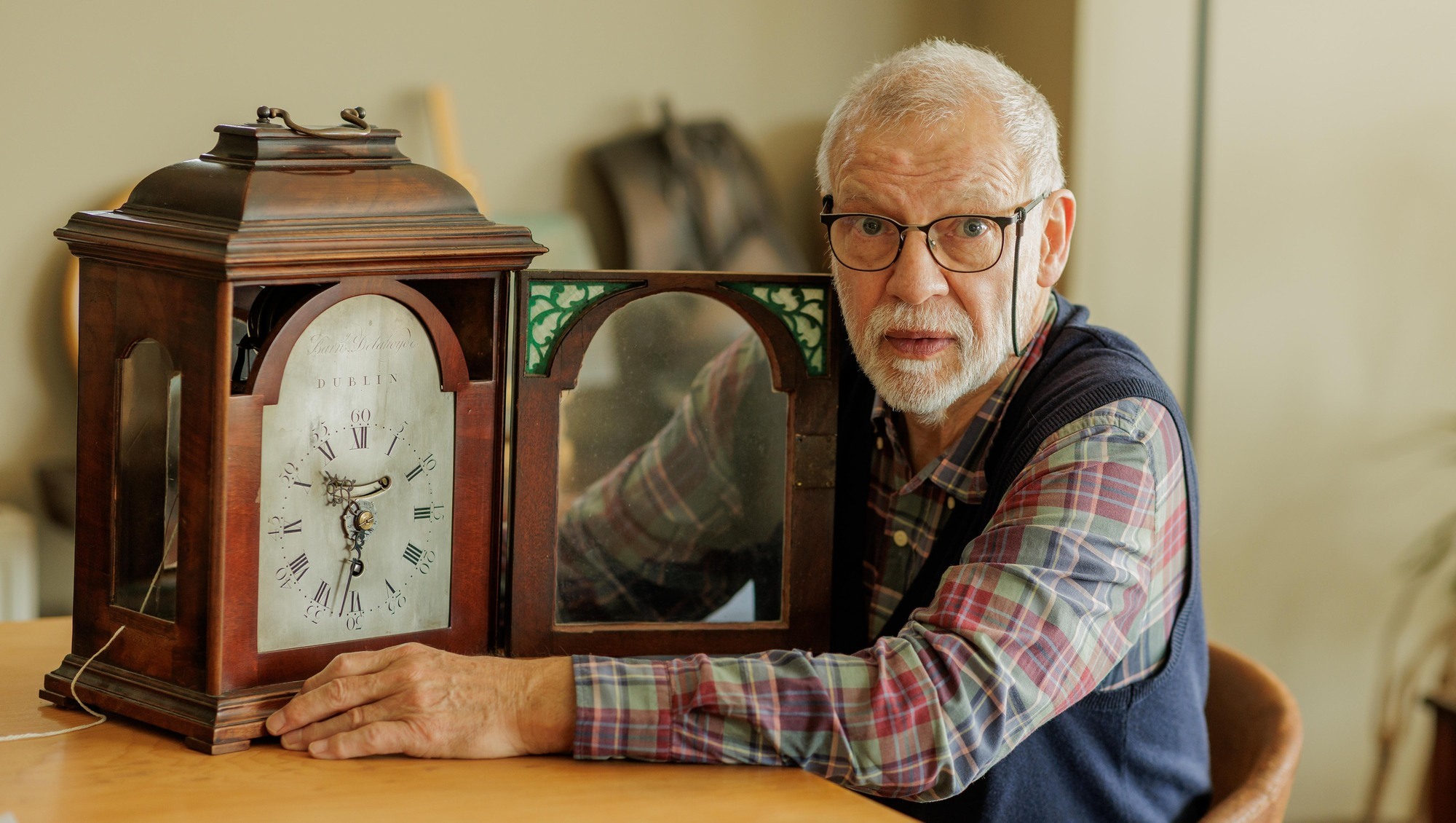
Horology Ireland's Killian Robinson putting one of his clocks back one hour as summertime ends on Sunday, at his home in Rosses Point Sligo. Picture: James Connolly
It may have been their striking similarities to the heart that sparked retired cardiologist Killian Robinson’s fascination with clocks.
Both mechanisms operate via a continuous rhythm, with the secretary of Horology Ireland underlining one fundamental common trait.
“The heart has to keep pretty regular time,” jokes Killian. “It can't just stop and start whenever it wants to, for obvious reasons."
This weekend marks a familiar ritual across Europe as clocks go back by one hour on Sunday.
All EU member states, including Ireland, are required to change their clocks at the same time each year. That remains the case despite a 2019 vote by the European Parliament in favour of ending seasonal clock changes.
However, the measure has yet to be implemented and there are no plans to bring forward fresh legislation to abolish the twice-yearly time change.
The clocks will move forward by one hour on the last Sunday of March, marking the start of summer time.
While devices like smartphones and laptops normally update automatically, older models are still in need of a helping hand.
Read More
For example, the iconic Four Faced Liar at St Anne’s Church in Shandon, Cork, continues to require seasonal adjustments. The clock times still differ slightly, however, due to mechanical quirks which earned the landmark its nickname.
Cork City Council normally enlists the help of local horologist Philip Stokes to do the honours.
Meanwhile, staff at the Museum of Time in WaterfordWaterford will undoubtedly benefit from the extra hour in bed after adjusting the time on more than 600 clocks this weekend.
Located on Greyfriars Street in the heart of Waterford’s Viking Triangle, the museum showcases unique timepieces including the oldest Irish-made grandfather clock.
This weekend is an exciting time for clock enthusiast Killian, who forms an instrumental part of Horology Ireland. The organisation brings collectors, professionals, and anyone with an interest in clocks together.
Having evolved from a niche and modest sized group, Killian said that slowly but surely, the club is starting to grow. A recent surge of interest from the younger generation has restored his hope for the future of horology in Ireland. The club now has around 60 paying members in total but membership is always ticking up as it welcomes at least one new addition each week.
“One of the last things we organised was clock and watch repair classes, which was done in associations with Engineers Ireland. That was very well attended. What surprised us was the number of young people in attendance with an interest in fixing broken clocks.
"The mean age of that group was actually pretty low, which was great news.”
The group also benefits from a wide skills exchange bank.
“You’ll often have someone bringing something along with them to ask how it can be fixed," says Killian.
"They might have a clock dial they want to restore or be in need of help from the group to repair the movements of the clock. Other people can repair watches. We've got quite a bank of skill sets in the group.
"For a lot of people it’s very difficult to find a horologist to repair a clock in the home that is no longer working properly. However, I think there is enough interest now among younger people who want to go about learning to fix things.
"Hopefully, they will carry this forward into the future.
"There are some people, though, who are happy to go abroad to do a training course with a view to returning to Ireland and starting their own business here.”
Members of the horology group come from all walks of life.
“Part of the fun of the club is that you're meeting people there with the same interests," says Killian.
"Some members are collectors, who enjoy picking up particular items. This could take a number of forms. Some people like to collect clocks. Others like to collect watches. There are even people out there who collect turret clocks which are basically tower clocks that can be found in large old buildings.
"People often don’t want these clocks because they don’t want to look after them. They can't afford to maintain them because it costs so much money to get them repaired or secure new parts for them.
"Most turrets are too large to display in a front room.
"However, you'd be very surprised at the height of some of the tower clocks which are actually quite small."
Killian explains that some are just 46cm wide and 25cm deep and high. "It’s surprising to note just how small some of them are.”
The group has facilitated trips to see clocks in almost every part of Ireland.
“We have trips where we go around the country to see various different collections or different timepieces. For example, previously the group has been to Christchurch Cathedral.
"They've been to see the clock tower at Farmleigh in Castleknock in Dublin, where a clock was made by Howard Grubb who happened to be much more famous at the time for his telescope making. The group organises these kind of regular educational and social events.”
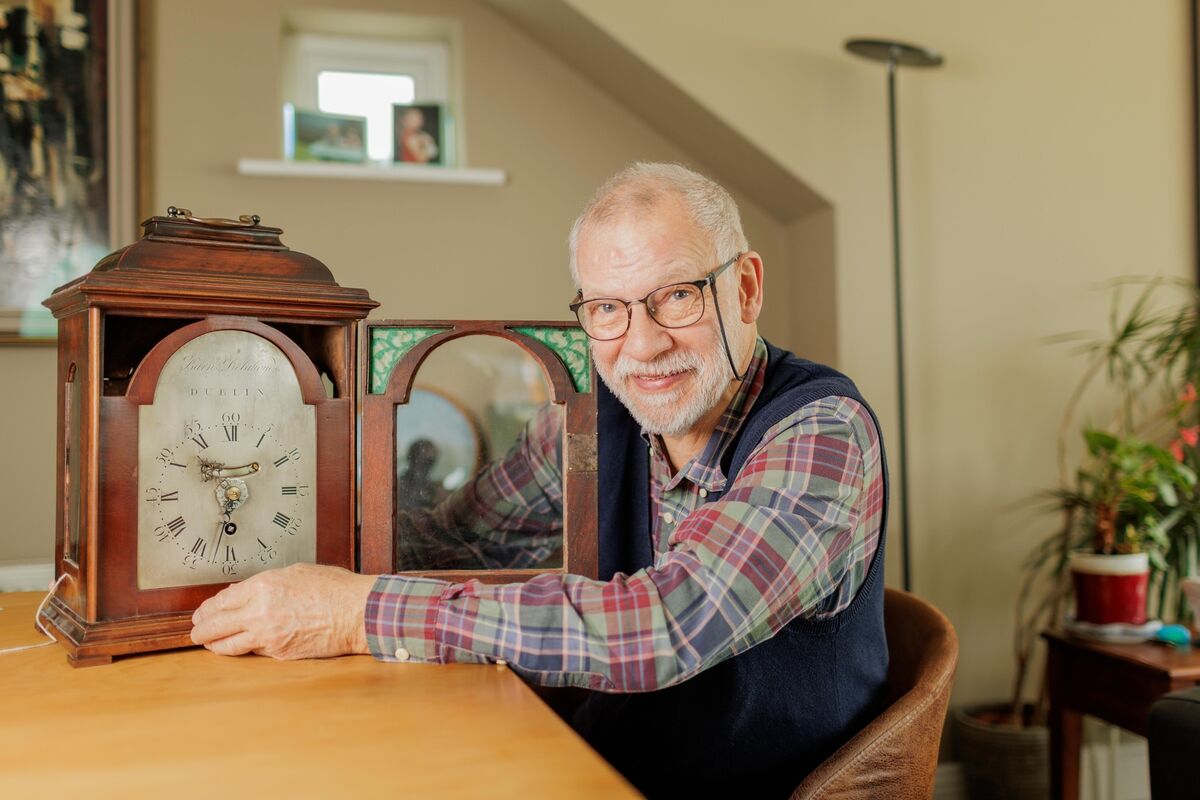
Killian, who hails from Dublin but lives in Sligo, also enjoys clock collecting as a pastime.
“I reckon I have about 15 clocks in the house but I don’t wind them as much as I used to now.
"When there were four or five clocks in one room it was a bit of a racket. At one stage we had a piano in the same room as all our clocks. When the piano tuner came round to our home, he got quite a shock to hear all the clocks striking at once.”
The organisation has evolved over the years to cater for a younger audience.
“Horology Ireland is kind of a rebranding of a previous group of people who used to meet together regularly and have their own clock meetings.
"We decided a few years ago that it would be nice to establish a new organisation which is how Horology Ireland was born.
"We’ve also tried to get a bit more technologically advanced through things like social media which wasn’t available to people many years ago.
"Some of these people are still members of the group. They are obviously much older now but we have new blood too and the organisation is growing all the time.
"This might be happening at a slow pace but this suits us better at the moment as these numbers are about as much as we can manage at the moment. “

CONNECT WITH US TODAY



Be the first to know the latest news and updates