Catholic priest turned Celtic monk: 'Manchán found a sense of the divine out in nature'
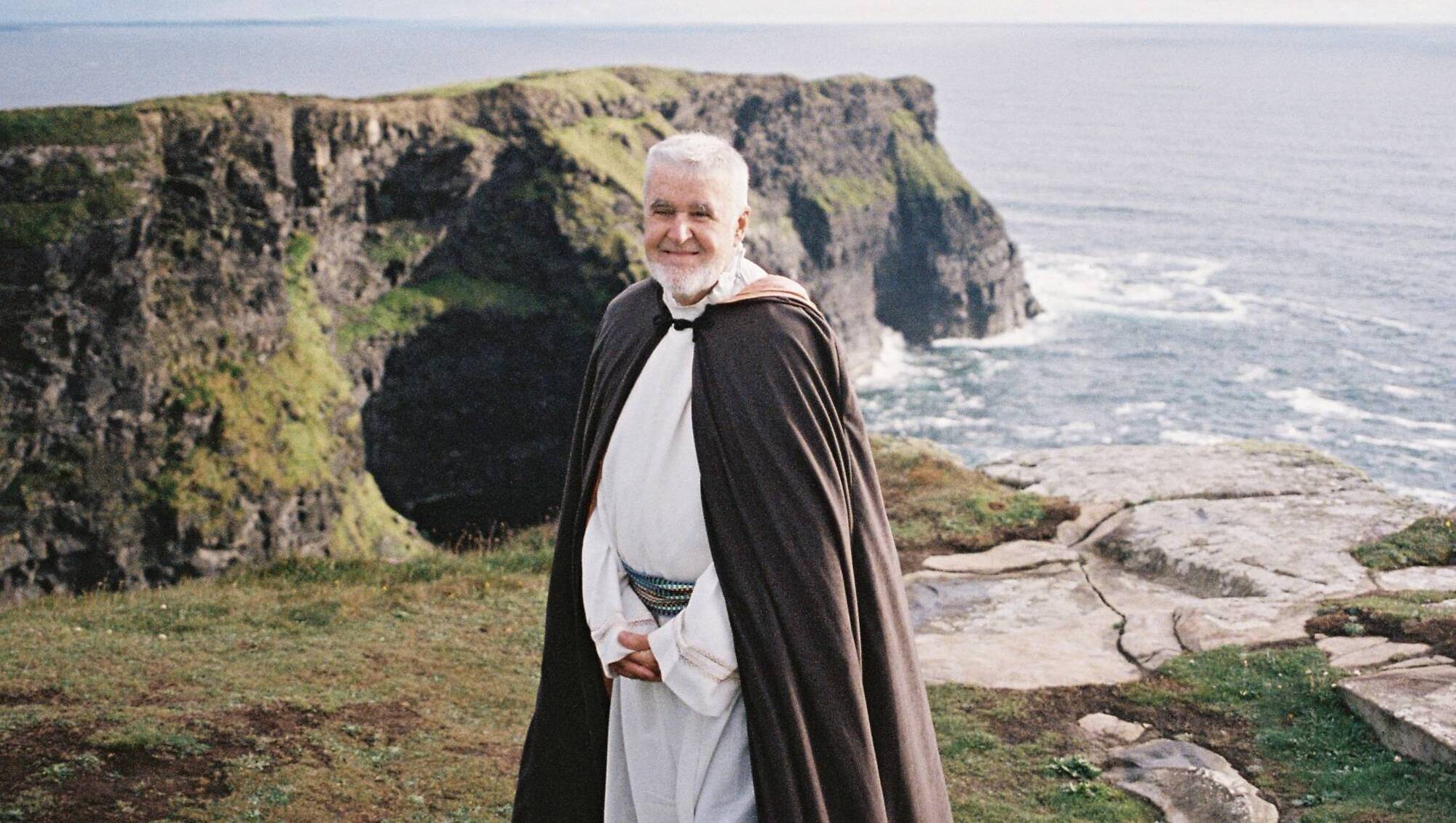
In his new book, Dara Molloy — a former Catholic priest turned Celtic monk who has lived on Inis Mór for more than 40 years — explores Ireland’s ancient spiritual soul. Echoing the sentiments of Manchán Magan, he tells Ciara Byrne about his call to us all to embrace the Celtic way
Dara Molloy gave up his life as a Catholic priest to become a Celtic monk
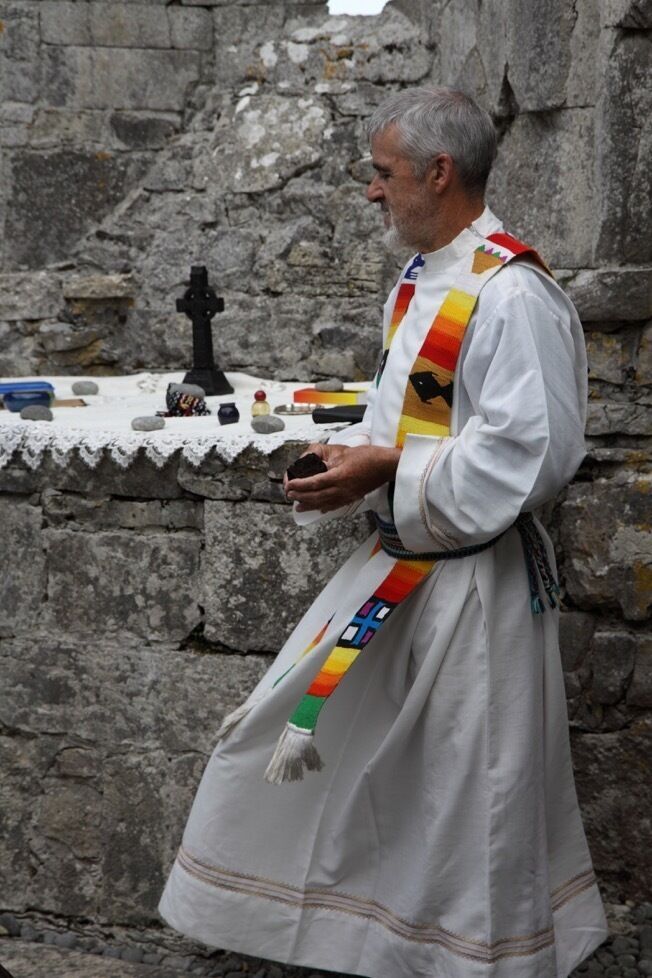
Dara Molloy gave up his life as a Catholic priest to become a Celtic monk

What makes a former Catholic priest want to leave the Church, move to the Aran Islands, and become a Celtic monk?

Dara Molloy is the former priest in question. Speaking over Zoom from his family’s summer house in Rush, the conversation opens in that typical Irish way of finding a mutual connection.

In this case, Molloy was my father’s teacher in Dundalk in the 1980s. At the time, the then priest felt like a square peg in a round hole.

“I wasn’t happy living in a community of priests in a very institutional way with people cooking my meals and washing my clothes and cleaning my room,” he says. “I was very unhappy as a teacher. Even though I loved working with young people, I liked working outside the system.”

After a summer visit to the Aran Islands in 1982, Molloy felt a calling much stronger than that of the priesthood. “When I got there, I discovered an island that had been used for monks over centuries,” he says. “It was a monastic island, and interestingly, the first monk to come there was from Dundalk.” Yet another connection.

Far and away from the notion of religion that Irish people grew up around — guilt, sin, and wrongdoing imparted by the Church that has caused lasting trauma to the women and men of Ireland — Molloy paints a very different picture of what spirituality can be.

His new book, The Celtic Way, is a deep dive into the traditions that have sustained and how we can implement them into modern life. It also examines the Catholic Church in an unredemptive manner.

“Ireland absorbed Christianity through the oral transmission of stories, and with it created something completely unique which today we call Celtic Christianity,” he says.

Through his writing, he gives context to how Christianity took a hold of Ireland, but it raises a certain degree of anger at the forces that held power over Irish society for centuries. One such consequence – the mass burying of babies in unmarked graves.

Irish monks continued to rebel in the spirit of their humanistic beliefs for hundreds of years after Christian teachings made their way to Ireland, even travelling to Rome to dispute the newly introduced idea that all humans inherited “original sin” in the late 4th Century.

“Celtic Christians believed in ‘original goodness’,” Molloy writes — a belief from which we could probably all benefit. Irish people have a sense of their own heritage that has dug its way into our psyche. In large part, it is due to written works, like the Book of Kells, that still live and are appreciated as records of our past. Of the way that we used to live.

“I grew up in a religious bubble. In childhood and early adulthood, my Christian faith defined my world,” Molloy writes.

“Living within such a world meant that I did not distinguish between tangible reality — the things that science can study — and spiritual reality.”

Through suppression, outright bans, and a practice that has on occasion had to survive out of the public eye and hidden from oppressive forces — these ways of thinking, of connecting with the earth and with each other — have lived on.

They are more prevalent and celebrated than perhaps they have been in the last 1,000 years. We return because we have something to return to. Something that transcends capitalism and the digital age.

As a Celtic officiant, he performs, among others; weddings, naming ceremonies, funerals, and the Celtic festival celebrations of Imboc, Bealtaine, Lughnasa, and Samhain.

Dara Molloy holding a Celtic ceremony

Oftentimes, Molloy notices, connections come about in mysterious ways.

“Three or four of the weddings I’ve done were in a grove of trees,” he says. “That brings you right back to the druids.”

With no churches as places of worship, “they had groves of trees where they did a lot of their rituals,” Molloy explains.

And now, “we’re doing it intuitively,” he says, telling the story of a recent wedding that he conducted in Rathvilly, County Carlow.

“I noticed the Irish version of the name, Ráth Bhile. So rock is a fort. Villa is the sacred oak tree, usually, or an ash tree, that represents the tribe in the area. And that oak tree would have been used for people to have a ceremony under, including a wedding,” he marvels. Molloy says that the couple went up to him afterwards, in awe that they were unknowingly connected to an ancient Irish tradition.

“Those people who chose to have their wedding in the grove of trees, didn’t know that the druids did it,” he says.

“They’re doing it intuitively, and I have every trust that it will continue to move in this direction,” he concludes.

Connecting to our Celtic past comes in many forms, with Molloy boiling his experience down to a very simple outlook.

He tells a story of the late Manchán Magan, in which he gave up the offer of a hotel to stay with a local family.
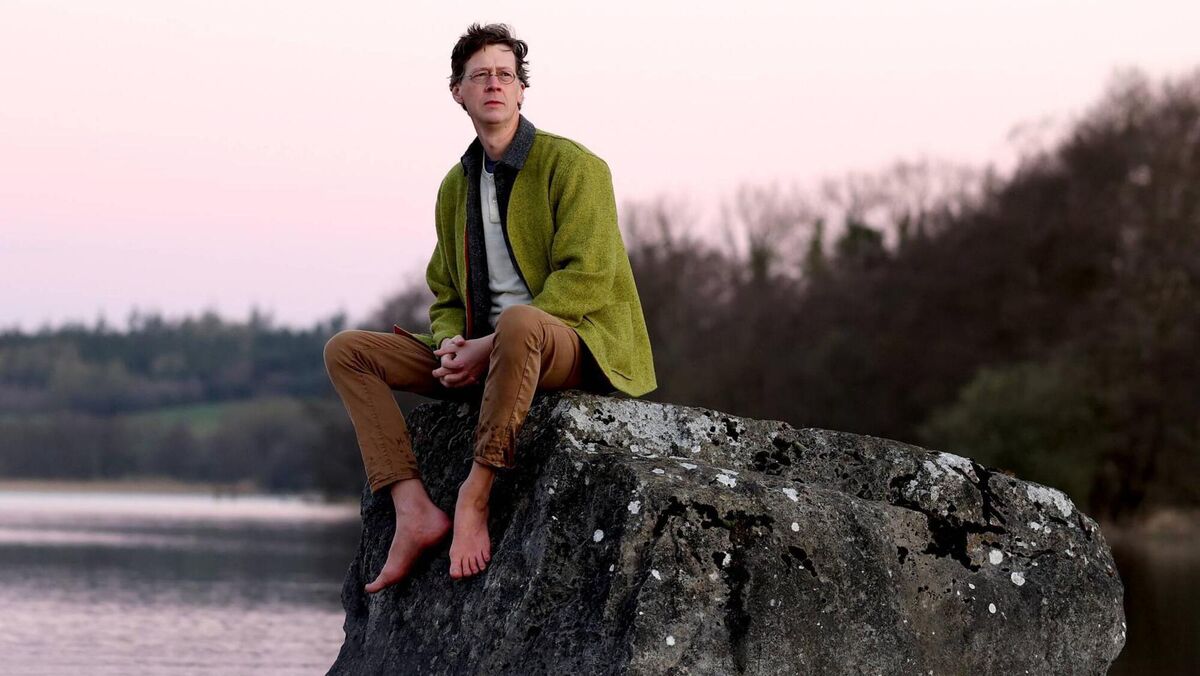
Manchán Magan found a sense of the divine in nature says Dara Molloy. Picture: ©INPHO/James Crombie

“He was invited to speak somewhere down the country. I think it was in Cork. And they were going to put him up in a hotel, and he said, no, no, I don’t want to go to a hotel. Find somebody who’ll give me a bed for the night.”

He continues: “And this family gave him a bed for the night, and on the Sunday morning, the family said, we’re off to mass. Now do you want to come? He said, well, no, that’s not really where I get my spiritual nourishment. I’ll go off for a swim and I’ll get my nourishment there.”

Molloy notes that this difference is the pinnacle of where devotion through organised religion and connection in a spiritual sense splits.

“He found a sense of the divine out in nature,” he says of Manchán. “In swimming, or walking the beach, or in among our forest trees. That would be where I’m coming from, too. It’s something we’ve been missing,” he says.

Because of the way that we were raised, and the lasting imposition from childhood, this strict way of thinking has stuck with us culturally.

The notion of Catholic guilt remains embedded in us, whether we consider ourselves devoted or lapsed Catholics. Understanding the ways of Celtic Christianity, and how it varies so much from what we have been raised to know of religion has the potential to open life up to be lived a little differently.

Molloy leaves the conversation with something worth thinking about. “Where do you feel nourished at a really deep, wholesome level?” he asks. “Is God found in somebody else’s writing? Maybe sometimes, maybe in John O’Donohue’s writing.

“But the Celtic monks always said that there were two ways to find God. One was in the scriptures, and one was out in nature.”

To embrace the divine on a morning walk, or a conversation with a friend, or in the food we eat, which has been grown from a seed into nourishment. To leave behind guilt, shame and sin and to instead try to live good lives for ourselves and others.

  • The Celtic Way, published by Gill, is out now

More in this section

Lifestyle

Newsletter

Eat better, live well and stay inspired with the Irish Examiner’s food, health, entertainment, travel and lifestyle coverage. Delivered to your inbox every Friday morning.

Cookie Policy Privacy Policy Brand Safety FAQ Help Contact Us Terms and Conditions

© Examiner Echo Group Limited