Michael Moynihan: Do we care enough to stop flats being built on Bessborough babies' remains?
Michael Moynihan contrasts the respect for the children and babies buried at Bessborough to that of the human remains found during building work five years ago elsewhere in Cork
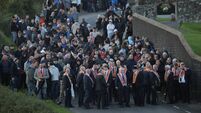
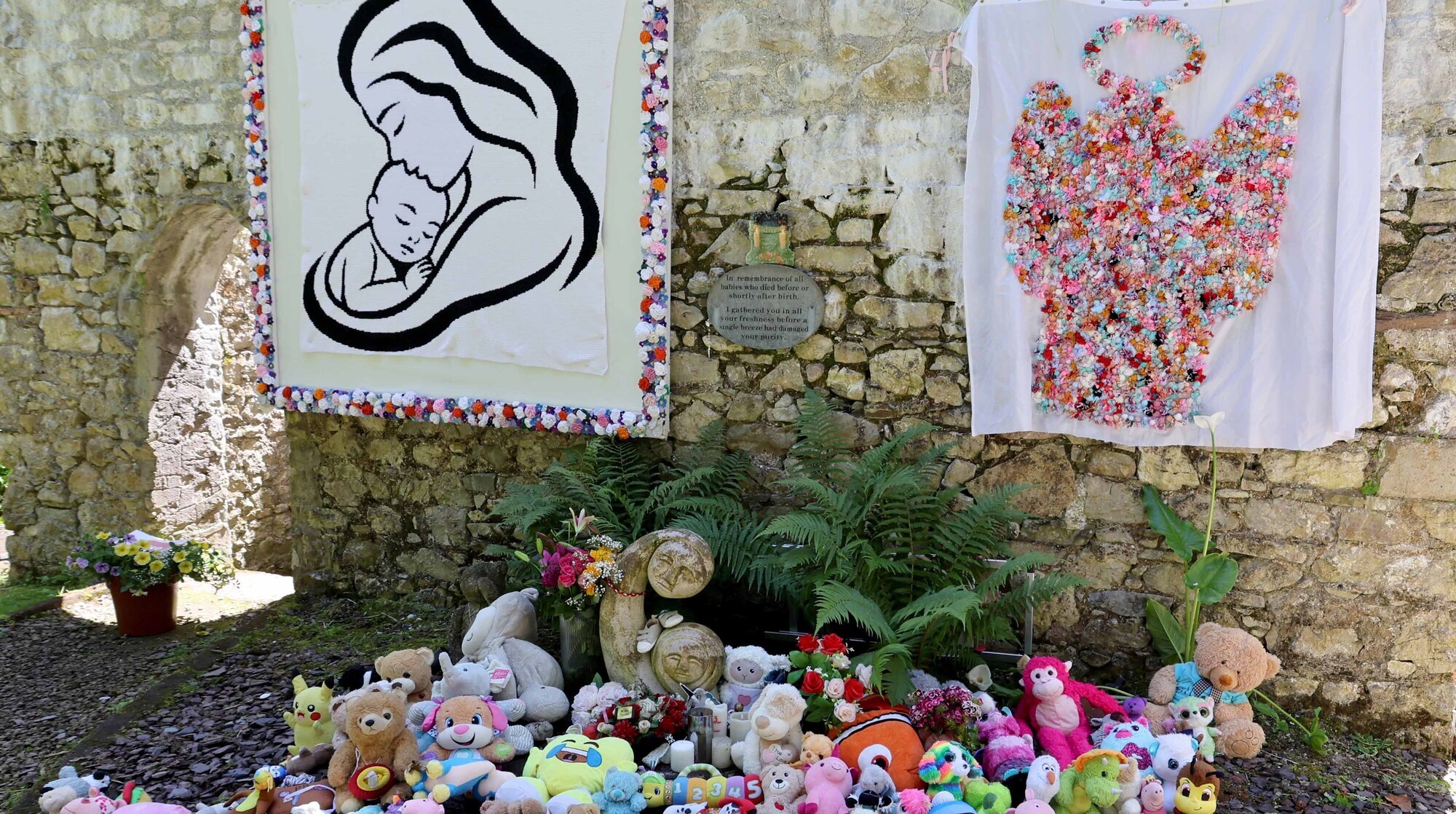
Part of the Bessborough Mother and Baby Home annual summer commemoration at the Folly in the former institution in Blackrock, Cork. Picture: Jim Coughlan

Part of the Bessborough Mother and Baby Home annual summer commemoration at the Folly in the former institution in Blackrock, Cork. Picture: Jim Coughlan

An important date is looming ever closer, one which is of particular significance to people in Cork but which should also resonate around the country.

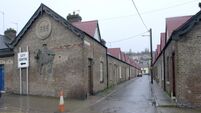
I refer to July 9, when a decision is due from An Coimisiún Pleanála on two appeals against the planning permission granted to build apartments on the site of Bessborough in Blackrock, which was once a mother and baby institution.


If you are not familiar with the context, the Bessborough facility dealt with thousands of mothers and children between 1922 and 1998, when it closed.

As reported here by Donal O’Keeffe and Emer Walsh, according to the General Registry Office (GRO), death certificates were issued for 816 Bessborough children. However, in 2021 the Mother and Baby Homes Commission reported that it was aware of 923 child deaths related to Bessborough. 

That is 107 extra children, over and above the number reported by the Sisters of the Sacred Hearts of Jesus and Mary, who ran the facility, to the GRO. To be precise, 107 extra dead children.

Burial records exist for only 64 of those 923 children, which means the final resting place of 859 children is not known. The Mother and Baby Homes Commission stated it was “highly likely” burials had occurred at Bessborough.

Last February, Estuary View Enterprises 2020 received planning permission from Cork City Council to demolish various buildings at Bessborough and to build 140 apartments on the site.

That decision has been appealed to An Coimisiún Pleanála separately by Bessborough Mother and Baby Home Support Group and by local councillor Peter Horgan of the Labour Party.

The Bessborough group says the site is one of “profound national significance”, and that any groundworks there would risk disturbing human remains.

Councillor Horgan made a similar point in his appeal, citing survivor testimony which indicated that burials took place across the site, including the locations of the proposed development.

When this news first broke some months back I asked if we had really reached a stage where it was acceptable to dig up the unmarked and forgotten remains of infants — who had been cruelly neglected in life — in order to provide housing.

Even with the housing and accommodation crisis raging in the country, this seems extraordinarily cruel — that babies and children who were mistreated during their short lives should be subject to further indignities and disrespect in death.

Respect for the dead

Since then one reader was in touch to point out that Cork has not always been so cavalier with the dead.

As reported here back in October 2021 by Eoin English, a building project in the city centre came to a sudden halt when human remains were unearthed during building work.

As groundworks were being carried out at the former Nancy Spain’s pub on Barrack Street, a partial skeleton was found one morning and works halted.

In total, the skeletal remains of six people were eventually found on the site. Following an inspection by archaeological specialists and Garda scene-of-crime experts, the bones were deemed a historic find, and the Garda investigation was stood down.

The works were necessary in the first place because Cork City Council planned to build 32 apartments on the site. 

The obvious comparison to be made here is with the proposed project in Bessborough, where it is already acknowledged that there is every possibility that the works to be undertaken may disturb human remains. 

There is a crucial difference, however. The remains found in Nancy Spain’s were not anticipated, unlike Bessborough.

It is also worth pointing out that in the Nancy Spain case those works came to a stop when the remains were found.

On one hand that is only what one would expect in the circumstances. However long ago that person died, her or she was entitled to be treated with dignity. 

Bringing the works to a halt was an acknowledgement of that person’s humanity by those on hand, a fundamental registration that this was a person owed the respect that all people are owed. 

Such are the standards of basic decency, no matter if the person had died a century or more before.

A contrast to Bessborough

The contrast with the proposals in Bessborough, where it is widely expected that the remains of children and babies will be disturbed, could not be more stark.

There is a way in which one could read this episode as a necessary corrective, as a clarifying agent of sorts. That is because if this project proceeds it will mark a profound change in our national outlook and a turning point in our values as society. 

That’s not an exaggeration. It will indicate what the reality is: what we care about — truly care about — and what we are happy to set aside for the sake of expediency.

That reality means setting aside the grief and heartbreak suffered by thousands of people who went through Bessborough, as well as the respect and dignity owed to hundreds of dead babies and children. 

Perhaps we should even be grateful that this entire story is giving us an accurate picture of how Irish society truly sees the vulnerable and the voiceless when all of the boilerplate soundbites and platitudes have faded away.

If that is the reality there was plenty of supporting evidence for it on offer just this week. Days ago we learned that women who attended Dunderrow National School near Kinsale — about 30 kilometres from the Bessborough site — are to take the State to court to seek redress for abuse they suffered at that school 50 to 60 years ago.

As an indication of the barriers those women have faced, one of the previous redress schemes excluded many of them because applicants had to have sued the State before 2021 to qualify.

This is a horrifying example of officiousness and obstruction, but it is also completely consistent with a State apparatus which allowed places like Bessborough to operate the way they did for over 70 years.

In general, I note no great rush of press releases or in-depth briefings giving details about this building proposal, or the rationale behind the planning permission. It’s almost as if nobody really wants to have their names attached to this scheme.

By contrast, there are some people who are willing to state the facts, including Catherine Corless, the researcher who uncovered the mass burial site of children at the former mother and baby home in Tuam. 

As reported here by Alison O’Reilly last week, MS Corless mentioned a front page this newspaper published five years ago which carried the names of all the babies who died in Bessborough.

"I was shocked when all those 900 names were printed on the front page of the Examiner. I thought there would be an outrage,” she said. "Do Cork people not care? All those little children and young babies. And does the church not care?” 

Those are valid questions. Do we care about children and babies? Or are we relying on An Coimisiún Pleanála to do all our caring for us?

x

Your home for the latest news, views, sports and business reporting from Cork.

More in this section

Revoiced

Newsletter

Had a busy week? Sign up for some of the best reads from the week gone by. Selected just for you.

Cookie Policy Privacy Policy Brand Safety FAQ Help Contact Us Terms and Conditions

© Examiner Echo Group Limited