Alan Healy: Are Cork's new apartments built for roots or temporary stays?
Are these State-supported units just transient housing or a missed opportunity for vibrant, family-friendly urban homes?
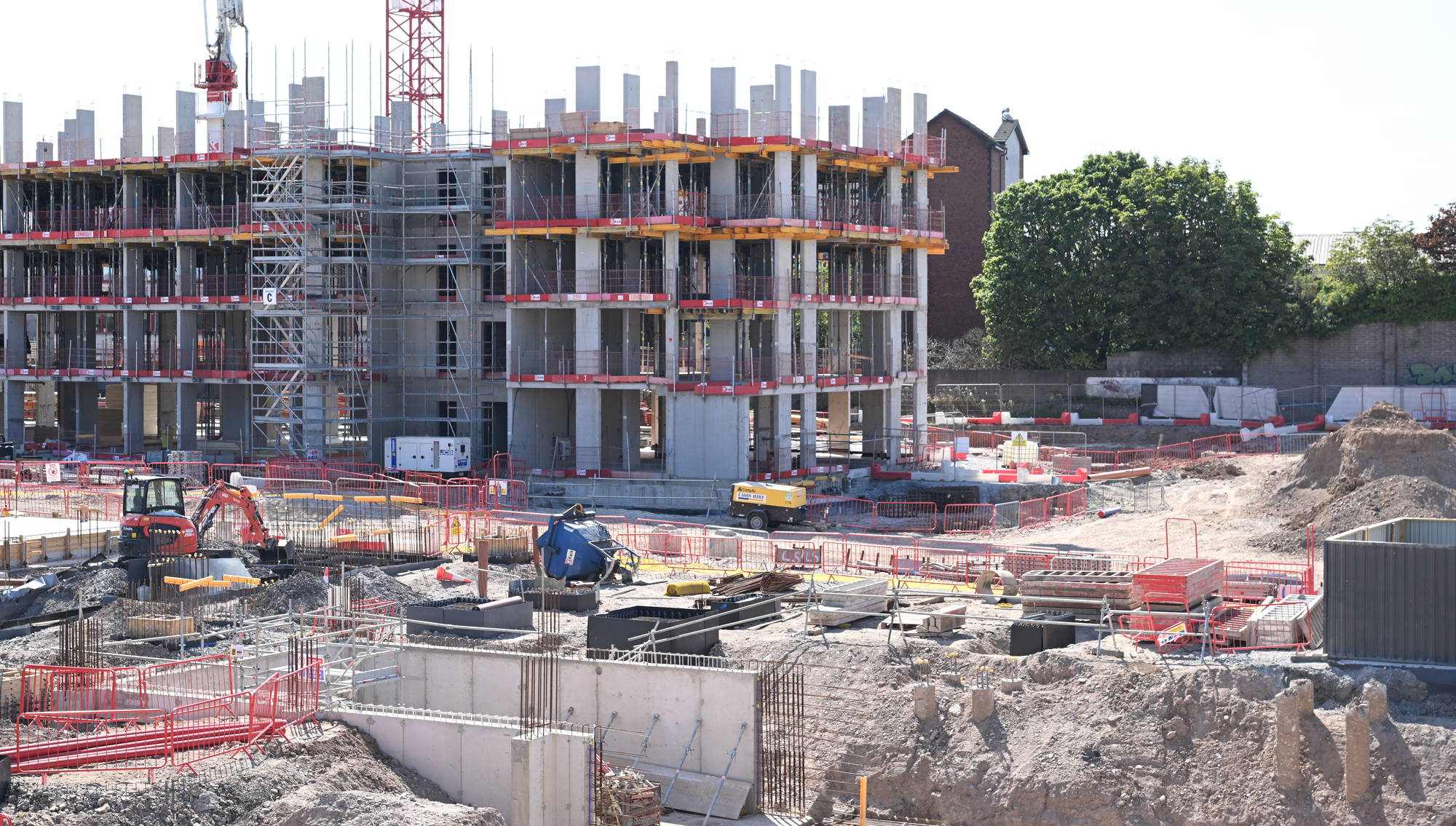
More than 1,300 apartments are currently under construction in Cork City. Picture: Larry Cummins

More than 1,300 apartments are currently under construction in Cork City. Picture: Larry Cummins

This week, the Irish Examiner published a visual highlighting the dramatic change to Cork City's skyline.

It shows 20 construction projects that are currently underway, all building new apartments. Anyone living or working in the city is well aware of the construction cranes which loom overhead.

By our count, more than 1,300 apartments in the city are currently under construction, and there is a greater number which are awaiting a planning decision or have already secured the go-ahead and are about to start construction.

This building activity is to be welcomed given apartments are a central strand to resolving the housing crisis. Apartments are commonplace in Dublin city, but rising construction costs have meant they had been unviable in Cork for a number of years now. 

It is only with State support that such apartment projects now proceed. Either way, the cranes and lift shafts are going up in greater numbers on Leeside.

But the level of activity that is currently underway poses the valid question of who these apartments serve and what apartment living is like in the city. 

Ireland, by a significant margin, tops the EU table for people living in houses as opposed to flats or apartments. According to Eurostat, 90% of people in Ireland live in houses, whereas the EU average is just 51%.

Who the new apartments are being built for can be deciphered by the housing mix. They are invariably one-bed and two-bed units. 

Last year, the construction guidelines were eased to allow faster development. This included new, reduced minimum sizes for one-bed and two-bed units and other changes, including reduced amounts of open spaces. It is obvious that young professionals, working immigrants, single adults and downsizers dominate the occupancy.

Half of all Irish households have children, and while growing numbers have taken up accommodation in apartment blocks, they often do not stay there for long. One-off rural housing and suburban estates remain the preferred location once children enter the equation. 

These new apartments are perfect for putting young professionals in a holding pattern until they are ready to settle down or return home. More than 440,000 adults live with parents, many of whom are saving to afford their own home.

It is clear that Ireland is finally building apartments at scale, and this will alleviate the major shortfall, but the apartments are being designed as transient housing and not as permanent homes for people wishing to put down roots. 

Missed opportunity

It seems Ireland is missing out on an opportunity, as many urban areas where apartments are being built are increasingly attractive locations. They are close to workplaces, schools, amenities and planned LUAS lines. 

Dotted around the city are interconnected greenways, playgrounds, parks and other green spaces. Joining them is the growing industry of food markets, gyms, yoga studios, urban saunas and golf simulators, all contributing to making these areas the perfect place to raise families.

We can look enviously to our European neighbours who have long embraced family life in rented, low-rise apartments, often in the heart of a town or city. Embracing apartment living and renting for life will require a significant change in mindset for Irish families. 

But there are also practical obstacles. Along with property taxes, those living in apartments also pay into Owners' Management Companies, which manage the building's common areas, looking after maintenance. However, this system is very much in its infancy in Ireland compared to other countries.

The Multi-Unit Developments (MUD) Act Reform Group is an alliance of various bodies including the Apartment Owners’ Network and housing bodies. MUD has long been campaigning for an update to legislation governing how OMCs operate. 

They point to a range of issues including poor governance, boards with little expertise, no clear path for the resolution of disputes other than the courts and even the lack of a central register of OMCs, making it difficult for the State to identify all apartment developments and OMCs and communicate with them.

These difficulties highlight why many families would be reluctant to commit to long-term living in an apartment complex. Across Europe, it is commonplace, and families are even encouraged to put down roots in rented accommodation where they have long-term security of tenure.  In cities like Vienna, approximately 75% of households are renting.

The construction currently underway across Ireland, and in particular cities like Cork, will permanently redraw the housing mix. But the country has yet to grasp whether these will be permanent homes or waiting rooms.

x

Your home for the latest news, views, sports and business reporting from Cork.

More in this section

The Business Hub

Newsletter

News and analysis on business, money and jobs from Munster and beyond by our expert team of business writers.

Cookie Policy Privacy Policy Brand Safety FAQ Help Contact Us Terms and Conditions

© Examiner Echo Group Limited