Shona Murray: Europe stood with Ireland on Brexit — now Ireland must stand with Europe
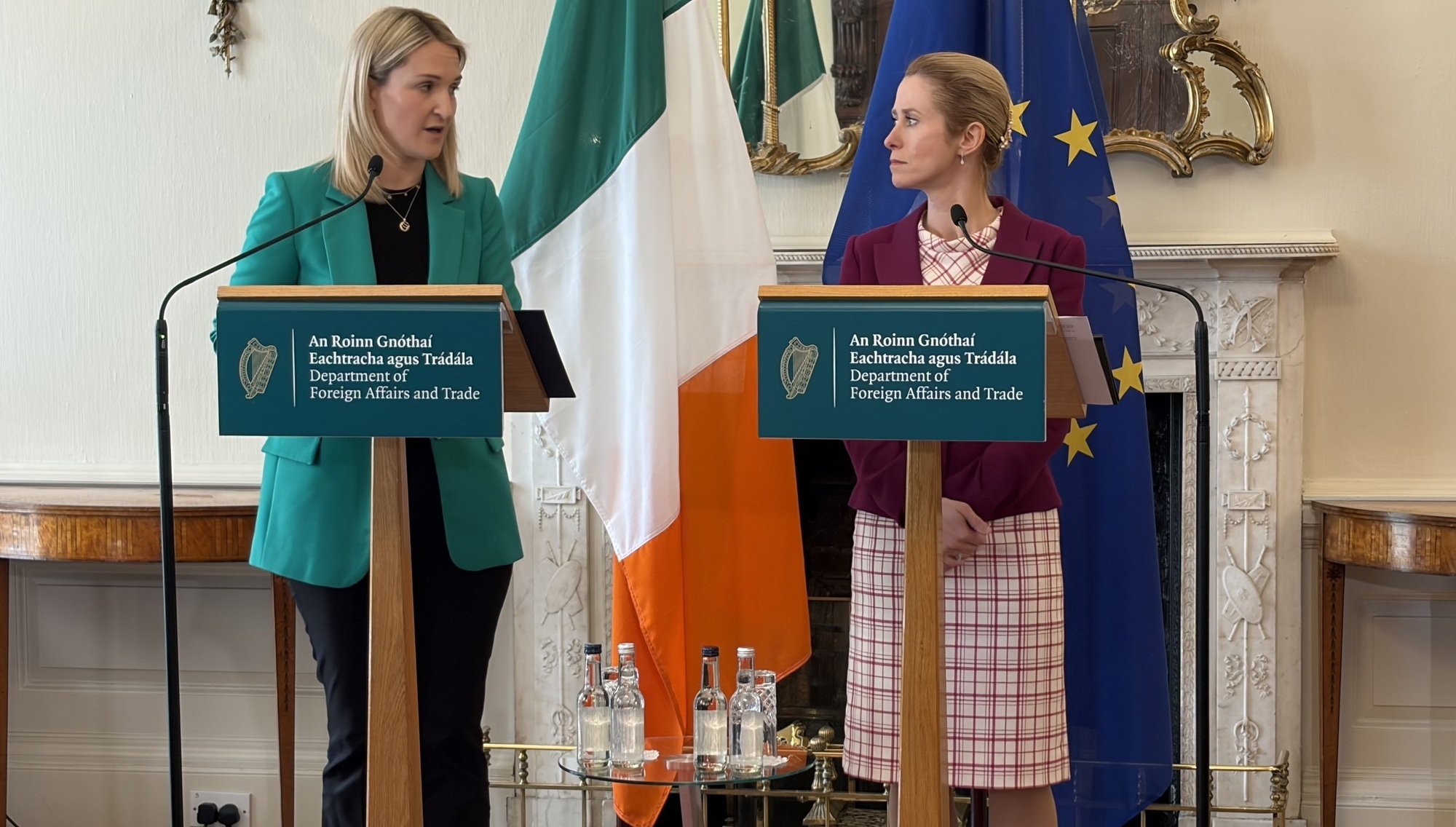
Foreign affairs minister Helen McEntee (left) and European Commission vice president Kaja Kallas (right).

Military neutrality does not provide cover from outside aggression, nor does it absolve a state from its responsibility to defend and secure the European continent. That was the message from EU foreign policy chief Kaja Kallas to the Government during her visit to Dublin this week.
“Ireland's proud tradition of military neutrality is not in question, but neutrality does not provide immunity from the threats Europe faces today. No country in Europe is off Russia's target list," she said.
While Ireland is fortunately geographically farther away from Russia than most other EU states, the spectre of democratic interference — through waves of social media messaging aimed at stoking up tensions and dividing society — looms large.
As previously reported in the , Russian and Chinese “influence networks” sent more than 7,500 posts about Ireland on social media from 2024 to 2025, according to a European intelligence report from the National Counter Disinformation Strategy working group.
Read More
Also during the Dublin riots in 2023, and in other incidents of racial attacks such as the anti-immigration protests in Newtownmountkennedy in 2024, most posts stirring up racial hatred on Elon Musk’s X network came from outside Ireland, according to several different analyses of online activity.
In the case of Newtownmountkennedy, accounts originating in America mentioned language such #IrelandIsFull “in the time leading up to and following the protest”, according to the investigation by the Sky News data and forensics unit.
Given that Ireland is due to hold the rotating presidency of the European Council — the body which leads negotiations on EU policy and legislation on behalf of 27 member states — there's a greater probability we will be a target of hybrid disruption.
Last December, at least four military-style unidentified drones sailed through Irish skies on the night Ukrainian president Volodymyr Zelensky arrived in Ireland. They breached a no-fly zone and flew towards the flight path of the Ukrainian president, though he had landed before they could become an issue. Gardai were alerted and an investigation was launched.
This is a snapshot of the frequent experience of European Baltic states, including Finland which shares a border of more than 1,500km with Russia. A few weeks ago, politicians in Lithuania, including the president and prime minister, were forced to take shelter in a bunker when state intelligence warned of serious drone threats in the capital, Vilnius.
Lithuania — which takes the mantle of the rotating EU presidency straight after Ireland — has vastly increased its spending on defence and security to 5.4% of GDP, such is the imminent, constant threat of Russian aggression.
Vilnius airport is frequently affected and periodically forced — last Christmas, the government declared an “emergency situation” in response to a spate of incursions from Kremlin-ally Belarus after balloons carrying smuggled cigarettes filled the skies.
Finnish, Lithuanian, Latvian, and Estonian armies have conducted several military exercises with NATO allies, testing readiness and capabilities in the event of an enemy invasion. Over the last year drone incursions in Brussels and Denmark have caused security tensions and led to the closure of airports.
And while the threat is not always Russian — in the case of political interference on social media, most of the disinformation comes from far-right, anti-immigrant MAGA enthusiasts — the threat from drone incursions tends to be. Over the last few weeks alone, including Tuesday last, NATO jets scrambled to shoot down a drone that entered Latvian airspace from Russia.
Before that, it was the eastern Romanian town of Galați, near the border with Ukraine, which was hit by a drone that injured two civilians and set an apartment ablaze.
While the threat to Ireland’s infrastructure or airspace is not comparable to the hostility countries close to Russia face, as an EU state Dublin has an obligation to show solidarity and support towards its fellow union members.
The 10th anniversary of the Brexit referendum is upon us on June 23. While there is no comparison to this ill-fated vote, and the bloody, illegal Russian territorial conquest of Ukraine, the outcome of Brexit had very significant potential ramifications for Ireland and the island of Ireland.
First among them was the future viability of the Good Friday Agreement which was directly under threat if the British government pulled Northern Ireland away from the Irish state through leaving the EU with a hard Brexit.
We witnessed several instances of violence throughout the negotiations as a reminder of the past, and what might re-emerge if the delicate balance wasn’t kept intact.
During this time, Ireland’s 26 fellow EU states stood with Dublin. This is despite pressure from London which promised all sorts of things including guarantees for their nation's citizens if they’d be willing to forsake Ireland.
In the end, it was EU unity that guaranteed no physical border was resurrected on the island of Ireland. Countries across Eastern and Central Europe — several of which had been living under Soviet Occupation during the Troubles and had less close consciousness of the Troubles.
Brexit didn't really affect them directly. Yet they did have citizens living in the UK which they also had a responsibility towards. But they chose to support Ireland throughout this time. Ireland shouldn't forget that.

CONNECT WITH US TODAY



Be the first to know the latest news and updates