Sarah Harte: Success of Djamel White and Claire Keegan show going to university isn't everything
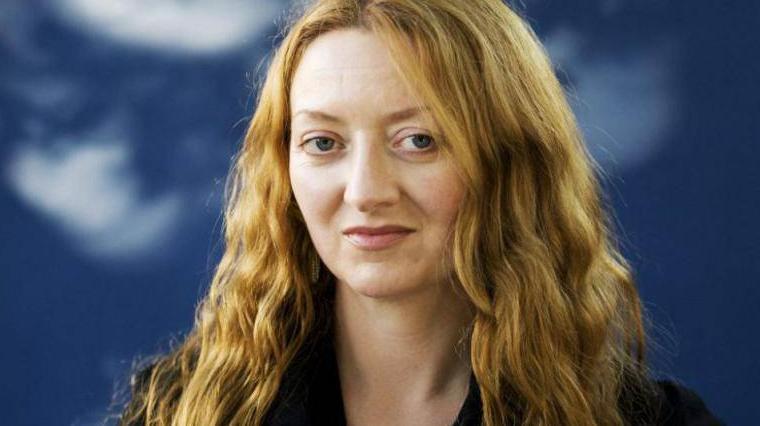
Claire Keegan failed English in the Leaving Certificate. Years later, her novel Small Things Like These was chosen for the Leaving Certificate English course.
Claire Keegan failed English in the Leaving Certificate, something she spoke about this summer. Years later, her novel , which was shortlisted for the Booker Prize, was also chosen for the Leaving Certificate English course. The irony was not lost on her, and she described herself as "tickled" by it.
It should act as a reminder to the thousands of people anxiously waiting for the Leaving Certificate results, and their parents, that a Leaving Cert result is a snapshot of one day — it’s not a measure of a person’s potential.
There are few psychodramas like the Leaving Cert. The first hurdle is getting students through the ordeal, which is basically one final written exam.
Then comes the results day when everyone says: "What did you get?" Fine if you’re a round peg in a round hole ready to answer that question and share your results. Not so fine if you’re leaving school already feeling like a failure.
Or maybe you haven’t even sat the Leaving Certificate, in which case you may feel completely locked out of the education system.
Read More
Fascinatingly, Keegan explained while she could write creatively (an understatement as you’ll know if you’ve ever enjoyed her spare, cool prose), she was not able to explain written texts. She didn’t really go to school much, nor did she read much at that age.
But that distinction between the creative act of writing and reducing writing to analysis for an exam performance is intrinsically interesting itself. It seems paradoxical. The qualities that make writing unique and able to generate multiple meanings are the qualities that must be reduced to be assessed. A master of contemporary fiction could not do this in the prescribed way. Therefore, she failed.

That failed exam did not stop her progressing academically. It’s the labelling of people as one thing or another at a young age that can hamper people from exploring their talents. Labels create unwarranted perceptions about a person’s capabilities and can become a self-fulfilling prophecy. How we respond to setbacks can determine whether talent is lost or captured.
Staying with the theme of successful writers who went their own way, on Thursday came the good news that 28-year-old writer Djamel White was nominated for the Booker longlist for his book . His debut novel is a gritty slice of West Dublin gangland, and to this reader, his book is about masculinity and vulnerability.
I interviewed White in April. He’s a thoughtful young man with an interesting backstory. He holds an MFA from UCD, but his educational background was not straightforward. He did not sit the Leaving Certificate, leaving school at 17.
His path was a twisty one that began with a feeling of not belonging in school.
White benefited hugely from a PLC in Kylemore College in Ballyfermot. Post Leaving Certificate courses, or PLCs, have helped thousands of students progress into higher education or prepared them for employment in different sectors.
ERSI research: ‘Evaluation of PLC Programme Provision’ supports the notion that PLC’s don’t simply prepare people for work but also act as a bridge to higher education.
According to last week, since 2019, those choosing Further Education and Training (FET) post-secondary school, including PLCs, instead of direct university entry have risen by 33%.
Several students I have encountered down the years have used PLCs successfully to progress to university, benefiting from smaller class sizes and more support as they build their confidence. Many of these courses are open, by the way, until the end of August.

We are insecure about education in Ireland. So many bright people in our grandparents’ and even in our parents’ generation could not afford to complete their education, leaving school early. That kind of thwarting of potential understandably leads to a prizing of education.
But it can mean we view education through a narrow lens and consequently view PLCs as a consolation prize rather than a launching pad. Djamel White’s journey from a PLC in Ballyfermot to a Booker nomination stands out. He didn’t so much as take the scenic route as progress at a pace that made him a stronger writer.
From his PLC, White went on to a placement with the Fighting Words programme, which led to a job as a facilitator on the programme. He spoke about meeting the writer Roddy Doyle on his first day and how inspiring he found that. Working there "reinforced his love of writing as something worth pursuing".
The Fighting Words programme is a non-profit creative writing programme set up by Roddy Doyle and Seán Love in 2009. Part of its philosophy is that every child, regardless of their background, deserves the opportunity to discover and develop their creative voice.
During our interview, White spoke about the amazing educators he met along his way who steered him on a path that ultimately led to UCD, the Booker Prize winner Anne Enright’s tutelage, and now a Booker nomination.
White’s story also reveals another truth: talent is unlikely to develop in isolation. It requires somebody to recognise it and nurture it.
Djamel White, who is very close to his grandparents and has been strongly supported by them and his mother, said his family were not readers and there were no books at home. Other adults stepped into the breach to encourage him with his writing.
There are so many unsung heroes working in the educational sector guiding our children, and they don’t get enough praise.
Would White have gone on to create if he hadn’t been mentored by adults willing to give time and encouragement and to recognise their potential?
The Leaving Certificate is a system that works for many students, but it’s also a brutal one for others, reducing young people to a number of points on a given day.
Leaving Cert results often fail to catch creativity, curiosity and raw talent. Claire Keegan and Djamel White remind us potential cannot be captured in a grade on a single day in August. We should remember that in two weeks’ time.