Clodagh Finn: What the 1926 census reveals about early independent Ireland
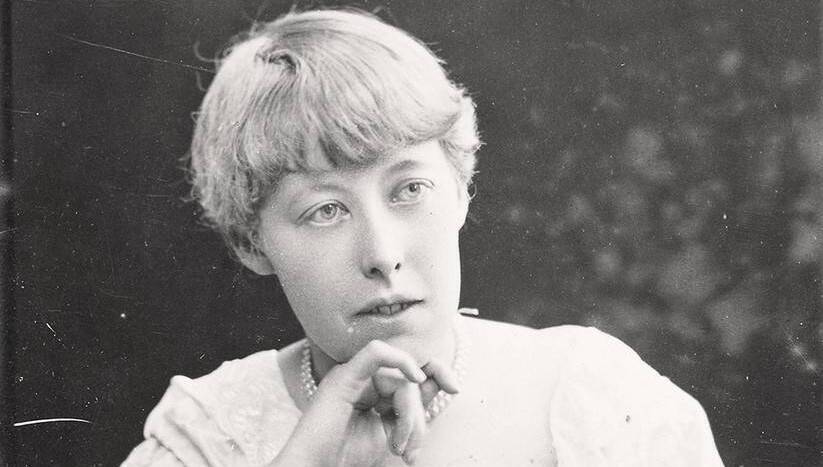
Katharine Tynan's 'The briar Bush Maid' received an enthusiastic review in the Cork Examiner.

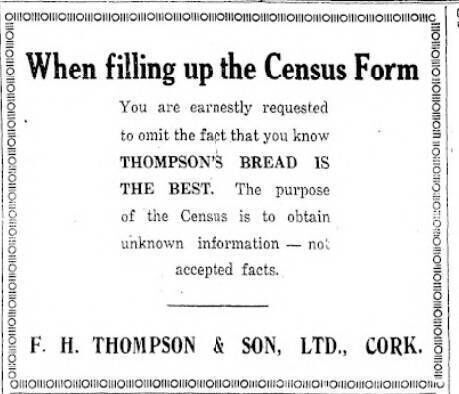
Top marks to Thompson’s bread for its advert on this day, 100 years ago, when the very first census forms were distributed to a newly independent Ireland.
It read: “When filling up the Census Form you are earnestly requested to omit the fact that you know Thompson’s bread is the best. The purpose of the Census is to obtain unknown information — not accepted facts”.
That clever take on a historic moment was carried on the front page of this newspaper on April 19, a Monday and the first publishing day after a nascent State set about defining its own character.
The results of that study are released today, providing “the earliest comprehensive snapshot of an independent nation emerging from a period of profound upheaval”, to use the eloquent summing-up provided by the Central Statistics Office.
In the spirit of providing snapshots, I’ve been time-travelling through the archives to see what was engaging readers a century ago.
HISTORY HUB
If you are interested in this article then no doubt you will enjoy exploring the various history collections and content in our history hub. Check it out HERE and happy reading
Well, the bread-and-butter issues of daily living were to the fore, as the Thompson’s advert shows. Even at times of political uncertainty and financial hardship — or maybe particularly at such times — day-to-day concerns take centre stage.
The front page, then the main platform for adverts, carried a large pencil sketch of five women wearing some of the perfectly tailored overblouses available at JW Dowden & Co on Patrick Street.
You could get a share of the 300 masses said annually in a church in Dublin for a shilling. If you had antique furniture or old Irish silver you could make a killing on the American market by selling them to a sales representative on MacCurtain Street.
If you had a pain, or indeed a rash, burn, cut, ringworm or piles, Gibsol cream would take it away. And you didn’t have to take the manufacturer’s word for it either because a real-life customer gave it a five-star review, saying it had healed her badly sprained foot overnight.
“Lady faints twice from pain, but quickly cured by Gibsol — without swelling or discoloration,” ran the strapline over an ad that is so gushing you can’t but feel sorry that “the greatest skin healer of the age” is no longer available.
The 10-page edition of the , as it was then, was full of local, national and international news stories packed tightly into dense columns.
Here’s one uplifting headline from page five: “Woman saves three sailors.” It describes, but not in enough detail, how Miss Foy Quiller-Couch, daughter of the famous author Arthur Quiller-Couch, single-handedly saved three foreign sailors from dangerous currents in heavy seas when their boat looked like it might be dashed against the rocks in Fowey, Cornwall.
It doesn’t go on to explain that Foy was a keen sailor from the time she was a child and a regular competitor at regattas, but then many of the vast array of news snippets would send a reader down endless rabbit-holes.
The focus of the paper, though, is on page three, which carries an impressive display of nine photographs. Seven of them are of men, and one is of the unveiling of a memorial to Pierce McCan, the Tipperary patriot who died of influenza in Gloucester jail in March 1919.
The ninth photo, and the only one of a woman in the entire paper, is of Lina Cavelli who, the captions tells us, “has been declared the most beautiful girl in southern Italy” (Who gives a hoot about the local angle when there’s a southern belle to champion?)
But perhaps Ms Cavelli offered a much-needed distraction because the aftermath of the War of Independence and the Civil War hum in the background of the coverage.
There is also a sense of a new nation asserting its identity. The main text on page three is in Irish and recounts cúrsaí Gaeilge in Gaelic script while three of the photos focus on a hurling game between Cork and Kilkenny.
(For the record: “Cork won after a splendid exhibition of hurling.”)
This paper’s Dublin correspondent, meanwhile, reported on the strange addition of a young woman “of refined appearance, neatly dressed in black” to the ranks of the organ-grinders in the city.
A card on display related her circumstances; her husband, a well-known athlete and military man, had died and she had no pension, no allowance and was unfit to work herself.
The reporter continued, with a somewhat jaundiced eye: “The spectacle of this well-dressed and superior-looking person turning the handle of a piano-organ draws a crowd and more money than is usual on these occasions. Nevertheless some people may question if the lady was absolutely compelled to seek a livelihood by this conspicuous method.”
If that seems a bit judgmental, it’s interesting to see there are articles about women engaged in a wide variety of activities — rescuing, begging, writing, protesting — there’s a piece about a women’s anti-strike march in London — and even committing crime.
A young girl was sentenced to a year in prison for demanding “money by menaces”, which was, according to Cork Circuit Court Judge Kenny, a very serious crime known as blackmail in other countries.
It’s hard to work out exactly what the girl did, but it seems she accused a doctor of something “extremely severe” and later admitted the accusations were false.
The judge said she could have been given a life sentence but he would send her to a jail of the second division, away from women much worse than her, so that she might have a chance to become “a good woman” in the future.
I wonder what became of that unnamed young woman.
The ‘World of Books’ section is fascinating too. by an officer of the Indian police was just out. (It’s still in print). In 1926, it was described as “an entirely new method of self-protection which… renders the daintiest lady carrying a walking-cane a match for the burliest highwayman”.
Today, its effectiveness is still praised but in very different terms. The defensive and offensive techniques, which can be mastered in days, are described as “practical self-defence for ordinary citizens”.
Speaking of ordinary citizens, it was great to see a woman less ordinary featured in the book section of that year.
There was an enthusiastic review of Katharine Tynan’s latest book, : “No one has a more charming literary touch for dealing with the difficulties which beset a man and a maid when they have fallen in love, and in the story of Elizabeth, [Tynan] has plenty of scope for delineating not only [the] flower-like quality in femininity but the thorn-like quality likewise. Elizabeth is a true maid of a briar-bush.”
Love it. And it’s good to have an opportunity to mention Katharine Tynan, a poet, freelance journalist and novelist who wrote an astounding 102 books.
If a cursory glance of one edition of a newspaper in April 1926 yields so many interesting stories, just imagine the insights to be gained from the census which is available online today. As the National Archives puts it, it tells the story of us.

CONNECT WITH US TODAY



Be the first to know the latest news and updates