Colin Sheridan: Demanding accountability from a government or a society is not racism
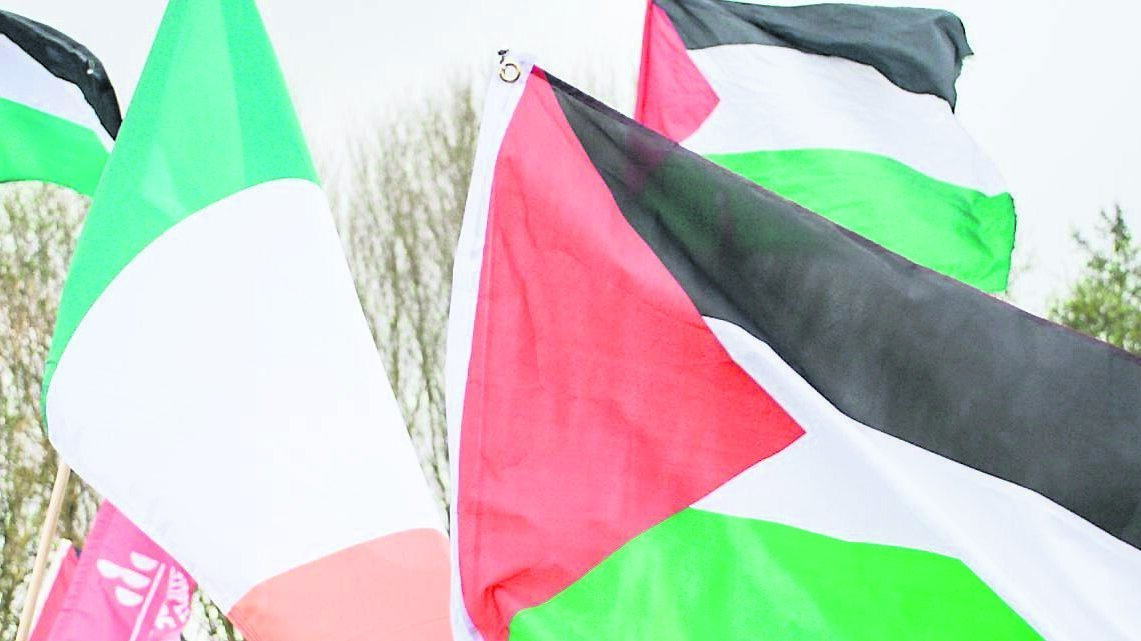
Our instinctive identification with occupied or dispossessed people does not emerge from racial animus, but from muscle memory.
Am I antisemitic? The current discourse in Ireland would suggest that, yes — as someone outspoken against the genocide in Gaza and the Israeli occupation of Lebanon — I am. I say this confidently knowing that I am not.
But, things being the way they are, the truth matters little. What matters is noise, and the noise of the moment dictates that Irish people publicly
opposed to genocide in Palestine are probably antisemitic.
It is a question I suspect many have quietly turned over in their minds over the past 18 months, but with some bemusement.
Not because they harbour hatred towards Jewish people — quite the opposite — but because they have been told, repeatedly and aggressively, that criticism of the state of Israel does itself constitute hatred towards Jews.
The latest eruption came after Patrick Kielty’s interview with Boy George on The Late Late Show — yet another media storm in which the boundaries between anti-Jewish prejudice and opposition to Israeli state policy became deliberately blurred.
And so the accusation hangs once again. Boycott Israeli goods? Antisemitic. Call for Israel to be suspended from international sporting competition? Antisemitic. Condemn the conduct of the IDF in Gaza and Lebanon? Antisemitic. Attend a lecture by Francesca Albanese? Antisemtic. Quote Holocaust scholars who are horrified by Israel’s actions? Platinum antisemitic.
At times, it appears the only way to avoid the label is to say nothing at all. That, one suspects, is the aim. And that should concern everybody.
Because antisemitism, like orientalism, racism, islamaphobia, homophobia, and transphobia, is very real. It exists in Ireland. All of the isms and phobias do.
No serious person could deny that. Jewish people, like any minority community, deserve safety, dignity, and protection from hatred, intimidation, and prejudice.
Read More
But if every expression of outrage at the destruction of Gaza and the annihilation of the Palestinian people is redefined as anti-Jewish hatred, then the word has completely lost its meaning. And once a word loses meaning, it loses all moral force.
There is also something deeply insulting in the suggestion — increasingly common in some international commentary — that Irish sympathy for Palestinians is rooted in some latent hostility towards Jews. It is a bizarrely erroneous reading of Irish history.
Ireland’s instinctive identification with occupied or dispossessed people does not emerge from racial animus, but from muscle memory. And from famine. From centuries of colonial violence, eviction, and subjugation. From the long psychological inheritance of knowing what it is to live beneath the overwhelming military power of an empire while being told your suffering is either exaggerated, inconvenient or deserved.
That history does not make Irish people morally superior, but neither does it make them antisemitic.
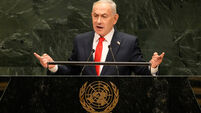
And yet, since October 2023 especially, a strange and dangerous conflation has taken hold in public discourse: The deliberate collapsing of Jewish identity, Israeli statehood, and the policies of Benjamin Netanyahu’s government into one indivisible thing.
Criticise the Israeli state and you are accused of attacking Jews. Ask questions of the indifference of Israeli society to Palestinian suffering and you are a Judeaphobe. Object to the targeting of civilians in Gaza, the Occupied Territories and Lebanon, and you are the spreader of Jew-hatred. Question whether the destruction of entire neighbourhoods, hospitals, and refugee camps constitutes collective punishment and suddenly your motives are placed on trial much quicker than the actions of those pulling the trigger.
This is intellectually dishonest and morally corrosive.
There is another uncomfortable truth in all of this — one many people are frightened to articulate publicly.
The Israeli state has, for decades, wrapped itself in the historical trauma of the Jewish people in ways that often make political criticism extraordinarily difficult. It has weaponised anguish, and turned its scopes on anybody who dares question their retribution.
The horrors of the Holocaust were real. European antisemitism was real. The attempted extermination of Europe’s Jews remains one of humanity’s greatest crimes.
But historical suffering cannot confer permanent moral immunity upon a modern state.
Nor can Jewish identity become a rhetorical shield behind which governments escape accountability for the killing of civilians or policies that many genocide scholars, human rights organisations, and international legal experts now openly condemn.
To say this is not to diminish Jewish suffering.
In fact, it is precisely because antisemitism is real, and because Jewish history contains such profound trauma, that its invocation in political discourse carries such enormous emotional and moral power.
And power, when weaponised by states, can silence. No state should ever enjoy that privilege. Not Russia, nor Britain. Not America, nor Israel. A nation’s trauma may explain its fears, but it cannot excuse its actions forever.
Another tragic byproduct of what the Israeli state has done to itself in doing so violently unto others is that the cynical blurring of criticism of Israel with hatred of Jews ultimately serves nobody — least of all Jewish people.
Because when accusations of antisemitism are deployed indiscriminately, eventually people stop listening even when genuine antisemitism occurs.
That is dangerous. Real antisemitism exists online, across Europe, and within far-right movements that traffic in conspiracy theories about Jewish control, disloyalty, and hidden power.
Synagogues have been attacked. Jewish families have faced intimidation. Ancient prejudices, once thought buried, have resurfaced.
Those realities deserve serious attention and unequivocal condemnation.
But conflating those hatreds with opposition to Israeli state policy does not protect Jewish people.
If anything, it risks tying an entire global faith community to the actions of a state over which most have no control. That is neither fair nor wise.
Last year, Ireland moved towards adopting a definition of antisemitism that critics — including civil liberties groups, legal scholars, and some Jewish academics — warned could chill legitimate criticism of Israel. The Government adopted it anyway.
Why that matters is because societies become frightened — and quiet — when dissenting language becomes punishable.
And democratic societies cannot function if citizens feel they must constantly second-guess whether opposing the slaughter of civilians will render them targets themselves.
We know what antisemitism looks like, just like we know what racism and islamaphobia looks like.
It looks like abuse directed at Jewish people because they are Jewish. Hate aimed at people of colour because their skin is different.
Violence targeting muslims because they praise Allah. It looks like inherited racial hatred. It looks like conspiracy theories and slurs and vandalised synagogues, community centres, and mosques.
But demanding accountability from a government or a society is not racism. I would argue it is the opposite.
Such an action is grounded in empathy. If it were racism, the very concept of human rights would be lost. And perhaps that is why so many ordinary people now feel trapped inside a public conversation that permits no nuance whatsoever.
If people say and do nothing about Gaza and Lebanon, they feel justifiably complicit in horror.
If they speak out, they risk social or professional condemnation. They might well be labelled antisemitic. So they retreat into silence.
But silence, too, has consequences. History labels those who said nothing while entire populations suffered in full public view.
The Jewish people know this better than most.
So yes, perhaps it is healthy to ask ourselves uncomfortable questions.
Am I antisemitic? Am i racist? Am I orientalist? Am I capable of prejudice? Have I spoken carelessly or unfairly?
Those are worthwhile acts of self-examination. But there is another question worth asking too: Who benefits when criticism of a state accused of genocide is treated as hatred of a people? Why, the genocidal state, of course. Because if the answer becomes “any criticism at all”, the accusation ceases to function as a defence against bigotry and becomes a political instrument designed to suppress dissent.
That helps nobody, but the perpetrators. It certainly doesn’t protect Palestinians burying their children beneath rubble. And not Jewish people whose genuine experiences of antisemitism risk being diluted by the reckless abuse of the term.
The fight against all racism matters too much to be weaponised and hijacked by opportunist warmongers.
And the suffering of Palestinians matters too much to be silenced.
CONNECT WITH US TODAY
Be the first to know the latest news and updates

More in this section