Clodagh Finn: Gertrude Gaffney — intrepid war correspondent and Ireland’s ‘ablest woman journalist’
Journalist was fearless, resourceful, resilient and often quite brilliant, writes Clodagh Finn
Clodagh Finn: Gertrude Gaffney — intrepid war correspondent and Ireland’s ‘ablest woman journalist’

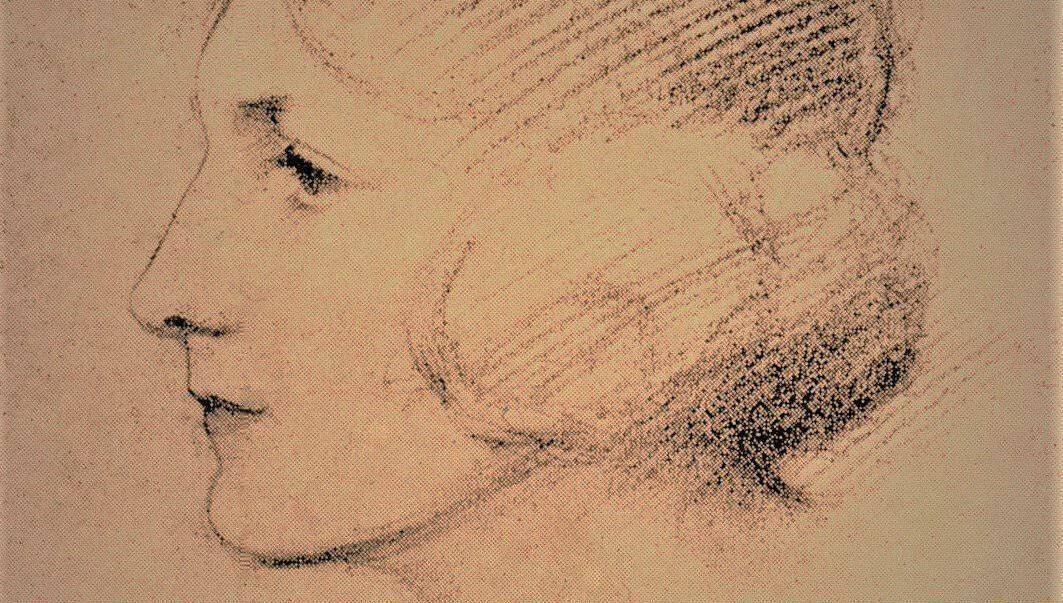
A sketch of journalist Gertrude Gaffney by Seán O’Sullivan which appeared in The Capuchin Annual (1939). Reproduced with permission from The Capuchin Annual.

If Gertrude Gaffney, once described as “Ireland’s ablest female journalist”, were alive today she would surely be reporting from the Middle East.

In the 1930s, she travelled extensively and reported from several war zones. Her car was ambushed by “the Reds” (anti-Franco forces) as she travelled to the front during the Spanish Civil War. On the eve of the Second World War, she was in Poland and saw German troops enter Danzig (now Gdańsk).

She escaped just before fighting broke out.

In March 1940, and against all the odds, she got a tour on a trolley-train of the miles and miles of tunnels that made up the Maginot Line, the fortifications built along the French border after World War One to prevent another war.

Gertrude Gaffney spoke out regularly and strongly on women’s rights.

HISTORY HUB

If you are interested in this article then no doubt you will enjoy exploring the various history collections and content in our history hub. Check it out HERE and happy reading

As it turned out, they proved useless as the German lightning assault on Europe was launched through the supposedly impassable forested terrain of the Ardennes in May 1940, just weeks after her visit. Belgium, the Netherlands, Luxembourg, and France all fell in six short weeks.

But Gaffney had already warned of what was to come in a series of articles published after her extended tour of “the storm-centres of Europe” in 1938.

“The people of this country have not even a faint idea of the ramifications of the Nazi reign of terror in Germany and Austria,” she wrote in the Irish Independent.

It’s quite something to see how proud the newspaper was of its special foreign correspondent. Her photograph appeared on a map of Europe above a column called, “Searchlight on Europe”.

Her work was heavily promo-ed. Here’s an extract from one ad trumpeting her work: “From Budapest she travelled through the Balkans then visited Czechoslovakia, Germany and Austria, seeing for herself the extraordinary things which are happening in these countries. As a result of her experiences she is able to reveal in all its nakedness the intensity of the Nazi persecution of Catholics and Jews.”

Gertrude Gaffney's regular feature logo.

She also wrote a regular feature called “I sketch your world”, an impressive title for pieces which might cover anything from Britain’s role in the Palestinian revolt of 1936 — she was strongly pro-Palestinian — to being asked what she thought of the tall hat and ‘tails’ worn by taoiseach Éamon de Valera to the coronation of Pope Pius XII in Rome in 1939.

“Since I returned from Rome the very first question that everyone I have met so far has asked me was: ‘Did you see Mr de Valera in his tall hat?’… Dear me, but we have awkward memories about the things that do not matter, and a tremendous facility for forgetting the things that do, or did matter.”

One of the things that deeply mattered to her was the way in which the tall-hatted Dev had, two years previously, sounded what she considered to be the death knell for working women in his 1937 Constitution.

Gaffney spoke out regularly and strongly on women’s rights. In the same year, she wrote a series of articles on the difficulties facing Irishwomen who emigrated to Britain and was stinging in her rebuke of parents and the Catholic Church who effectively banished unmarried pregnant women to Britain.

Journalism career

Born in Co Armagh and schooled at St Louis Convent in Carrickmacross, Co Monaghan, Gertrude Gaffney was already working as a journalist in London by 1917. She was accomplished in several genres; she wrote fiction under the alias ‘Conor Galway’, contributed to a number of Catholic publications and was on the editorial staff of The Queen magazine in London.

She was appointed ‘lady editor’ of the Irish Independent in 1920 and would go on to be its special correspondent, writing on a range of issues from the geopolitical implications of war to the difficulties of having a new pup who was chewing on her best slipper.

She came to mind recently because Finola Finlay of the singular roaringwaterjournal.com sent a pencil sketch of her by artist Seán O’Sullivan. It was used as a photo byline in the Capuchin Annual (and is reproduced here with their kind permission) along with this flattering blurb: “Ireland’s ablest woman journalist, whose bright informative style is known to thousands of readers. 'GG' has travelled extensively in Europe.”

Blue Blouses

She was one of the first women correspondents to cover the Spanish Civil War. That war and the Irish women who flirted with fascism have also been in the ether because of Bo Media’s fascinating TG4’s documentary on the Blue Blouses ( Mná na Léinte Gorma), the female wing of Eoin O’Duffy’s fascist Blueshirts movement.

Gertrude Gaffney was not a Blue Blouse, but she was a big admirer of General Franco and O’Duffy’s Irish brigade as was clear in the dispatches she sent from the war zone.

She was unquestionably on Franco’s side although that wasn’t unusual in Ireland, particularly at the start of the conflict when it was seen as a religious war rather than a political one.

In Cork city in 1936, for instance, some 40,000 people attended a meeting of the pro-Franco Irish Christian Front to protest against “church burning and priest slaughter”, as the organisation’s manifesto put it. 

An Irish Christian Front meeting in Grand Parade, Cork on September 22.

This paper published an arresting photograph showing thousands of people raising their hands above their heads to make the sign of the cross.

What is more striking reading Gaffney’s coverage of the war today is her tone. She seems almost flippant in some of the 23 pieces she filed in 1937. She wrote vividly about the spectacle of war, without the political context and depth so evident in her later writing.

Then again, that might have had more to do with her editors.

War coverage

The Independent advertised her first series on one of the worst conflicts of the 20th century as an account of the “thrills behind [enemy] lines in Spain”, the “colour and spectacle in Salamanca”, the “swarms of troops in their extraordinary medley of uniforms” and “all the clamour and the crowding, and movement and apprehension of a country at war”.

Whatever about the approach, Gaffney did nothing to hide her bias. She wrote about the “refugee children orphaned by the Red Terror” and her admiration for the well-groomed Irish Brigade whom she visited in Cáceres in March 1937.

The Irish, she wrote, “stood out in the matter of grooming and smartness of bearing and putting on their uniforms, though how they manage to keep themselves so clean-looking on the very limited amount of water available was a complete mystery to me”.

She wrote of more serious matters too; the wounded, the fighting and venturing far too close to it for comfort. We might describe her as being ‘embedded’ with the Nationalists now — and elite ones at that, as this headline attests: “Shells whizzed over as I lunched with two generals”.

She wrote of the weapons that travelled over them “in corkscrews of high thin sound” as they ate on a mountaintop, latter narrowly escaping fire.

Her reporting of that war might have been one-sided and impressionistic but she proved fearless, resourceful, resilient and often quite brilliant in a wide-ranging career that continued until shortly before she died in 1959.

Less than three decades later, I remember being told that journalism was a very difficult job for a woman. And it was, but what a shame we didn’t learn about the life and exceptional reporting career of Gertrude Gaffney.

x

More in this section

Revoiced

Newsletter

Sign up to the best reads of the week from irishexaminer.com selected just for you.

Cookie Policy Privacy Policy Brand Safety FAQ Help Contact Us Terms and Conditions

© Examiner Echo Group Limited