Clodagh Finn: A woman’s toolkit for change for the next 100 years
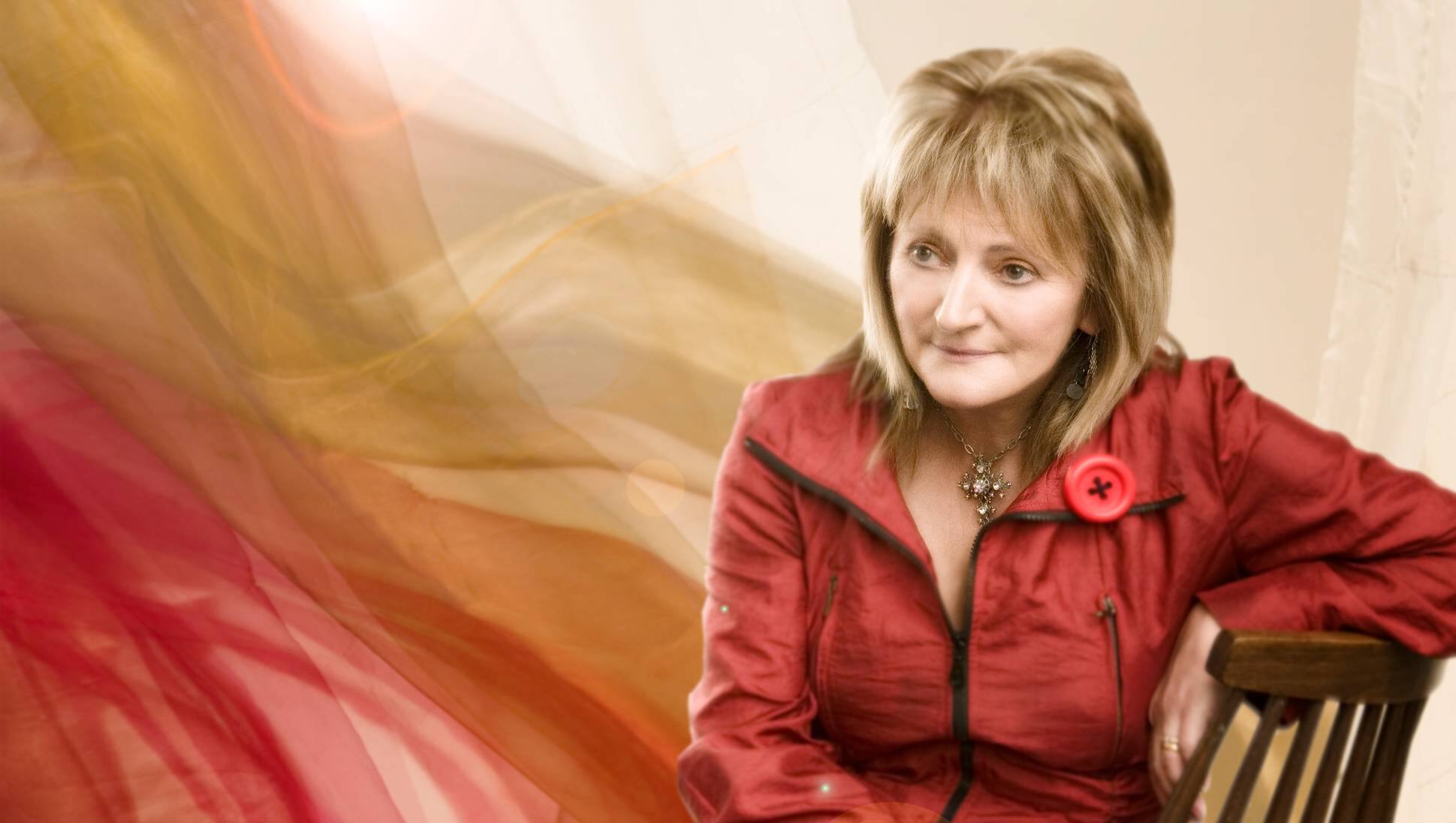
Noirin Ni Riain: 'I’ve mellowed in so many ways, taken life as it comes. Living a much more compassionate life, an interfaith life.'
Before we go forward, let us cast a glance back on this, the eve of International Women’s Day.
As a young child, the theologian and acclaimed singer Nóirín Ní Riain spent her Sundays “saying Mass” in her parents’ bedroom, dispensing Silvermints as Holy Communion to imaginary parishioners.
It was fun but also deadly serious because this little girl born in Limerick in 1951 knew from a young age that she wanted to be a priest. She was gutted when her brother laughed heartily and told her that she could never follow her vocation in the Catholic Church.
At the time, she couldn’t even have been an altar boy.
That poignant but also devastating vignette captures the essence of what it was like to have your ambition thwarted before it even had a chance to take root.
HISTORY HUB
If you are interested in this article then no doubt you will enjoy exploring the various history collections and content in our history hub. Check it out HERE and happy reading
It is told in , an inspiring and uplifting book from the pen of social researcher Íde B O’Carroll which features interviews with seven women, 30 years apart.
The format is ingenious because it situates each woman in the societal scaffolding of the time and shows how, in the period from 1993 to 2023, each one overcame the barriers and restrictions imposed on them to become agents of change themselves.
As we all know, the would-be celebrant of the opening paragraph went on to be ordained Rev Nóirín Ní Riain, Interfaith Minister (One Spirit Interfaith Seminary), in July 2017.
It was, she said, a powerful day, a very exciting day but also a very sad day because ordination for women was not possible in the Catholic Church.

But, as O’Carroll writes, Rev Nóirín Ní Riain PhD achieved her aim — and much else besides — on her own terms.
Not that any of it was easy. At 41, she told O’Carroll that her life up to then had been marked by periods of “trauma and transformation” connected to her art form and her relationships, but that her faith in God anchored her.
When the author returned 30 years later, in 2023, she visited a woman who had experienced divorce (from her late composer husband Mícheál Ó Súilleabháin), motherhood and grandmotherhood, and was now firmly established in her own spiritual work, performing weddings, funerals, naming ceremonies and giving lectures and workshops all over the world.
“From a personal point of view, I don’t recognise myself from that person, 30 years ago,” Ní Riain said. “So much has happened… it’s like looking at a different person, a much wiser person, I hope. I’ve mellowed in so many ways, taken life as it comes. Living a much more compassionate life, an interfaith life.”
There is something extraordinarily comforting in that observation. Things always change and even if they don’t do so in the way we’d like, we get much better at riding the rollercoaster.
That’s a recurrent theme in Íde B O’Carroll’s book, which makes it ideal reading for International Women’s Day. She balances her scholarship with an engaging writing style to lay out clearly the ways in which society holds women — and indeed others — back, but also to show that change is possible.
And there has been momentous change in the years under study. Legislation on divorce, marriage equality, abortion and the collapse of the moral authority of a scandal-rocked Catholic Church have all led to unparalleled advances in the lives of Irish women.
There are new challenges too; a backlash to women’s increased participation in the workforce and the world at large, an epidemic of gender-based violence and the increasing weaponisation of the digital space to degrade and humiliate women.
Though, there is much to celebrate. Witness the turn-out to Wednesday’s protest at University College Dublin after an image of a naked, bruised female student was widely shared. “We stand with her,” the large assembled crowed chanted in the kind of display that will, sadly, be needed even more forcefully in the years ahead.
My hope for this International Women’s Day is that all of us remember what strength there is in looking back to witness how the women who went before us transformed the world as they passed through it.
The late Mary Banotti might be best-remembered as a MEP who spent two decades in Europe but, in the early 1970s, she took a job as a cleaner in a hotel in rural Co Cavan because it meant she could bring her tiny daughter to work with her.
She is the seventh of O’Carroll’s interviewees and recalls taking that job because it meant she could be with her one-and-a-half-year-old daughter and avoid spending the lion’s share of her salary on childcare.

Banotti had just come back to Ireland after the breakdown of her short marriage to an Italian doctor. When her husband took their daughter without her permission for a number of weeks, she decided it was time to come home.
Life as a lone parent in 1970s Ireland was incredibly difficult but Mary Banotti took many steps to make it better, first by setting up a branch of Irish Women’s Liberation in Cavan. She later got a job in Irish Distillers which, she said, opened her eyes to the issue of “problem drinking”. That prompted her to join efforts to establish the Rutland Centre to provide addiction-treatment services.
The impulse to do something concrete to solve an issue is evident throughout her life. With Nuala Fennell, she set up organisations to campaign for family law reform and help women escape domestic violence.
This is but a taste of how Mary Banotti, Nóirín Ní Riain and the five others featured in the book — Margaret Galvin, Garry Hynes, Olwen Gill, Ruth Mellish and Patricia Hamilton — created better lives for themselves though education, the arts, politics and, it must be said, sheer inventiveness and determination.
The gains, says the author, were due to three factors: women’s increased engagement with education; women’s groups’ capacity to successfully organise, advocate and campaign with allies on a range of issues, and the collapse of the Catholic Church’s hold on society.
The transformative power of uniting in a common cause shines out from another project that looked at what happens when women come together for friendship, education, crafting and activism.
The Women’s Grassroots Activism Network joined forces with women’s organisations, such as the Irish Countrywomen’s Association and the Soroptimists, which between them represent over 200,000 women across Ireland, England, Wales and the islands.
The result? The Activism Toolkit 100+ which is designed to enhance the lives of women and girls over the next century. It will be launched at an online event on Tuesday.
As Caitríona Beaumont, principal investigator and professor of social history at London South Bank University, explains: “What we learnt from this project is that there are many forms of activism: Loud, dramatic, quiet, gentle, kind, self-help, creative, craftivism, advocacy, everyday, local, national, and global.”
They also found that all forms of activism were strengthened by collaboration and networking. The grassroots project, which ran from 2023 to 2025, also highlighted the importance of storytelling and making use of our own history and archives to ensure that women’s voices are heard.
The stories of how women coped and changed the world are too often housed in spare rooms, under beds and in dusty boxes in the attic. Those stories are wrought gold for future generations of women facing similar struggles.
Let’s dedicate this International Women’s Day to unearthing them.