Carbon tax changes under consideration as minister defends home energy grants
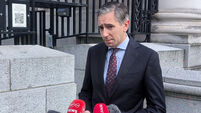
Energy minister Darragh O’Brien has defended the benefits of the carbon tax as Budget discussions intensify over possible changes to planned increases in the tax.
Mr O’Brien said he “did not see any reduction of grants” to scrap fossil fuel boilers or insulate homes – which, he stressed, are funded by the carbon tax.
Speaking at an EU Presidency meeting of energy ministers at Dublin Castle, he said any discussion about carbon tax was an issue for himself and the finance minister, as well as Government colleagues.
He said they will decide “over the next few days” what will happen in relation to carbon taxes and pointed out that he did not see any decision being made outside the Government.
Budget 2027 will be announced on October 6.
Last week, public expenditure minister Jack Chambers told RTÉ News that a lower rate of carbon tax on home heating oil was being considered for the Budget.
Home heating oil prices have increased sharply, from just short of €1,000 for 1,000 litres earlier this year to more than €1,600 now.
Also last week, at an EU Presidency meeting of transport ministers, junior transport minister Seán Canney hinted the Government could “stall” the forthcoming carbon tax rise.
Read More
Asked by the media about carbon taxes, Mr O’Brien said: “What I would say about carbon tax is that it provides us with the funding to retrofit homes and retrofit businesses.
“We have retrofitted over 287,000 homes. We’ve seen a doubling in applications this year. They protect people from future price shocks, reduce energy bills and reduce emissions.”
The Fianna Fáil TD said any discussion around carbon tax was a matter between himself, the finance minister and Government colleagues.
He said he didn’t envisage any decision separate to that in Government, adding: “We will decide over the next few days.”
Mr O’Brien said the carbon tax also funded the boiler scrappage scheme.
He said grants of up to €14,500 were being provided to people to upgrade from fossil fuel boilers to new technology, such as heat pumps.
He said there was an over-reliance on home heating oil and fossil fuel boilers in rural areas.
Mr O’Brien said he did not see “any reduction in the acceleration of grants” and that he wanted grants deployed faster.
Energy costs – and the impact on EU citizens and businesses – and security of supply are set to dominate much of today’s energy meeting.
It is being attended by energy ministers from member states as well as European commissioner for energy and housing Dan Jorgensen and International Energy Agency executive director Fatih Birol.
Russia’s war in Ukraine and the US conflict with Iran have driven fossil fuel prices this year.
AA Ireland estimates that diesel prices at the pumps have risen from €1.72 a litre last February to €1.94 a litre in September, while petrol has increased from €1.73 to €1.87 a litre in the same period.
The company said carbon tax accounted for 19c of diesel prices and 16c of petrol prices in September. Excise and VAT accounted for 55c of the price of diesel and 69c for petrol.
After the fuel protests last April, the Government reduced excise duty on petrol and diesel, but the reductions were set to be unwound from the beginning of November.
The cuts resulted in a 32c lowering of the price of a litre of diesel while 27c was shaved off the cost per litre of petrol.
Ireland’s transport sector – including the haulage industry – largely uses diesel and the Irish Road Hauliers Association (IRHA) has urged the Government to deliver a “firm extension” to the existing excise reductions in Budget 2027.
IRHA president Ger Hyland has said diesel prices have moved above €2.10 per litre at many forecourts and warned they were heading towards €2.20. He has argued that many haulage operations become unviable once diesel moves beyond €1.90 per litre.
Mr O’Brien said the Government was focused on the impact on the transport sector and said haulage was “a critical part” of Ireland’s supply chain.
In relation to the cost of living, he said that the Government started direct payments of fuel allowances on Monday to a quarter of households, which he said were “direct assistance” to people’s energy bills.
Mr O’Brien said member states have “flexibilities” at their disposal to help alleviate the impact of the ongoing energy crisis by adjusting taxation.
He said Irish and European citizens in general were aware that governments were not going to be able to protect their citizens “from every single price increase”.
The minister also defended planned increases in public transport fares by the National Transport Authority, saying that there had been no such rises in “eight years”.
The Dublin TD also said the extra money was going “directly to new services”, with 140 new services next year.
He said commuters wanted both “reliability and affordability” and that expansions were happening to the rail and DART network as well as Cork Commuter Rail and Cork Light Rail.
In relation to reports of a US ban on the export of diesel, he said: “Towards the end of last week I was in Washington DC where I had an opportunity to meet the US Chamber of Commerce and that was a matter we discussed. Obviously, any 90-day diesel export ban in the United States would have a significant impact on use here in the European Union.”
But he said: “From the information I was able to glean in DC, there doesn’t seem to be a push to do that. We’re not going to be complacent about it. I’m very aware of the statements that have been made, but when you talk to others around the administration, it doesn’t seem it would be something that would happen. I think there would be an impact on the United States themselves from diesel ban and impact on other fuels.
“Obviously that was a point of discussion last night here, with the European Commission and member states watching closely. We have to be prepared.”
The US administration has since denied that a 90-day diesel export ban is being prepared, while EU officials have said they remain in contact with Washington over the issue.

CLIMATE & SUSTAINABILITY HUB
CONNECT WITH US TODAY



Be the first to know the latest news and updates