Ministers gather to hammer out details as budget deadline looms
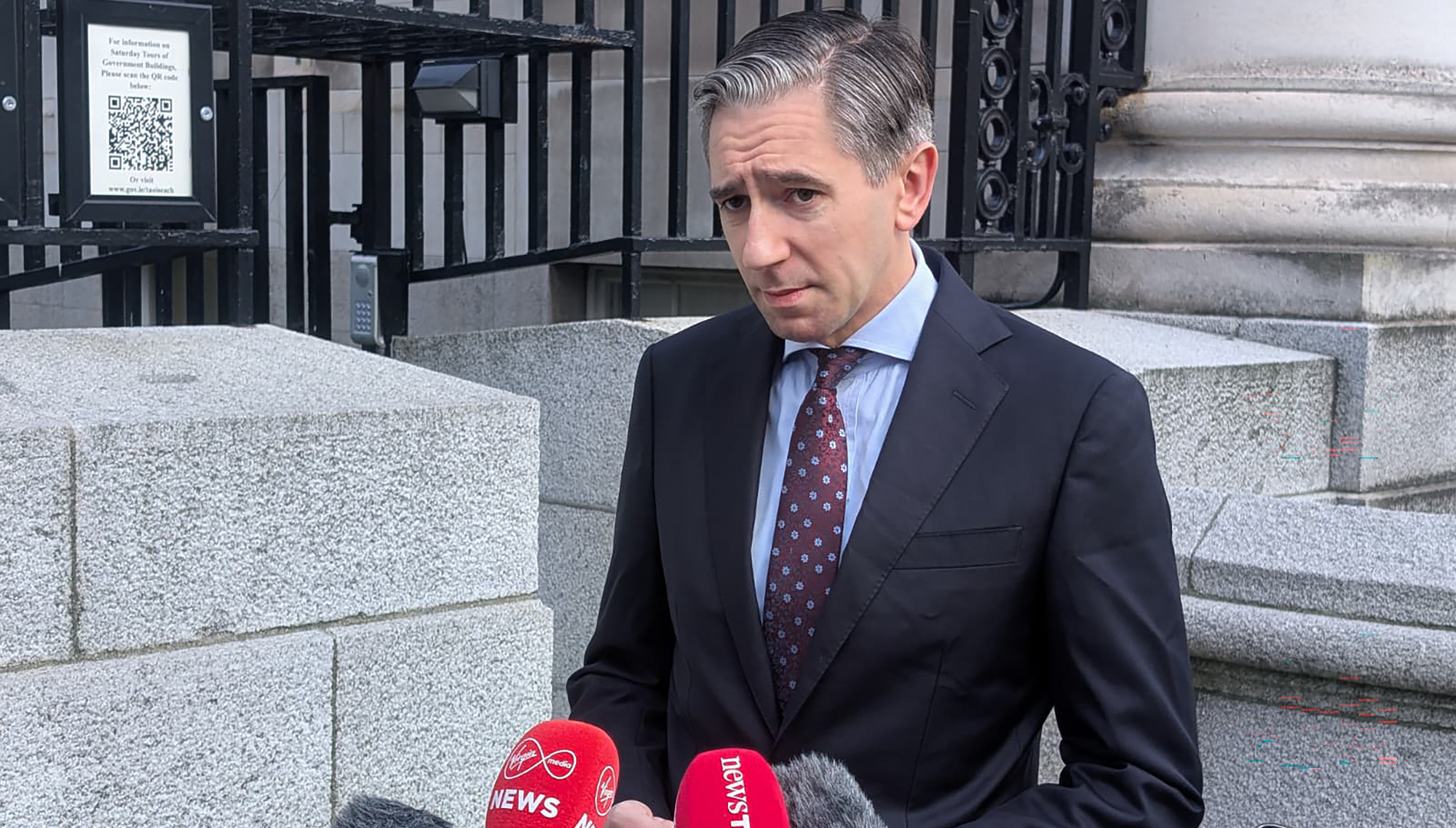
Finance minister Simon Harris will on Tuesday tell Cabinet that he will publish his department’s white paper on Friday, setting out the financial baseline for the current and upcoming year. File picture: PA
Government leaders met late on Monday to hammer out the final shape of next week’s budget.
Finance minister Simon Harris will on Tuesday tell Cabinet that he will publish his department’s white paper on Friday, setting out the financial baseline for the current and upcoming year.
It is believed the paper will show the amount of corporation tax collected this year is now expected to exceed the €35.3bn projection from April.
However, Government sources cautioned that this would not see a departure from the message of recent months, which has been one of restraint and moderated spending.
Sources have said some departments have sought 15% rises on their spending. Public expenditure minister Jack Chambers has asked that increases be kept to 6% at most.
It is understood the budget will pave the way for increases in core social welfare rates of between €7.50 and €10 per week, with €5 added to the fuel allowance, and a cost-of-disability payment.
Mr Harris is set to increase the entry point for paying the higher rate of income tax to at least €46,000 in Budget 2027.
A new analysis from the Parliamentary Budget Office shows that over two-thirds of income tax will be paid by the top 13% of earners next year, while 36% of workers are either exempt or their tax liability is covered by credits.
Read More
The analysis, which compares Irish labour with its European equivalents, found that Ireland ranked sixth among European countries in terms of the highest marginal income tax rate.
However, it had the lowest income threshold at which the top marginal rate applies. Workers here enter the highest tax bracket at just 69% of the average annual wage, meaning that a larger proportion of workers are subject to the top rate of tax compared with countries such as France, Germany, and the UK.
Conversely, Ireland had the third-lowest level of employee social security contributions.
The authors found that while Ireland operates “a strongly progressive system of labour taxation”, it is expected that in 2026, the top 12% of taxpayers, those earning more than €100,000 annually, will contribute approximately 66% of total income tax revenue.
If no measures are taken, this trend will be maintained in 2027.
Meanwhile, the Government has been told by the Irish Property Owners’ Association that it should hike the existing landlord tax relief and introduce a 0% capital gains tax for the sale of rental properties where a tenant remains in
In a letter to Mr Harris and housing minister James Browne, OPOA chairwoman Mary Conway called for several supports, saying the current regulatory and tax position makes it “increasingly difficult for smaller and medium-sized landlords to remain in the market”.
She called for the Government to increase the existing landlord’s tax credit to €2,800 annually. This is above the €1,000 which could be clawed back by landlords on their rental income in 2026.
Ms Conway called for landlords to be excluded from capital gains tax from sales of rental properties in situations where a tenant remains in situ and the house remains on the rental market.
There is also a call for the Government to formally recognise landlords as businesses, which would allow for “full deductibility of legitimate business expenses”, as well as access to pension contribution and allow for full losses to be offset from all income.

CONNECT WITH US TODAY



Be the first to know the latest news and updates