Colman Noctor: World Cup creates rare opportunities for families to come together
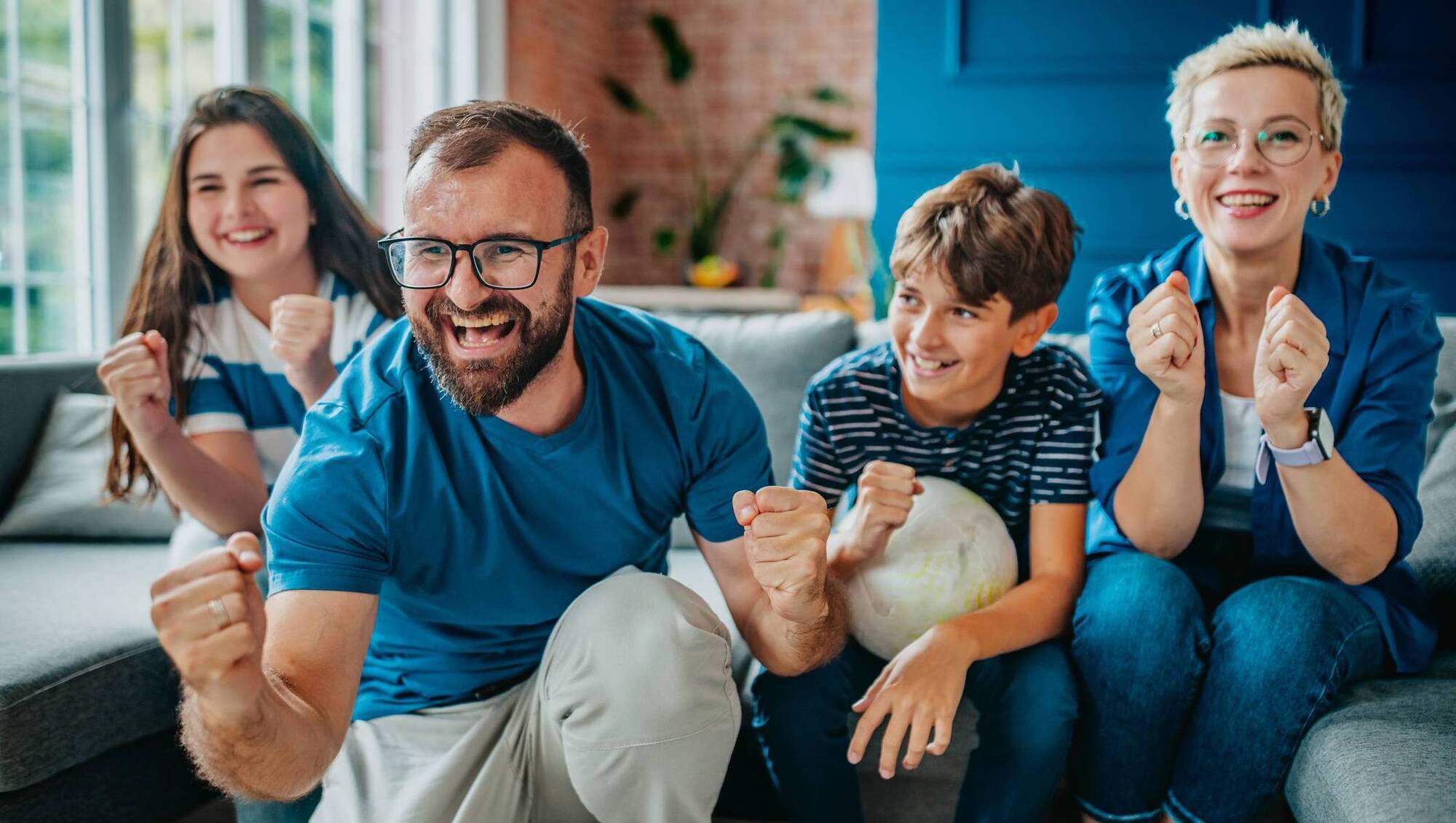
Watching live sport together as a family offers a rare antidote to modern fragmentation. Picture: iStock

Part of me also feels disappointed that my children are not getting to experience the buzz of Ireland qualifying for a major tournament.
My children were still a bit young when Ireland last qualified for the Euros in 2016, but at 16, 13, and 11 now, they are just the right ages to enjoy the peak excitement of a major tournament.
I was trying to explain this to my eldest son last week. I told him that when Ireland qualifies for a major tournament, something special happens. For a few precious weeks, the country shares a common experience. Every conversation in schools, workplaces, and family homes centres on team selections, potential opponents and the latest injury concerns. I even got him to watch the film Saipan as I thought it might capture the significance of these events in our country’s history.
When I reflect on my time as a sports fan, my most treasured sporting memories are not about the matches I watched, but who I watched them with.
I can vividly remember seeing my 90-year-old grandfather leap out of his chair when Ray Houghton scored in Stuttgart in 1988, and I recall doing something similar myself when he scored again against Italy in 1994. I have other memories of hugging strangers in Biddy Mulligan’s bar in Edinburgh in 2002 when Robbie Keane scored the dramatic injury-time equaliser against Germany. And my mother still recalls the image of my Dad and me with our heads in our hands, unable to look as David O’Leary took ‘that’ penalty in Italia ’90.
The details — where I was sitting, who was in the room, and how I felt — are still crystal clear in my mind.
Those memories have endured not simply because they were important sporting moments but because they were shared experiences. On these occasions, entire families and communities watched together. Children sat alongside parents and grandparents, experiencing the emotional highs and lows together. Long after these tournaments ended, the memories remain.
Research published in the journal supports the idea that sharing a love for sports is a powerful emotional anchor between parents and children and suggests that watching sports together can enhance their social well-being and sense of community integration “by creating a space where families pass down values, build resilience, and construct a lifelong sense of shared identity”.
In 2024, research from Waseda University in Japan also found that watching live sport activates the brain’s reward circuits, with regular viewers showing changes in areas associated with wellbeing and positive emotion. Researchers also concluded that watching sports together may contribute positively to our overall psychological health.
The real benefit I suspect, lies not only in what happens within our brains but also in what happens between us. This dynamic is even more evident when we consider fans who attend live sporting events.
Prof Brendan Kelly spoke about this topic recently on an episode of the Ray D’Arcy Daily podcast, where he described the powerful group dynamics at sporting events. He gave the example of how complete strangers can be seen chanting in unison on Hill 16 and singing songs about their heroes and hugging each other in jubilation when the final whistle blows and their team is victorious. This is a unique and transcendent experience that is rarely replicated in any other setting and exemplifies the importance of the ‘shared sporting experience’ for innately social beings.
Family life has changed dramatically over the past two decades. Television used to be a communal activity, with everyone watching the same programme together. Today, most homes have multiple viewing options such as televisions, tablets, smartphones, and laptops, leading to family members spending entire evenings consuming completely different content in different rooms. Parents scroll on phones while teenagers watch YouTube videos upstairs, and younger children stream something entirely different on a handheld tablet.
We may be under the same roof, but we are not sharing any experiences. While some might argue that this sidesteps the issue of people arguing over what to watch, the loss of communal experiences is more concerning.
This is where sporting events such as the World Cup offer a rare antidote to modern fragmentation.
Unlike many forms of entertainment, live sport unfolds in real time. There are no opportunities to binge-watch, and no chance to skip ahead. The uncertainty of the outcome demands attention, and for those 90 minutes, everyone is invested in the same story.
Even without Ireland’s involvement, the World Cup creates opportunities for families to come together. There is also the unique excitement of letting children stay up later than usual to watch a particularly important game. The anticipation, the snacks, the discussions about who might win, and the shared atmosphere all become part of the late-night experience.
As parents, we often become understandably protective of sleep routines. Most of the time, that is absolutely the right thing to do. But occasionally, like during the World Cup, making exceptions is excusable. The potential gain of family togetherness is worth an occasional late night. A child is unlikely to remember an ordinary Tuesday night spent following their normal bedtime routine. They may, however, remember staying up with their family to watch Pico Lopez from Crumlin put on a heroic display for Cape Verde against Uruguay — wrapped in a blanket, fighting sleep, while everyone cheers together.
I often speak about the importance of family rituals. These don’t have to be elaborate. In fact, the simplest rituals are often the most powerful. They create a sense of belonging, predictability and connection. Watching key World Cup matches together can become one of those rituals.
Sport also provides a safe space for children to experience emotions. They witness excitement, disappointment, frustration, and joy. They learn that what you hope for doesn’t always materialise, and that losing is part of life. As all Irish rugby supporters will understand from repeatedly believing this might finally be our year to break the Rugby World Cup quarter-final curse, only to have those hopes dashed again.
Yet we come back again and again, which is important too. There is a resilience in supporting a team that mirrors many of life’s broader lessons.
Perhaps that is why memories of Italia ’90, USA ’94, and Japan 2002 remain so vivid. They remind us not only of famous goals or victories but of shared moments. Of sitting beside people who mattered to us and caring deeply about something together.
Ireland’s absence from the World Cup means we miss out on some of that collective national experience. Yet an opportunity for family connection remains. The tournament still offers moments that can bring us together in a world increasingly designed to keep us apart.
In an era of personalised screens, the World Cup offers something increasingly precious: the chance to create a memory and spend time together. These experiences of togetherness are more important than we realise, and the opportunities are becoming rarer in our increasingly individualised world, so we need to seize the opportunities when they come along. And who knows, in 2030 we might have even more to celebrate if Ireland are actually at the World Cup.
- Dr Colman Noctor is a child psychotherapist
CONNECT WITH US TODAY



Be the first to know the latest news and updates