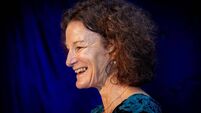
My Childhood with Ralph McTell: 'At grammar school, I realised we had far less money than others'
Ralph McTell: 'When my four children were born, mother lavished attention on them, hugging and pampering them. She was so different to how she had been with us that I felt jealous.'
“I’m also preparing for my final tour of Ireland and working on my next album, which features some of my favourite Irish artists reimagining some of my old songs. It’s no wonder I’m feeling nostalgic.”
The childhood he describes to the is hardscrabble. His mother, Winifred, met his father, Frank, when Frank was a soldier during the Second World War. They married in 1943, while Frank was on leave, settled in Croydon, and McTell was born in 1944. A second son, Bruce, followed in 1946. A year later, Frank left.
“One of my earliest memories is from when he was still with us,” says McTell. “I’m sitting in a high chair, watching my mother take an egg cup out of a pie. He’s beside me and I can see his curly hair and sallow skin. But I can’t hear his voice. I can’t remember what he sounded like.”
Frank died in an accident when McTell was 13. The family read about it in a local newspaper. “At first, my mother didn’t think it was her Frank, because the article said he was a butcher and our father had been a mechanic,” says McTell. “We later found out he had retrained.”
Winifred had to raise her sons singlehandedly and the family had very little money. McTell often thinks back to the basement flat they lived in for the first 11 years of his life. It was “so full of mould that it was eventually condemned”.
Winifred took on whatever work she could find and McTell and his brother would make money knocking on doors to ask for newspapers to sell as salvage. “We’d make sixpence a week, which would pay for a Saturday trip to the pictures,” he says.
He thinks he was “a bit of a dreamy kid”, with a curiosity about the world. As an example, he tells of the time he tried to figure out how radio worked.
“I was convinced there had to be little people living inside it. So I took the back off our radio, expecting to see them sitting in miniature armchairs. That radio was never the same afterwards.”
Yet the family still loved listening to it and were particularly fond of comedy shows. “Mother would laugh listening to those shows,” says McTell. “And she was tough the rest of the time. Life was hard for single mums in those days and I know now that she suffered. But it was so nice to hear her laugh. It made me happy.”
During the summer holidays, the brothers would be sent to stay with their mother’s sister in Banbury, in the countryside, which was about 160km away. McTell smiles as he recalls how “sweet and much more easy-going than mother Auntie Olive was”.
Their uncle was a source of fascination. “Growing up without a dad, Uncle Reg was the main father figure in our lives,” says McTell. “So we looked to him for guidance on manly things. We’d be entranced just watching him shave.”

When the boys went back to Croydon, and to school, canings were a regular occurrence. McTell wasn’t happy there, but both he and his brother were bright and passed the 11-plus exam to win a place in grammar school.
“That’s where I became aware of class,” he says. “I’d never felt poor as a child, but at grammar school, I realised we had far less money than many of my classmates.”
That awareness came at around the same time as the death of his father and McTell began acting out. Instead of telling his mother he needed money for sports gear — money the family didn’t have — he would skip sports class entirely. He gradually started skipping other classes and began failing exams.
He enrolled in a new school, which is where he learned how to play the guitar.
From early childhood, McTell had enjoyed singing. “I loved how happy people sounded when they sang songs and loved singing hymns and carols at school,” he says. “But best of all were the times I’d hear mother singing in the scullery. She would sing sad wartime songs that would go right through me.”
The guitar opened up a world of possibilities to McTell. In his late teens, he strapped it to his back and took off hitchhiking around Europe. He would busk to make money for food and says he would “send postcards home to reassure mother I was still alive”.
Looking back, McTell feels a complicated fondness for his childhood. “When my four children were born, mother lavished attention on them, hugging and pampering them,” he says. “She was so different to how she had been with us that I felt jealous.
“She fed us, clothed us, and kept us clean, but a lot of the time, she was harsh and tough on us. But she also told us stories, recited poems, and exposed us to music, all the magical things that make life worth living.”
- Ralph McTell’s final tour of Ireland, Somewhere Down the Road, runs from October 17 to November 08. It includes a show in Cork’s Everyman Theatre on November 01. Tickets are available from ralphmctell.com