Colman Noctor: 'When can our children get the chance to practise responsibility?'
Nobody learns responsibility by being told to be responsible; they learn it by carrying responsibility
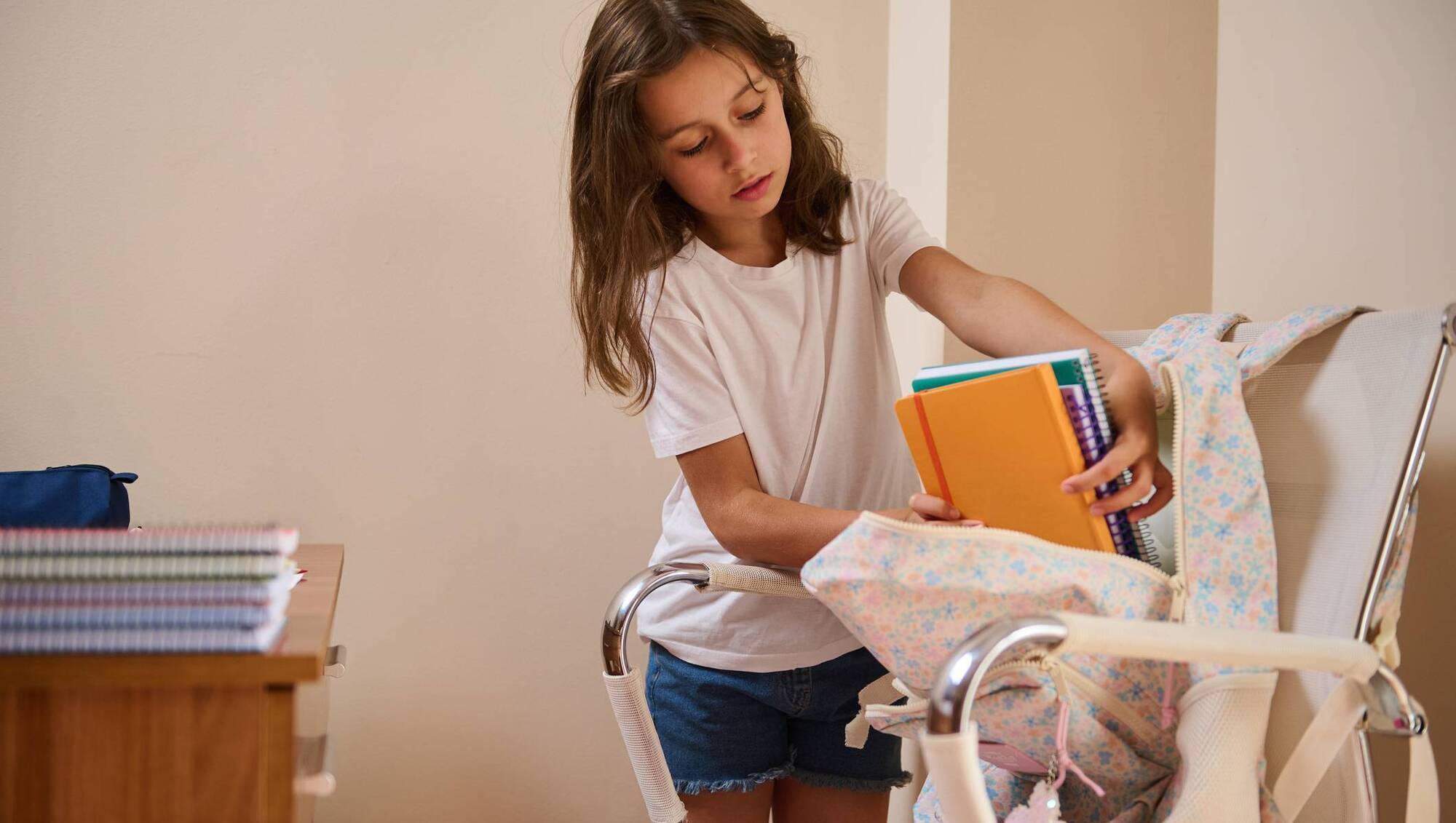
The challenge for parents is not to make childhood harder but to make responsibility more accessible, such as leaving them to organise their own school bags. File picture

The challenge for parents is not to make childhood harder but to make responsibility more accessible, such as leaving them to organise their own school bags. File picture

CAN you teach responsibility, or does it need to be practised?

It is often claimed that teenagers today are less mature than previous generations. But what if it is less about immaturity and more about their having had fewer opportunities to practise responsibility?

A common misconception is that responsibility can be taught. We explain it, encourage it, remind children of it, and sometimes lecture them on its importance. But responsibility is more like wisdom than knowledge. You cannot hand it down. Nobody learns responsibility by being told to be responsible; they learn it by carrying responsibility.

For previous generations, opportunities to develop responsibility arose almost organically. Children walked to school alone, looked after younger siblings, took Saturday jobs, answered the family telephone, and solved countless minor problems without adult intervention. 

None of these experiences seemed particularly significant at the time, yet collectively they formed a vital apprenticeship for adulthood.

Today’s childhood often looks very different. We remind children to bring their PE gear because we’ve already packed it. We email teachers when homework is forgotten. We manage their calendars, track their location via smartphones, and solve logistical problems without them even realising they existed.

None of this stems from poor parenting. It stems from love, concern, and time pressure. Modern parents are deeply invested in their children’s wellbeing, but our drive for efficiency can unintentionally deprive children of the very experiences that help them become capable young adults.

Take something as ordinary as ordering food at a cafe. Many teenagers will happily spend hours communicating with hundreds of people online, yet still look to their parent when the waiter arrives.

This isn’t social anxiety, it’s a lack of practice. The parent orders because it’s quicker, but the young person never develops the skill that comes from doing it themselves.

Continuing on this trajectory leads parents to contact employers after an interview or to contact universities about accommodation. Each intervention is understandable in isolation. Collectively, however, they convey a subtle message: “Someone else will manage difficult conversations for you.”

But responsibility is more than completing tasks. It develops the belief that “I can cope”. 

Albert Bandura described self-efficacy as the belief in one’s ability to deal with life’s challenges. 

Importantly, he found that this belief develops through mastery rather than reassurance. People become capable by successfully navigating manageable difficulties, not by watching someone else solve them on their behalf.

The erosion of childhood responsibility isn’t confined to families. It is embedded throughout society.

Impact of technology

Technology has utterly changed how responsibility is practised. Friendships once relied on knocking on doors and negotiating disagreements face-to-face. Today, a disagreement can end with someone simply leaving the group chat.

Many of the small frustrations that once demanded initiative have quietly disappeared. Sat-navs mean we rarely get lost. Streaming services remove the need to wait or choose carefully. Banking apps notify us before we overspend. Online shopping means we rarely speak to retail staff. 

Even university life has become increasingly supported, with automated reminders, digital timetables and online portals reducing the need for students to organise themselves.

With all these safeguards and shortcuts in place, you would imagine that our children should be far more independent than we were, but the opposite is the case, because trackers, sat-navs, and notifications don’t enhance responsibility, which is the central currency of independence.

None of these technological developments are inherently negative. In many respects, they represent remarkable progress. But convenience carries a cost if it removes too many opportunities to think, plan, persevere, and recover from mistakes — all of which are core aspects of responsibility.

I fear AI may further accelerate this trend.

Students can already ask ChatGPT to summarise books they have not read, explain concepts they have not grappled with, generate essays they have not planned, and draft emails they have not attempted to write.

AI can also negotiate wording for difficult conversations and increasingly make decisions that once required reflection and judgement.

The risk is not that young people become less intelligent. It is that they become less accustomed to the productive discomfort inherent in learning.

I have often written about ‘surmountable stress’ and ‘desirable difficulty’. These ideas suggest that struggling with a problem is often the very process through which deeper learning takes place, and that responsibility develops in much the same way. It grows every time we wrestle with uncertainty, tolerate frustration, make imperfect decisions and accept the consequences.

If AI consistently removes that struggle, we may produce young people who know the answer without fully understanding how they arrived at it.

AI can provide knowledge in seconds, but responsibility depends on wisdom. Knowledge tells us what we can do; wisdom helps us decide whether, when, and whom our actions might affect. That judgement is rarely acquired through instruction alone.

Even employment has changed. Part-time jobs, once almost a rite of passage, are becoming less common among younger teenagers. Yet those first jobs were never only about earning money. They taught punctuality, accountability, customer service, teamwork, and what it meant to be relied on by someone outside your family.

Psychologist Jeffrey Jensen Arnett argues that adulthood has become a longer transition than it once was, with many traditional milestones arriving years later. Rising housing costs, prolonged education, and changing careers mean young adults remain financially dependent for longer. 

But developmental opportunities have also evolved, with children spending less time unsupervised.

The challenge for parents is therefore not to make childhood harder but to make responsibility more accessible.

Chances for practise

That might mean expecting children, with the exception of those with dyspraxia or other relevant additional needs, to organise their own school bags, manage their own alarm clocks, order their own meals, travel independently when appropriate, contribute meaningfully to family life, earn some of the things they want rather than automatically receiving them, or experience the natural consequences of forgetting something rather than being rescued every time.

While these may seem minor interventions, they are becoming psychologically crucial. Each one communicates, “I trust you”. Trust is one of the most powerful teachers of responsibility we have.

None of this means abandoning children or reverting to the carefree parenting of previous decades. Today’s world is different, and in many ways, safer parenting has brought enormous benefits. 

Young people are generally more emotionally literate, more accepting of difference, and more comfortable discussing mental health than any previous generation. But, as is so often the case, the dial may have swung too far in the other direction.

Emotional awareness and practical responsibility are not the same thing. One can be discussed; the other has to be experienced.

Perhaps the question modern parenting needs to ask is not “how do we teach responsibility?” but “where are our children getting the chance to practise it?”

Responsibility isn’t learned on TikTok or in another school class on ‘life skills’. It is learned every time a young person is trusted with something meaningful, allowed to make mistakes, expected to recover, and discovers they were capable all along.

Despite spending my professional life studying how responsibility develops, I have realised that this is one area of my parenting that still needs work. It is far easier to talk about responsibility than to tolerate the messiness of letting children practise it. 

They will forget, make poor decisions, disappoint us and sometimes fail. But that is not evidence that they are incapable of responsibility; it is the very process through which responsibility is learned.

My job is not simply to teach my children the theory. It is to create enough space for them to experience the consequences of their choices, while knowing I am there to guide them when they need me. 

Responsibility cannot simply be explained. It has to be lived and experienced.

More in this section

Cookie Policy Privacy Policy Brand Safety FAQ Help Contact Us Terms and Conditions

© Examiner Echo Group Limited