Play in a hospital setting helps children cope with illness — here's why
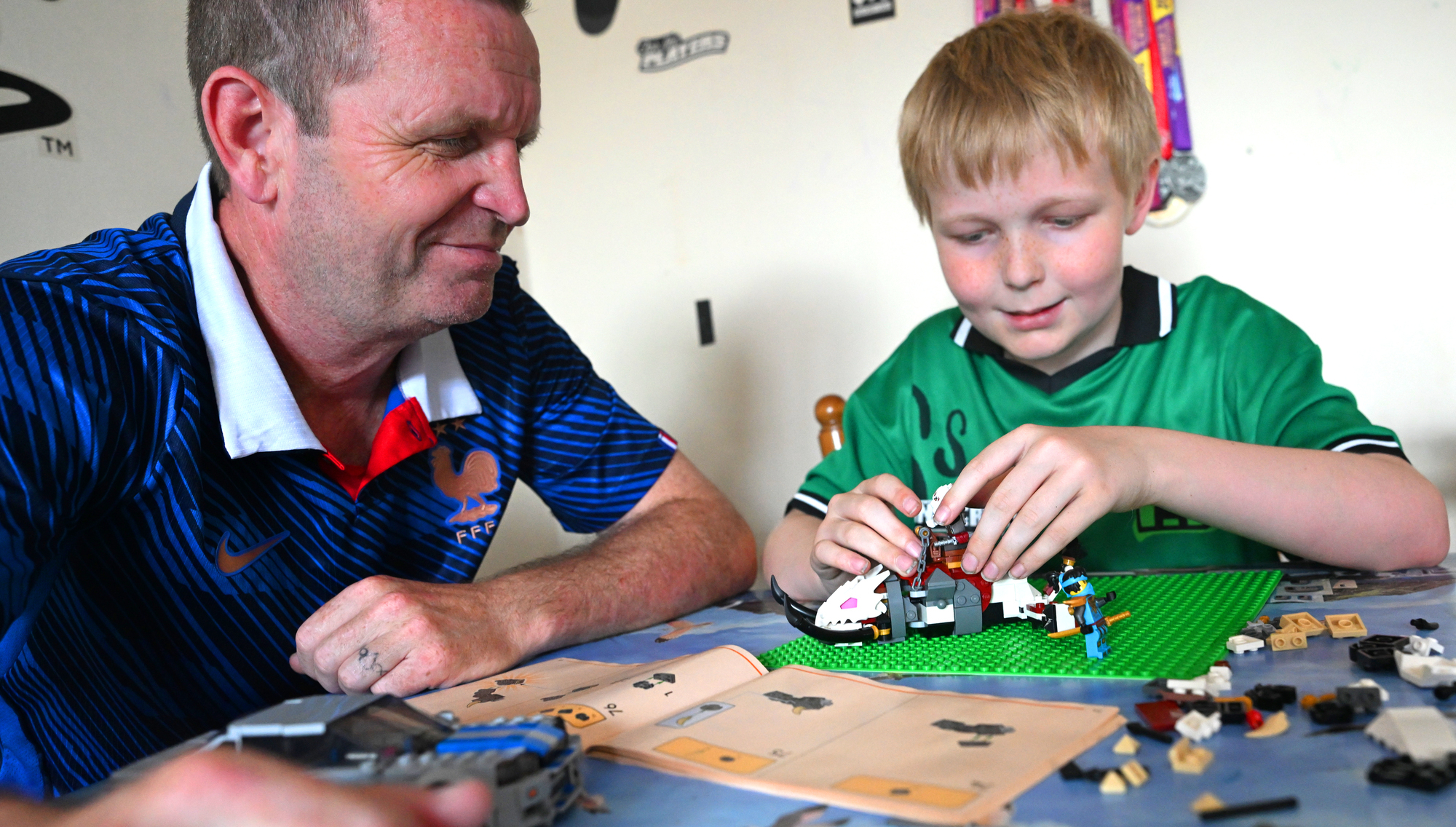
10-year-old Kye Lenihan playing Lego with his dad Terry. Pictures: Larry Cummins
Kye, now 10, was diagnosed with a rare skull condition, craniosynostosis, when he was three. One or more sutures in a baby’s skull fuses too early, causing abnormal head shape and restricting brain growth.
Lenihan and her husband, Terence, as well as other family members, had noticed from Kye’s birth that his head was slightly larger and they mentioned it at the newborn check-up.
“The doctor said he’d grow into his head. The PHN, at the three-month visit, said his head was measuring on the higher scale and we’d keep an eye on it,” says Lenihan, who lives in Donnybrook, Cork.
By the time Kye was six months, his mum recalls not being able to get hats for his age to fit him. “Not without stretching them to their limits. They were ripping. His head size was becoming noticeable.”
Diagnosed in late 2019, Kye was already in playschool. “He was putting things together, getting more conscious of his head. We kept his hair long to make it less noticeable, and he’d wear his daddy’s hats.”
On the day of diagnosis, Lenihan realised in the clinic waiting room that “this is reality now: We’re here for a reason. We didn’t know what the doctor was going to say and every time a name was called, we were hoping it was us next, just to put us out of the waiting”.
Kye was quickly diagnosed, but needed to return to Temple Street for an MRI pre-surgery to “make sure there was nothing else happening”. Lenihan says they were lucky Kye got the MRI a few months ahead of the pandemic.
Yet getting him to submit to the scan was not easy.
“The plan was to do the MRI and then do blood tests. But in the MRI room, Kye got very panicked. I was waiting outside and could hear him screaming for me to help him. He was too worked up. They couldn’t do it, though they did get the bloods.”
What turned things around was bringing Kye to the sensory room. “It was what he needed, this break in this really cool, fun room. We’d never been in a room like it before. It wasn’t dark or bright, it just had a twilight vibe to it.
“It had lava lamps, funky mirrors where you look different sizes, hopping stones, fidget toys, pop-its, little bean bags. It was like you were in hospital, but you weren’t in the hospital environment.
Lenihan says the interlude allowed Kye to ground himself enough to undergo the MRI. “They let his dad into the room with him and they got what they needed as fast as they could.”
Because Kye is asthmatic and medics wanted to minimise covid infection risk, the little boy finally had his surgery in May 2021. “Our emotions were all over the place. We broke down signing the consent forms, and again when we handed Kye over for surgery. Those six hours were the longest of our lives.”
The surgery, posterior cranial vault remodelling, worked to “reshape the back of his head, because it fused too early”. Lenihan says: “It allowed him to have a ‘big boy’ haircut, get hats that fit him properly, and gave him back so much confidence.”
In the days after surgery, Kye couldn’t walk. “We honestly thought he was broken. But the staff gave us the comfort we so badly needed.”
There were some light moments. “I’ll always remember a nurse asking Kye if he wanted mash, and his witty response was, ‘Do I look like I want mash?’ Everyone burst out laughing. It was the first glimpse his personality was coming back. The next day, he took his first steps again. Within two days, he was discharged.”
Five years on, Kye’s doing great. “He’s autistic, so he has all the anxiety traits, but he’s funny, he’s a gent, he has his manners — he’ll hold the door open for girls — and he’s the best big brother to his sister, Paris, who’s three. He’s not a big fan of hospitals, but he loves Lego, Minecraft, PlayStation, and his books.
“It was such a tough time, but thanks to the team in the cranio department, he knows that he’s strong enough to overcome anything and that a scar or diagnosis doesn’t define who he is.”
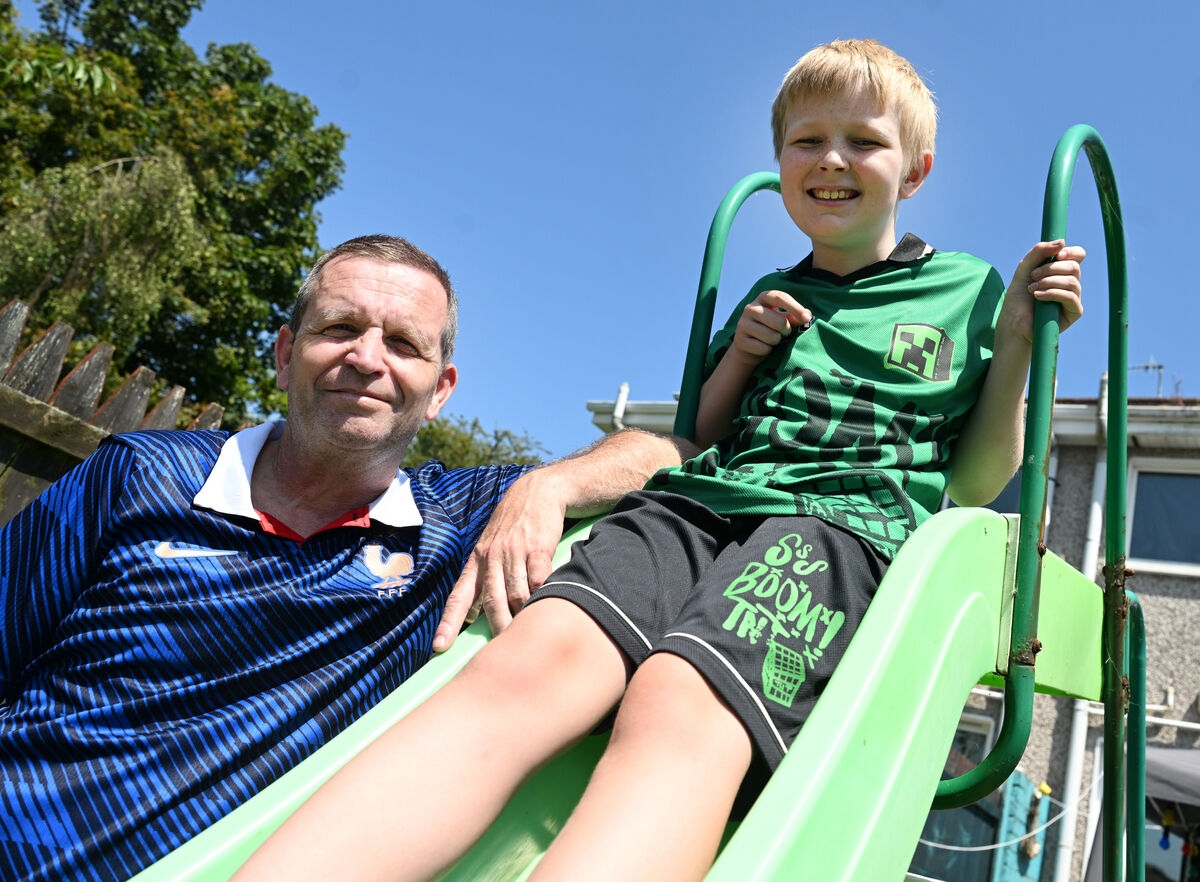
Still attending Temple Street for annual check-ups, Kye continues to use the sensory room on bad days. “He’ll start wringing his hands, covering his ears, his whole body will start shaking — you know there’s going to be a meltdown. On those days, the sensory room brings him away from all the hustle and bustle: There’s no noise, no hospital smell, no beeping.
“That room takes him away from it all: He grounds himself in it, he forgets where he is, he’s in his happy place.”
Fratangelo outlines the different forms such therapeutic play can take. “Normalising play, where the child’s invited into the playroom and allowed find an activity they like: For example, Lego or arts and crafts. It gives them a bit of fun in the hospital and a break from medical procedures.”
‘Preparation play’ often happens at a child’s bedside, with medical equipment and educational materials brought along prior to a procedure. “It helps the child understand the procedure and what their role might be during it; it prepares them for that. It can be very powerful; it makes the unfamiliar familiar and allows the child succeed at a difficult task and feel proud of that.”
Play can also be a support and distraction during a procedure, whether the child’s playing a game or being distracted with, for example, music or bubbles.
Following a play session, Fratangelo says you can see children’s anxiety reduce. “Their stress levels are down. They feel more comfortable and relaxed in the environment.”
She says hospital-based play benefits parents, too. “Often, parents mightn’t have the words or strategies to support their child in hospital. Once they know how to support their child through play, they can do it, too.”
Fratangelo says international studies consistently find play-based interventions in healthcare settings can improve children’s coping skills and emotional resilience, reduce perceived pain during procedures, and create more positive healthcare experiences for children and families.
Lenihan has learned first-hand that play in hospital is not simply a distraction from treatment, but an important part of helping children navigate illness and maintain a sense of childhood while in hospital. “People think the playroom is just a room, but, for children like Kye, play just resets their whole body when everything gets too much.”
- Children’s Health Foundation continues to fund programmes and services that ensure sick children have access to the play, support, and therapeutic resources they need throughout their healthcare journey: childrenshealth.ie.
Read More

CONNECT WITH US TODAY



Be the first to know the latest news and updates