Fit to be a dad by taking steps to better health
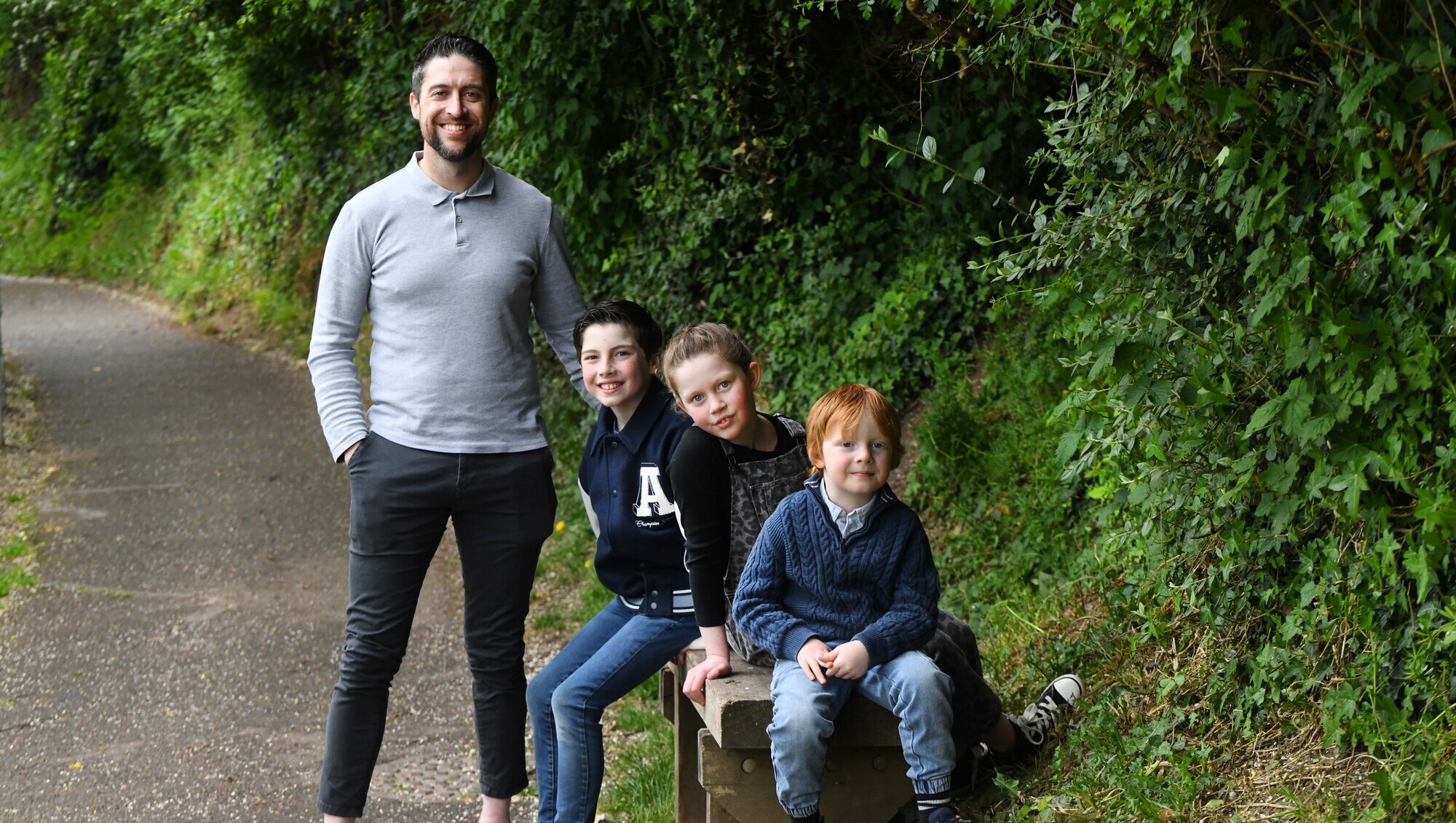
Paul Wren, Kildare, with his children Oliver, 10, Matilda, 8, and Theodore, 5. Picture: Moya Nolan
The Kildare father — head of sales at Odeon Cinema Ireland and UK — says a healthier mindset began to kick in when Oliver, his first-born, was six months old.
A 20-a-day smoker back then, Wren says: “I started to realise how smoking, in particular, impacts your ability to do things effectively and that my health wasn’t where I wanted it to be. I was around friends who had kids and I realised I wanted to be around to participate in Oliver’s life and enjoy physical things with him, like kicking a ball or running after him.
“But the way I was going, I felt all that was at risk.”
Oliver is now aged 10, and two other children have followed: Matilda, eight, and Theodore, five.
Wren was 29 when his first child was born.
“I felt young enough to say ‘I’ve got away with it so far, but I need to cop on now and take things seriously’. I gave up smoking. I’d smoked consistently from the age of 20 to about 30. I did it through nicotine-replacement therapy.”
While he ate what he thought was a good diet — “meat, potatoes, and two veg” — he liked a lot of rich food. “Buttery potatoes, buttery veg, a lot of red meat, fry-ups, roast dinners, lasagne, lots of greasy foods and processed meats. I ate a couple of takeaways a week. My diet was typically overfed and under-nourished and you’d struggle to get me away from the dinner table.”
After reading about heart health, Wren went pescatarian, eating only fish and vegetables, before going vegan. “I’ve been vegan for the past six years, primarily because it allows me to eat all the stuff I love: Vegetables, and starchy foods like pasta and potatoes, but I cut out a lot of saturated fats.”
At his heaviest, Wren had been “the guts of 18 stone”. He lost weight by taking up running and joining a gym. “I’ve stayed healthy. I have my bloods done every January, the full MOT, and I’m told everything is fine.”
Wren wasn’t “a huge drinker, but drank a fair bit once a week” when out socialising. “Out with the lads, I’d have five or six pints. It seems extreme now. I completely cut it out,” he says, explaining while playing a weekly online game with college mates, he has two 300ml cans of beer. “I enjoy those,” he says.
Having reversed the trajectory of an unhealthy lifestyle, Wren feels his mental health is much better. “I wasn’t happy in myself because of how I looked. Now I like how I look and feel.”
He loves that he can run upstairs after his children. “I wouldn’t be able to if I was still smoking and eating as I was.”
Wren is looking forward to going to a theme park in Amsterdam with his wife, Una, and their three children. “I’ll be able to get around there without my back killing me, or needing to sit down, or having to find a place to smoke.”
The change is helping him be a more attentive and authentic parent, he says: “How could I ever credibly tell my children not to vape or smoke if I was doing those things?”
Having completed three marathons, as well as many half-marathons, Wren is a triathlete. He feels his example — and Una’s, who also embraces a healthy lifestyle — is benefiting their children.
“The older two do jiu-jitsu four days a week. Matilda does ballet, Oliver does Gaelic football, and Theodore is starting all those. It’s not competitive for them, it’s just about being active.”
Aside from new fathers “suddenly becoming more aware of their own health, mortality, and long-term wellbeing in a way they may not have before”, Kelly says, there is also a strong identity shift.
“Becoming a father can create a powerful wish to be dependable, energetic, and present for a child over the long-term. For some men, that translates into practical changes, such as exercising more, improving diet, reducing alcohol, stopping smoking, or reassessing work-life balance.”
But, counterintuitively, dads can let themselves go at this time, Kelly says. “Parenthood can create conditions that make healthy living harder. New babies bring sleep deprivation, stress, financial pressure, changes in relationships, and much less personal time. Under those circumstances, healthy routines can easily collapse.”
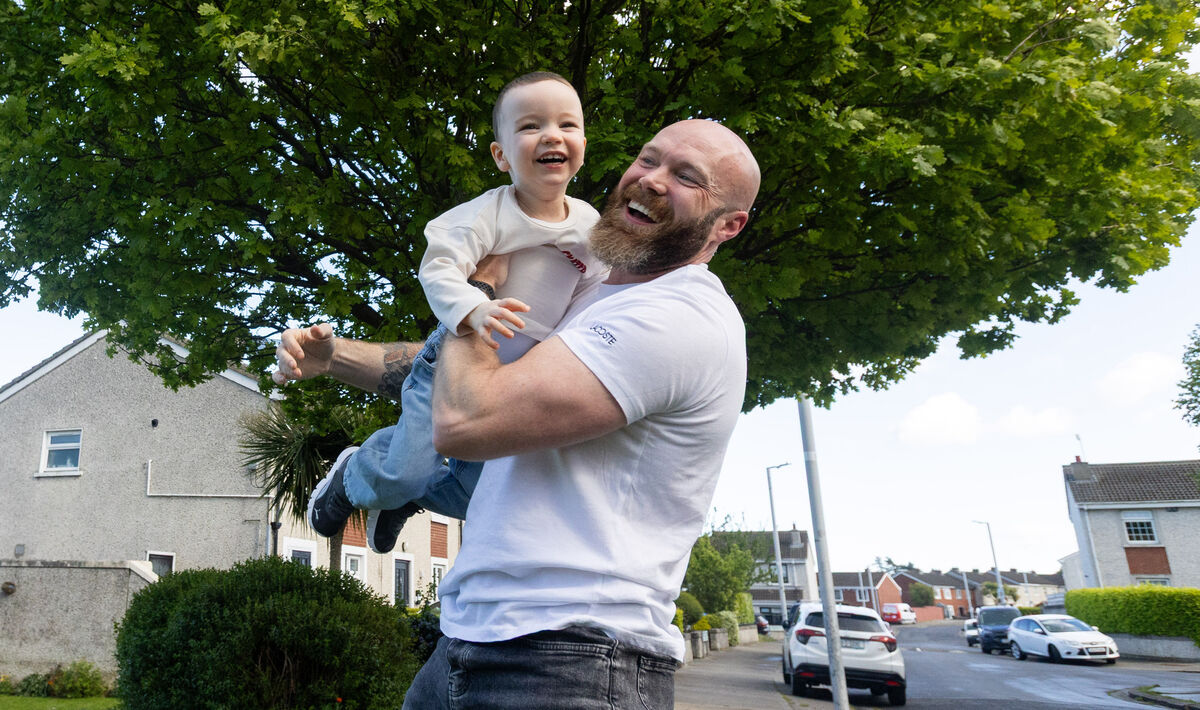
This is what South Dublin-based dad Shane Fallon, 37, experienced after his now two-year-old son, Brody, was born. Head coach at FLYEfit gyms, Fallon says he was in great shape coming up to when his baby was born.
“And after? Well, a baby coming into the picture, whole schedules change, your lifestyle, priorities, and time-management. I wasn’t going to the gym as often as I had been — I’d been going up to five days, now it was one or two.
“Not training as much, I put on a bit of weight. At the start, you don’t realise you’re not getting the training in. Then, you get a bit of quiet time and you think, ‘Oh, I didn’t go this week’. Over time, I saw a change in my body shape.”
Fallon realised being active improved his mood and this had a positive impact on the people around him. “I knew I needed to make a change,” he says, adding his partner was a vital support. Stacey, an operations manager for creches, has a busy lifestyle and is herself very active.
When Brody was about six months old, the couple began sitting down at the start of each week to review their schedules.
“We’d allocate time to focus on our health and wellbeing, so I had time scheduled when I could go to the gym and work out.”
Fallon has seen exactly this difference between what motivated him to be fit pre- and post-arrival of his son. “Pre-fatherhood, my motivation was probably more selfish. I was training for myself, to feel and look good. The motivation after becoming a father was different, because I have to, and want to, focus on other people: My partner and child.
“I’m keeping healthy and fit now, for longevity and for quality of life; being a fit dad is important to me. I want to play football in the park with my children, go on hikes and do outdoor activities with them. I want to be a role model, lead by example; that’s the purpose of my training now.”
And with the birth of their second baby imminent, Fallon says: Children don’t stop, so you have to be able to keep up.”
- For Prof Brendan Kelly’s new book, , see: exa.mn/Buddhism-and-psychiatry

CONNECT WITH US TODAY



Be the first to know the latest news and updates