Walk on the wild side: Crabs move sideways to confuse predators
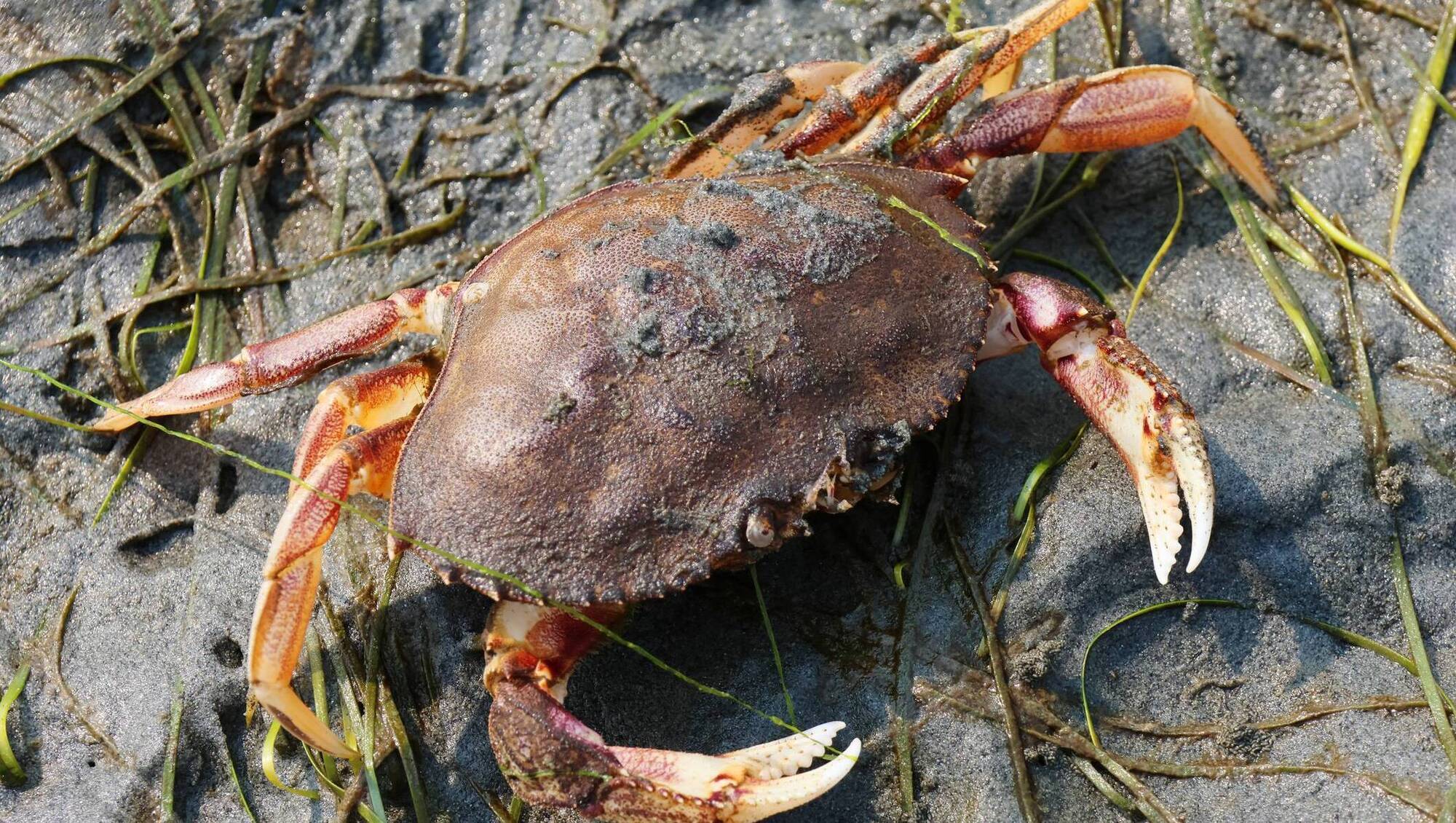
Researchers in Japan tell us why crabs move sideways, rather than straight ahead like all other creatures and how 'sideways motion’ is to their benefit
Of the 50 species tested in the Nagasaki University study, 35 turned out to be sideways movers and 15 were forward movers. 	Picture: iSotck

Of the 50 species tested in the Nagasaki University study, 35 turned out to be sideways movers and 15 were forward movers. Picture: iSotck

For yourself sir shall grow old as I am, if like a crab you could go backwardHamlet to Polonius

The ‘Cashen’, the wild estuary of the River Feale, reaches the mouth of the Shannon near Ballybunion. I used to fish for flounder there in my youth, but I caught mainly crabs. Released from the line, they would scamper back to the water, snapping their claws together aggressively. I feared their sharp pincers.

But why did the crabs move sideways, rather than straight ahead like all other creatures? Could they even see where they were going? You don’t drive a car while looking out of the passenger window! How does ‘sideways motion’ benefit crabs? Do all species engage in it and when did this peculiar trait evolve?

Researchers from Nagasaki University address these questions in a paper just published.

Birds fish and marine mammals travel effortlessly using powerful wings tails and fins. Legs, however, have their limits. Their owners must walk run, or crawl on their bellies. Nor is moving around the only challenge; being able to flee rapidly from danger can mean the difference between life and death.

Not surprisingly, animals have probed the limitations of leg use. A cheetah, the Formula One mammal, can reach speeds of 120km per hour in a sprint. But, soon exhausted, it can do so only briefly. Kangaroos recommend hopping, while frogs and fleas jump to confuse their enemies.

In a vote of no confidence in legs, we humans opted for the wheel. Invented in Iraq around 5000 years ago, it proved to be one of the most useful innovations of all time. Nature seldom misses a trick but, oddly, it missed out on this one; a land-based creature with wheels would have crucial advantages over ones relying on shank’s mare, at least in some environments. To evolve wheels by natural selection wouldn’t have been easy, but Nature has accomplished more extraordinary feats.

Making moves

The Nagasaki researchers took crabs from the wild and from aquaria. Each captive was kept in a bucket for a few minutes to calm it down. Then it was transferred to a small plastic arena, where its movements were observed and filmed. All of the crabs, the authors assure their readers, were returned unharmed to their original habitats after testing.

The experiment showed that not all crabs move sideways. ‘Crab locomotion’ they say ‘can be separated into two distinct types, sideways and forward, with no intermediates’. Of the 50 species tested, 35 turned out to be sideways movers and 15 were forward movers.

Examination of their ancient lineage showed that sideways movement by crabs evolved from a forward moving ancestor about 200 million years ago and it seems to have occurred only once.

A snipe, flushed form a rushy field, twists and turns in air, making it difficult for the wildfowler to target it. Likewise, the crabs I released back into the Cashen, all those years ago, darted unpredictably either to left or right, making it difficult to head off and catch them. Sideways motion, it seems, is the crab equivalent of the frog’s leap and the snipe’s jerky aerobatics.

  • Junya Taniguchi et al. Evolution of sideways locomotion in crabs. eLife 2026.

x

More in this section

Revoiced

Newsletter

Had a busy week? Sign up for some of the best reads from the week gone by. Selected just for you.

Cookie Policy Privacy Policy Brand Safety FAQ Help Contact Us Terms and Conditions

© Examiner Echo Group Limited