Age-old question: Could the longevity of butterflies be down to diet?
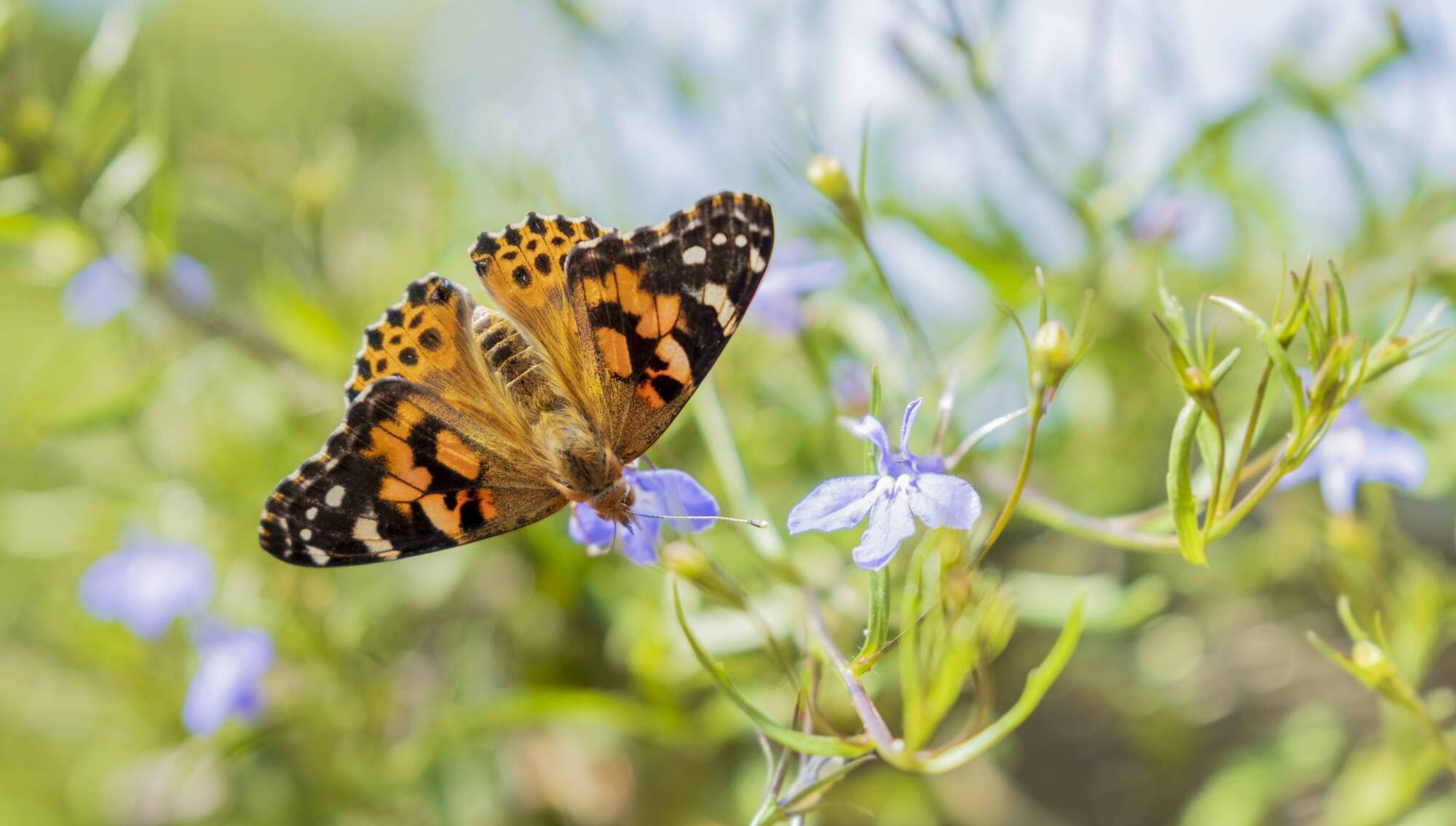
Some butterflies are migrant species, which head back south in the autumn. One of them is the painted lady.
–
William Hogarth’s ‘The Mackinnon Children’ hangs in the National Gallery of Ireland. A boy is shown reaching out to a butterfly, which is rising from a sunflower while his sister looks on. Tempus fugit; the butterfly sun-flower and children, here today, will alas all be gone tomorrow. Carpe diem!
Most Irish butterflies don’t live beyond the autumn. Having mated and laid eggs, their work is done. A few species survive for a further nine more months by hibernating. There are also some migrant species, which head back south in the autumn. One of them, a painted lady, is on the buddleia bush in my garden as I write; 2026 looks like being a ‘painted lady year’!
Things are less constrained in warmer climes. Some butterfly species there are impressively long-lived. A ‘blue-wave’ one, in Central America, reached the ripe old age of 384 days. A Heliconius hewitsoni survived for 348 days although not all of the heliconius tribe reach such dizzying geriatric heights. Another species, the ‘Juno silverspot’, lasts a mere 14 days.
Nor is longevity the only remarkable achievement of these ephemeral insects. Small tortoise-shell butterflies, when emerging from hibernation in Ireland, are dishevelled and down at heel. The wings, on which they will depend after resurrection, are worn and tatty. Some heliconius ones, however, buck the trend. They seem to remain young almost for ever. At any rate, they show no obvious signs of physical decline as they get older. But how do they manage to do this?
Their name derives from Mount Helicon in Greece, sacred to Apollo. Perhaps intervention by the god accounts for their miraculous resistance to ageing. At any rate, Science can’t yet explain how they do it.
Our lives may not always be a ‘bed of roses’, but most of us want to linger on for as long as we can, if only to discover what happens next. ‘To get back my youth’, declares Lord Henry Wotton in The Picture of Dorian Grey, ‘I would do anything in the world, except get up early take exercise or be respectable’.
Longevity and remaining young, by public demand, have become hot scientific topics.
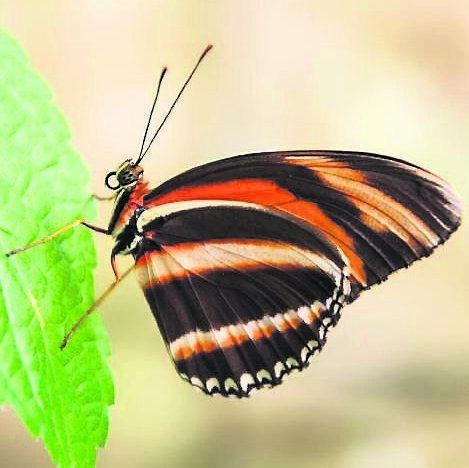
Researchers from Bristol University and the Smithsonian Tropical Institute of Panama have been studying heliconius butterflies native to Central and South America. The team gathered data from gardens, butterfly houses, and from observations of captive ones.
Most butterflies feed exclusively on nectar. Heliconius species, however, supplement their diet with pollen, which is rich in lipids and body-sustaining proteins. Could their longevity be down to this diet? The effects on heliconius when fed only on nectar were examined. The insects still ‘maintained body mass and muscle function for longer and showed no evidence of the age-related physiological decline observed in Dryas iulia’, the researchers concluded.
Since Heliconius, when fed on a nectar-only diet, still retained a longevity advantage, pollen-feeding can’t account entirely for their seniority. These butterflies must have evolved mechanisms which slow aging down but, the researchers admit, they still don’t know what those mechanisms are.
- Jessica Foley et al. 'Evolution of increased longevity and slowed ageing in a genus of tropical butterfly'. . 2026.
CONNECT WITH US TODAY



Be the first to know the latest news and updates