Winging it: Swift ‘the devil bird’ that does its own thing
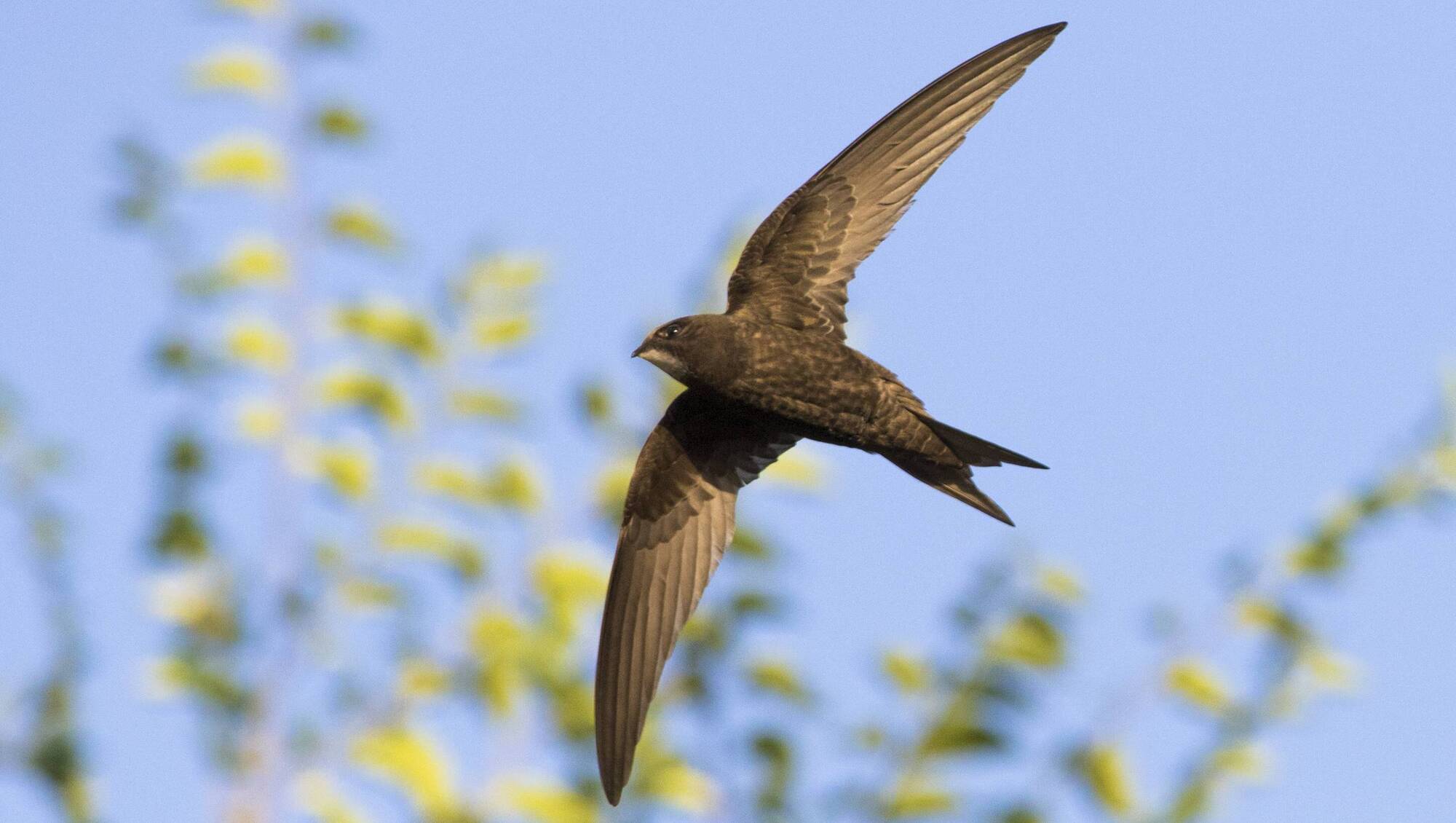
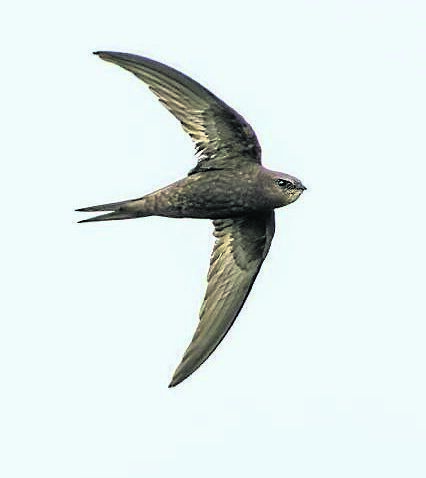
Known as ‘the devil bird’, the swift is the dark-brown acrobat which wheels, screaming loudly, even over cities and towns. Picture: iStock
—
The late James Fairley once remarked that birds are less interesting biologically than mammals. The basic lifestyles of all bird species, he thought, are boringly similar. Mammal profiles, by contrast, are much more varied. There are egg-layers such as the platypus, marsupials like kangaroos, and placental breeders including us humans.
But not all birds are dull conformists. The European swift, for example, does its own thing, engaging in behaviours very different from those of other, more ‘normal’, birds. Indeed, its lifestyle seems so strange, as to be almost unbelievable.
Known as ‘the devil bird’, the swift is the dark-brown acrobat which wheels, screaming loudly, even over cities and towns. It may resemble the swallow, but the two species are not related. The swift’s evolutionary lineage goes back almost 70 million years, whereas the swallow, a Johnny-Come-Lately, evolved less than 20 million years ago.
Just a handful of bird species, none of them European, hibernate. However, during inclement weather, when flying insects are in short supply, a swift can reduce its metabolism and temperature to enter a ‘torpid’ state, avoiding starvation.
But the swift’s strangest behaviour only came to light during the First World War. A French reconnaissance pilot, gliding silently with his engine switched off over enemy lines in the early morning, noticed swifts flying close to his aircraft. They seemed to be asleep on the wing. Nobody believed this at first but we now know that swifts not only sleep in flight, they spend almost all of their lives aloft. Mating displays and copulation, even the moulting of flight feathers, are performed on the wing. Most European swifts only touch ground to nest.
Physical location, you might expect therefore, would be irrelevant to a swift. Its domain being the air, and the underlying terrain of no interest, it would have little attachment to ‘home’. But you’d be wrong. New research by the Royal Society for the Protection of Birds has dispelled that idea.
Nest-boxes were erected in and around a Dartmoor village in the South of England. Chicks raised in them were ringed prior to fledging, enabling their fidelity to the nest location, and to each other, to be determined. Data on 243 nests, and 190 individual birds, were gathered over a 15 year period.
Despite wandering far and wide, nine out of ten of the birds, 94%, returned to the previous year’s nest site. Doing so, presumably, saves time and avoids the squandering of energy in searches for an alternative site.
Swifts ‘winter’ as far away as sub-Saharan Africa. Feeding on insects on the journey southwards, the vagaries of wind and weather may alter their route. Presumably they depend on body-clocks and the position of the sun to get their bearings when returning to Europe.
Fidelity between partners was slightly less impressive. Around 59% of pairings were with the mate of the previous year. Divorce, where a bird bred with a ‘new’ partner, the previous one being still alive, was recorded in 5.5% of cases.
There is no place like home, it seems, even to a devil bird!
- RSPB. (Swift) Nest site fidelity and pair-bonding. 2026.

CONNECT WITH US TODAY



Be the first to know the latest news and updates