Age-old question: What are the factors behind a long life?
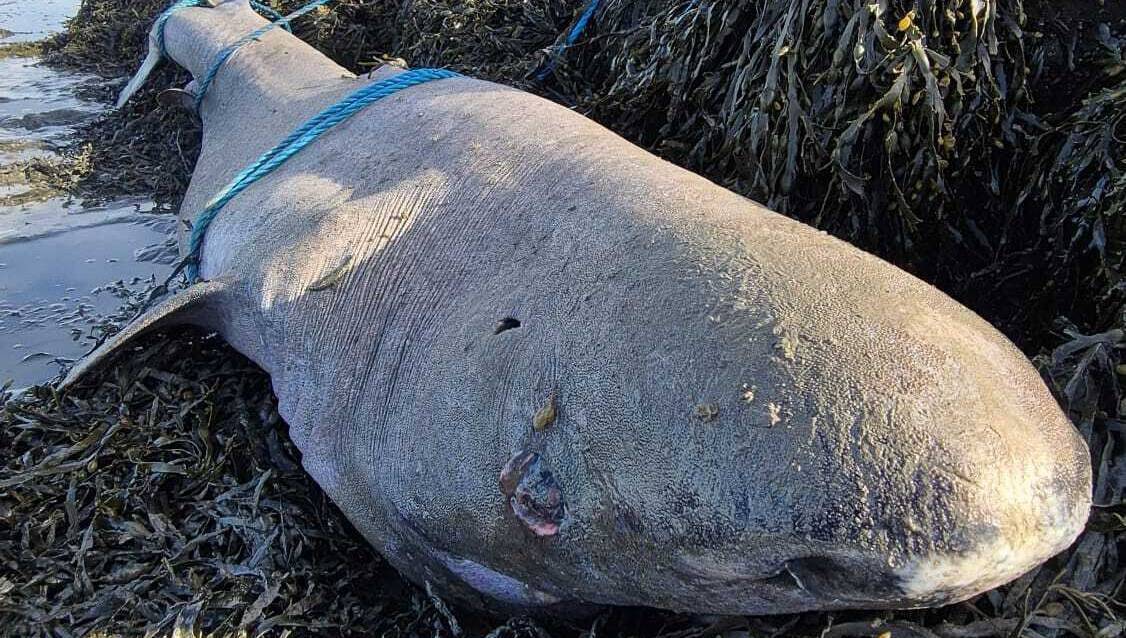
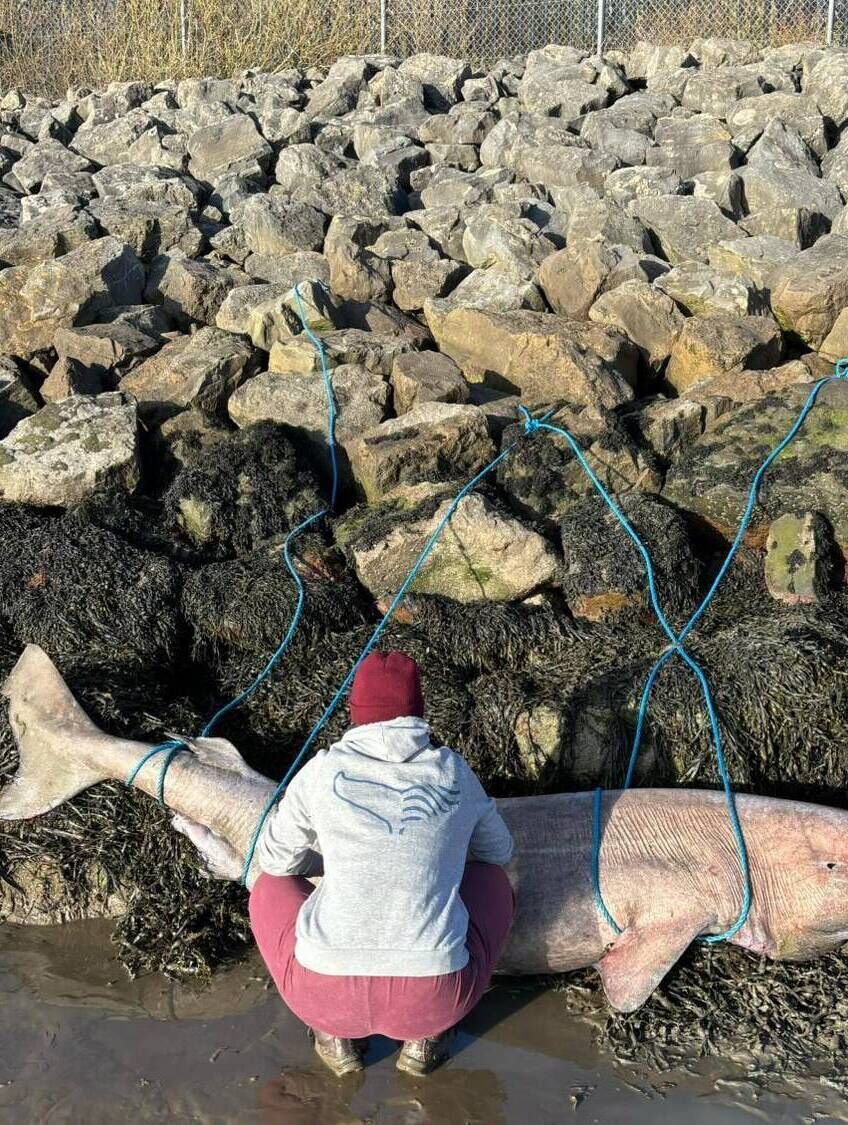
The Greenland shark found by teenagers Hammad Chaudhry and James Winter O’Donnell on the seashore at Finisklin, Co Sligo. Picture: Irish Whale and Dolphin Group via Facebook
—
In mid-April, teenagers Hammad Chaudhry and James Winter O’Donnell came upon the carcase of a large fish on the seashore at Finisklin, County Sligo. The cadaver proved to be that of a Greenland shark, a species never recorded previously in Irish waters. This species of shark, the world’s longest-lived vertebrate, can live for four hundred years and reach a length of six metres. The Finisklin specimen, three metres long, was about 150 years old when it died. A comparative youngster in shark terms, it had scarcely reached puberty.
Nor is the Greenland shark the only long-lived species of Arctic seas. Whalers used bone-headed harpoons up to 200 years ago. Then, metal ones became available. Some of the older heads are still found embedded in the skins of bowhead whales. These individuals, therefore, must be at least two centuries old, making them the world’s longest-lived mammals.
Greenland sharks and bowheads live in very cold waters. Although well-oxygenated and teeming with life, creatures tend to move at slower pace in such an austere environment. That might explain the extraordinary longevity of these sharks and whales. But the Finisklin find raises another mystery. This teenager among whales was said to be of normal weight, with no sign of injury or trauma. Had it died of natural causes?
Why do some individuals die much sooner than others, despite belonging to the same gene pool and facing similar life challenges? What lifestyle factors, if any, influence life-expectancy?
Researchers at Stanford University have tried to answer this question. However, they didn’t choose long-lived sharks and whales as subjects for investigation, but focused instead on one of the world’s shortest-lived vertebrates, the turquoise killfish. Native to temporary ponds in Sub-Saharan Africa, this fish must complete its life cycle before the habitat dries up in summer. Life-expectancy, therefore, is only four to eight months. This enables individual fish to be monitored continually throughout their entire lives and cradle-to-the-grave life-histories recorded. Eighty-one killfish were watched and videoed continually in the laboratory.
The experiment showed that by early mid-life, when 70 to 100 days old, fish that would go on to live longer lives behaved differently from those destined to have shorter lives. Sleep patterns were important. Those destined to be short-lived ‘tended to sleep not only at night but increasingly during the day’. Ones with longer life prospects ‘mainly slumbered at night’. Long-lifers also swam more vigorously, darted around their tanks frequently and were more active during daylight hours.
These behavioural differences, the researchers claim, are not just ‘descriptive’, they are ‘predictive’. The life expectancy of a fish could be predicted from just a few days of behavioural observation.
Nor did aging turn out to be a slow gradual process, as had been expected. A fish would ‘stay stable for long periods and then transfer very quickly to a new stage’. There is a sequence of aging stages throughout a killfish’s life.
‘While the research was conducted in fish, the findings raise the possibility that tracking subtle daily behaviours like movement and sleep, now routinely captured by wearable devices, may offer clues about how aging develops in people', researchers Claire Bedbrook and Ravi North claim.
CONNECT WITH US TODAY



Be the first to know the latest news and updates