Gardaí could be given the go-ahead to ram people who use mopeds, scooters, or scramblers to commit crimes off the road.
Justice minister Jim O’Callaghan has revealed he and transport minister Darragh O’Brien “are prepared to look at” statutory provisions for police in Britain that allow the use of so-called “tactical contact” in pursuits.
This is where police officers chasing violent thieves or reckless drivers on mopeds are allowed to ram them off their vehicles.
Concerns have been increasingly raised about the ability of gardaí to clamp down on scrambler use in recent years.
More recently, a garda driver was banned from driving for two years for dangerous driving while in pursuit of two masked scrambler riders in Dublin in 2024.
The mother of 16-year-old Grace Lynch, who died in January after being struck by a scrambler in Dublin, said the case illustrates the need for more reform to help gardai do their jobs.
A law named in her daughter's memory came into force on April 3, which saw an outright ban on scramblers and quadbikes being ridden in public.
Grace's Law strengthens existing provisions and powers of enforcement by gardaí.
Asked about gardaí worried they could still be prosecuted for pursuing someone suspected of committing a crime, Mr O'Callaghan said: “In the UK, they have a statutory provision that recognises that a guard in pursuit of a criminal or a suspect is not bound by the same road traffic laws as applied to everyone else during that period of time.”
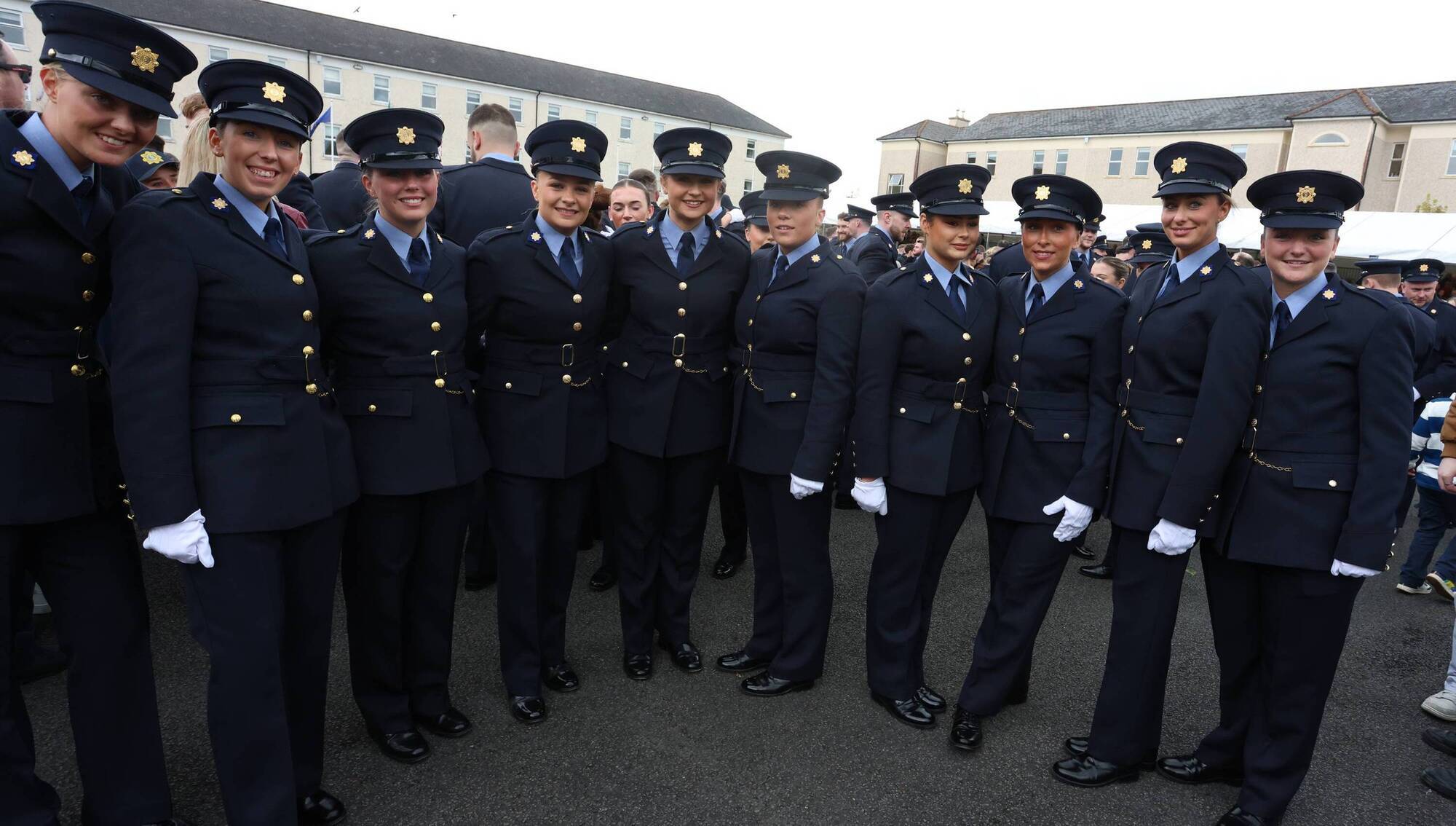
Speaking before 193 recruits were attested as sworn Garda members at the Garda College in Templemore, Co Tipperary, he added: “That's something that certainly Minister O'Brien and myself are prepared to look at. It's a road traffic issue. Obviously, it's within his responsibility.
“But certainly [with] gardaí pursuing suspects, we need to recognise they're entitled to pursue them vigorously.”
Also speaking at Templemore, Commissioner Justin Kelly said that while the number of sworn members being allocated to Dublin was high due to Ireland’s forthcoming EU presidency, with a large number of related events held in the capital, more members will be allocated to rural divisions later in the year.
“It is slightly unusual to other years, because we have the EU presidency in the second half of this year and most of the events for the EU presidency are going to be in Dublin, so we've had to put extra people into Dublin.
"Obviously, the EU presidency will be finished at the end of the year, and with allocations towards the end of the year, we'll certainly see more people going to rural areas.
"I'm committed to not just urban policing, but rural policing. We've appointed a superintendent as a dedicated rural crime lead in relation to allocations. People want to see guards. They trust us.”
Some 193 gardaí were attested as sworn, bringing the current force strength up to 14,661 sworn gardaí, 3,664 Garda staff and 300 Garda reserves.
There are still 632 recruits currently or shortly due to start training at the college.
Some 141 of the 193 newly sworn gardaí will take on operational responsibilities and be allocated to the Dublin region, 27 will be allocated to the eastern region, and 14 will be allocated to the southern region.
A further 11 are going to the north western region.
CONNECT WITH US TODAY



Be the first to know the latest news and updates