Michelle McKeown: The smell of rain and the science behind it
Scientists have a name for the smell of rain: petrichor. It was coined in the 1960s and loosely translates as ‘the blood of stone’.
Have you ever noticed a familiar smell when it starts rains, especially after dry weather? That sudden, earthy scent that seems to appear out of nowhere. It drifts through the air just as the first drops land, catching your attention in a very nostalgic way that few other natural smells can. This smell of rain is a real physical thing that can be explained by science.
Scientists have a name for this scent: petrichor. It was coined in the 1960s and loosely translates as “the blood of stone”. It comes from the Greek word ‘petra’ (stone) and ‘ichor (the blood of the gods in Greek mythology). It sounds poetic, but the science behind it is far more grounded (pun intended). Because this smell doesn’t come from the sky. It comes from the soil beneath our feet.
At the heart of it are microscopic organisms, specifically soil bacteria such as Streptomyces. These bacteria are found almost everywhere, quietly breaking down organic matter and cycling nutrients through the soil. As part of this process, they produce a compound called geosmin. It’s this compound that is responsible for that distinctive earthy scent. Its name translates directly as “earth smell,” which is refreshingly straightforward for something so scientifically complex.
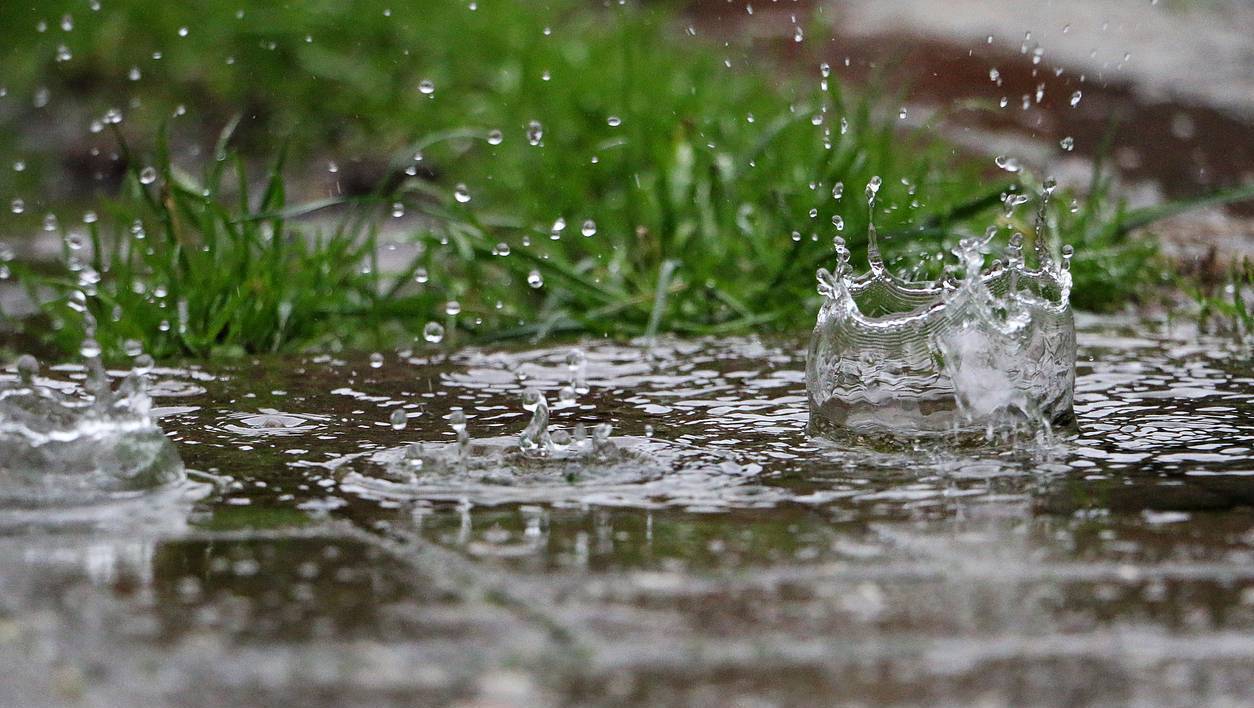
During dry periods, geosmin builds up in the soil, sitting in tiny air pockets between particles. It remains there, largely unnoticed, until something disturbs it. That disturbance comes with rain. When the first drops hit dry ground, they don’t simply soak in. Instead, they trap small pockets of air, forming bubbles that rapidly rise and burst. As they do, they release compounds into the air, including geosmin. These particles are carried on the breeze, reaching our noses almost instantly. So, while the smell appears with the rain, it is actually triggered by the rain interacting with the soil.
This also explains why the scent is often strongest after a dry spell. The longer the soil has been dry, the more these compounds have accumulated. When rain finally arrives, they are released all at once, creating that sudden, intense burst of fragrance.
Bacteria are only part of the story. Plants contribute too. During dry weather, vegetation releases oils that settle on surfaces such as leaves, seeds, and soil. Rain helps release these oils into the air, adding subtle variations to the scent depending on the landscape. A woodland will smell different to a freshly cut field, and both differ again from an urban street.
In the case of thunderstorms, there can be an additional note in the air, which has a sharper, slightly metallic scent. This is ozone, formed when lightning breaks apart oxygen molecules and allows them to recombine in a different form. It adds a distinct edge to the otherwise earthy aroma.
What makes this phenomenon particularly interesting is how sensitive humans are to it. We can detect geosmin at extremely low concentrations. There is some suggestion that this sensitivity may have offered an evolutionary advantage. The smell is often associated with moist, fertile soils, which in turn indicate the presence of water. Being able to detect that from a distance could have been useful.
Yet there is a contradiction. While we find the smell appealing in the air, its taste is far less welcome. When geosmin dissolves in water, it creates a musty flavour often associated with stagnant or untreated sources. Our aversion to that taste may help steer us away from water that is not safe to drink. It is a neat example of how the same compound can both attract and repel, depending on context.
There is still one part of the story that scientists are working to fully understand, why soil bacteria produce geosmin in the first place. It is not a trivial investment of energy, so it is unlikely to be accidental. One explanation involves tiny soil-dwelling creatures known as springtails. These organisms are attracted to the smell of geosmin and move toward its source. When they feed on the bacteria, they also pick up spores, which can then be transported elsewhere, helping the bacteria spread. In this way, the smell may act as a signal. A means of drawing in organisms that assist in dispersal.
It is a reminder that even something as fleeting as a scent can be part of a much larger ecological process. What feels like a simple sensory experience is, in fact, the result of interactions between microbes, plants, soil, and atmosphere. And it is happening all the time, just out of sight.
In Ireland, where rain is a regular feature of daily life, this phenomenon is easy to overlook. But it is worth pausing to notice next time it rains. Any minute now. That brief, familiar scent is not just the weather changing. It is the ground responding, releasing compounds that have been quietly building beneath the surface. A small moment but one rooted in a surprisingly complex piece of science. And once you know that it becomes something more than just the smell of rain.
CONNECT WITH US TODAY



Be the first to know the latest news and updates