Ireland’s seasonal identity crisis — what is it and how can we adjust?
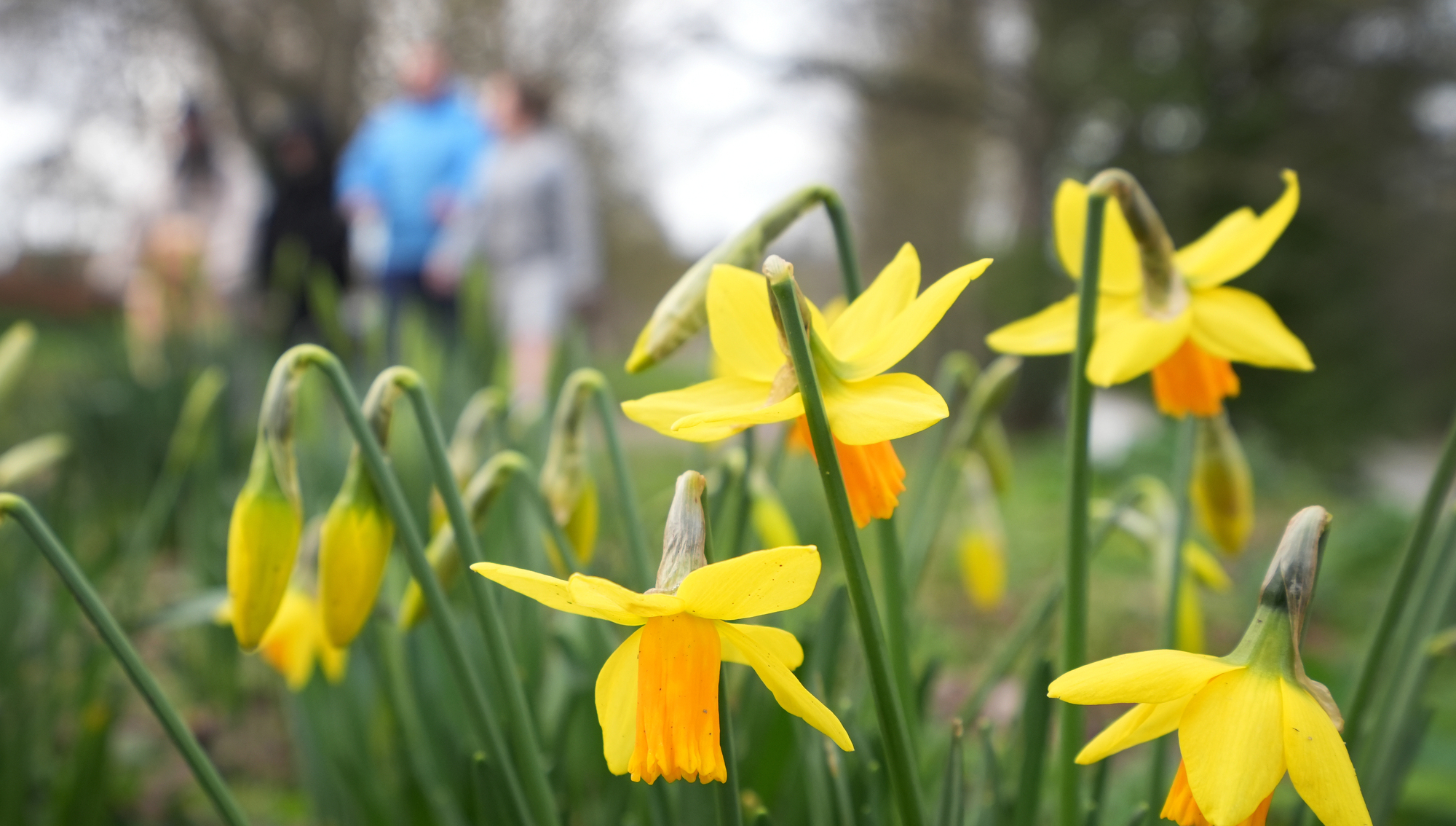
The daffodils are in bloom but depending on who you ask, we are either well into spring, just starting it, or still technically in winter.
It’s March. The daffodils are out, the evenings are stretching, and someone, somewhere has confidently declared that winter is over. The coats are still on, admittedly, and there’s a fair chance of hail, but psychologically at least, we’re moving on. Or are we?
According to the meteorological calendar, spring began on March 1st. According to the astronomical calendar, it won’t begin until later this month, at the equinox. And according to the traditional Irish calendar, we’ve been in spring since February 1st. So, depending on who you ask, we are either well into spring, just starting it, or still technically in winter. Ireland runs on more than one set of seasons, and they don’t always agree.
Meteorologists divide the year into four neat quarters: spring is March, April and May; summer runs June through August; autumn covers September to November; winter is December, January and February. It’s tidy, practical and extremely useful for analysing temperature records. When scientists examine long-term climate trends, such as how Irish winters are warming or how rainfall patterns are shifting, this structure keeps the statistics consistent. Three months, clean averages, no ambiguity. It is efficient. It is logical. It is not particularly poetic.
This system exists because climate data needs order. Comparing winter temperatures from the 1960s to today only works if winter means the same three months every time. For researchers, policymakers and meteorologists, this clarity matters. But it isn’t how Ireland originally understood the year.
Long before weather apps and rainfall charts, Ireland followed a different rhythm. One shaped by land, livestock and light. The traditional Gaelic calendar marks the turning of the year through four seasonal festivals: Imbolc on February 1st, Bealtaine on May 1st, Lughnasadh on August 1st and Samhain on November 1st.
In this system, spring begins at the start of February, which can feel wildly optimistic if horizontal rain is involved. By early February, the days are noticeably lengthening. Snowdrops emerge. There is movement beneath the soil surface. The land is shifting gears, even if we are still reaching for scarves. The Gaelic calendar is often described as a cross-quarter system because its festivals fall roughly midway between solstices and equinoxes. Rather than beginning seasons at the longest or shortest day of the year, it marks the midpoints between them. This is subtle but notable transitions in light.
Each festival reflected practical realities. Imbolc coincided with the first signs of spring growth and new milk. Bealtaine marked the movement of cattle to summer pasture. Lughnasadh signalled the first harvests. Samhain represented the closing of the agricultural year, when livestock were brought in and the darker half of the year began. These were ecological thresholds, not arbitrary dates. You didn’t need a thermometer. You needed to watch your fields.
Astronomical seasons add another layer again. They begin on the equinoxes and solstices (around March 20th, June 21st, September 22nd and December 21st) determined by the Earth’s tilt relative to the sun. This system is globally consistent and astronomically precise. But Ireland’s maritime climate complicates neat astronomical boundaries. Surrounded by the Atlantic and influenced by the North Atlantic Drift, we experience a seasonal lag between peak solar energy and peak temperatures. The shortest day arrives in December, yet the coldest conditions are usually January and February. August often feels like late summer tipping toward autumn, despite astronomical summer running into late September. In that sense, the traditional Gaelic calendar aligns surprisingly well with how seasonal change actually unfolds here.
So which calendar is correct? Scientifically, the meteorological seasons are indispensable for analysing long-term trends. Culturally, the Gaelic calendar captures lived experience. Increasingly, however, both systems are being tested. Ireland’s climate is warming. Average temperatures have risen, particularly in winter. The growing season has lengthened. The timing of natural events such as flowering and leaf emergence (phenological records) show that many species now bloom earlier than they did decades ago. Autumn warmth can linger. Storm patterns are changing.
The dates on the calendar remain fixed. The ecological signals do not. Snowdrops and daffodils sometimes flower in January. Trees leaf out weeks ahead of historical norms. Periods of unseasonal warmth blur the edges between spring and winter, summer and autumn. Perhaps this is why the older calendar continues to resonate. It reminds us that seasons are not just administrative divisions of time; they are processes unfolding in daylight hours, soil temperatures, plant physiology and animal behaviour.
Most of us operate on a hybrid system. We celebrate St Brigid’s Day as the first whisper of spring. We book our holidays during meteorological summer. We know astronomical winter technically begins in December, but it rarely feels that brief.
The coexistence of multiple seasonal calendars is not confusion; it is perspective. Science gives us structure and comparability. Tradition offers continuity and even ecological awareness. Both emerged from careful observation with one through instruments, the other through generations of lived experience.
In an era of climate change, paying attention to both feels increasingly important. The dates will not move. But the signs might. And perhaps the more pressing question is not when spring officially begins, but whether we are still noticing when it arrives.
CONNECT WITH US TODAY



Be the first to know the latest news and updates