Sky Matters: Astronomical events that come along ‘once in a blue moon’
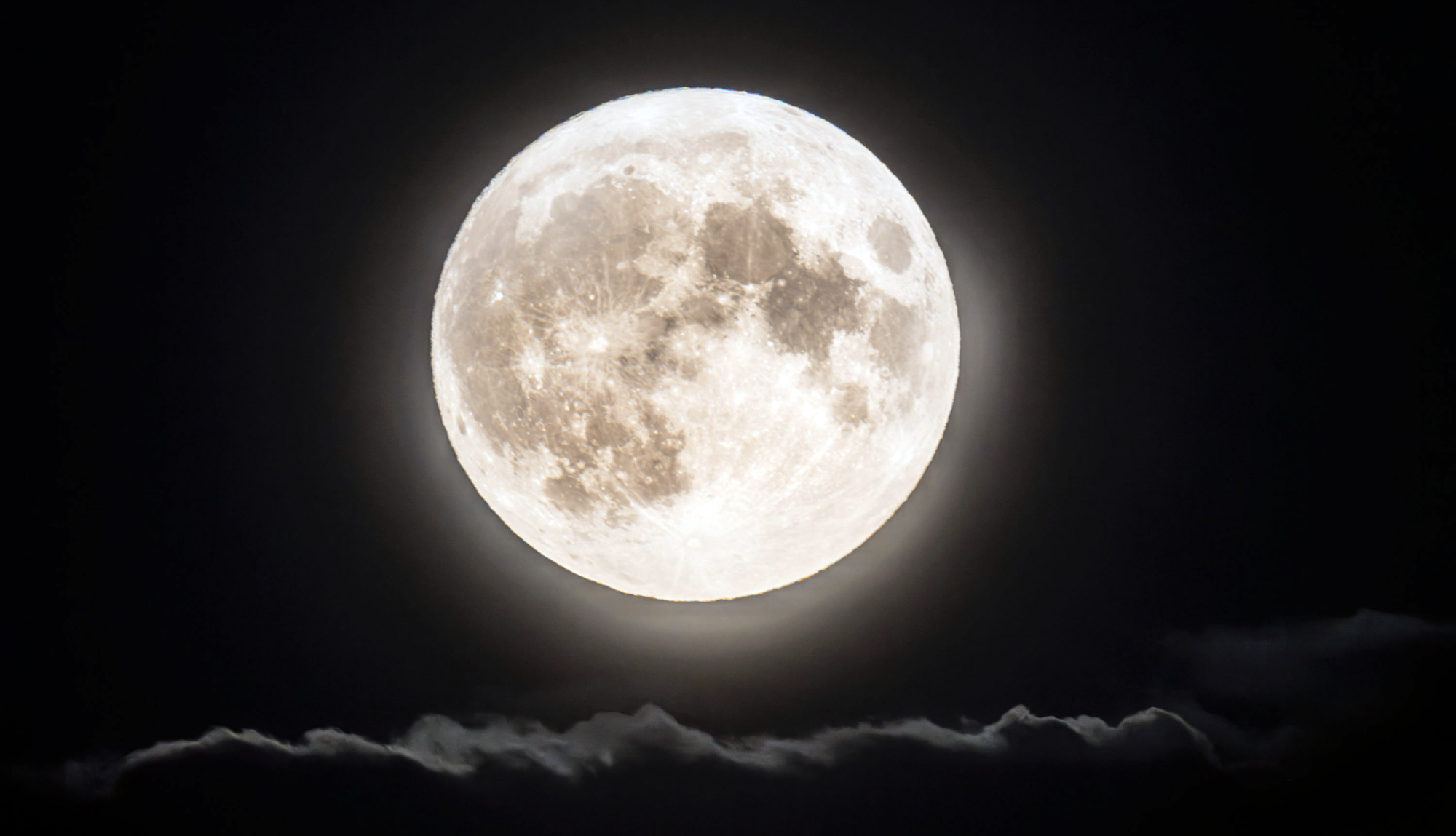
The blue moon refers to the second full moon in one calendar month, which occurs approximately once every two or three years.
The term “once in a blue moon” refers to something which happens rarely. In May we have a very specific “blue moon” on 31st. In astronomical terms a blue moon refers to the second full moon in a calendar month. These happen every 2-3 years and they occur because the time for the Moon to orbit the Earth is 29.5 days whilst the lengths of our months is usually 30 or 31 days (with February and leap years being the obvious exceptions). If the first full moon is within the first day or two of a calendar month, that makes it possible for the next full moon – some 29.5 days later – to also appear in that calendar month.
The term “blue moon” does not refer to the colour of the moon. Indeed a full moon close to the horizon can appear blood red, getting progressively more grey-white as its altitude increases. The only time the moon might take on a blueish hue is after certain volcanic eruptions, such as Krakatoa or Mount Saint Helens. This is due to fine dust particles ejected into the upper atmosphere scattering the red light away from us, leaving only the blue light, which is the opposite of what happens normally.
Other astronomical events are much rarer.
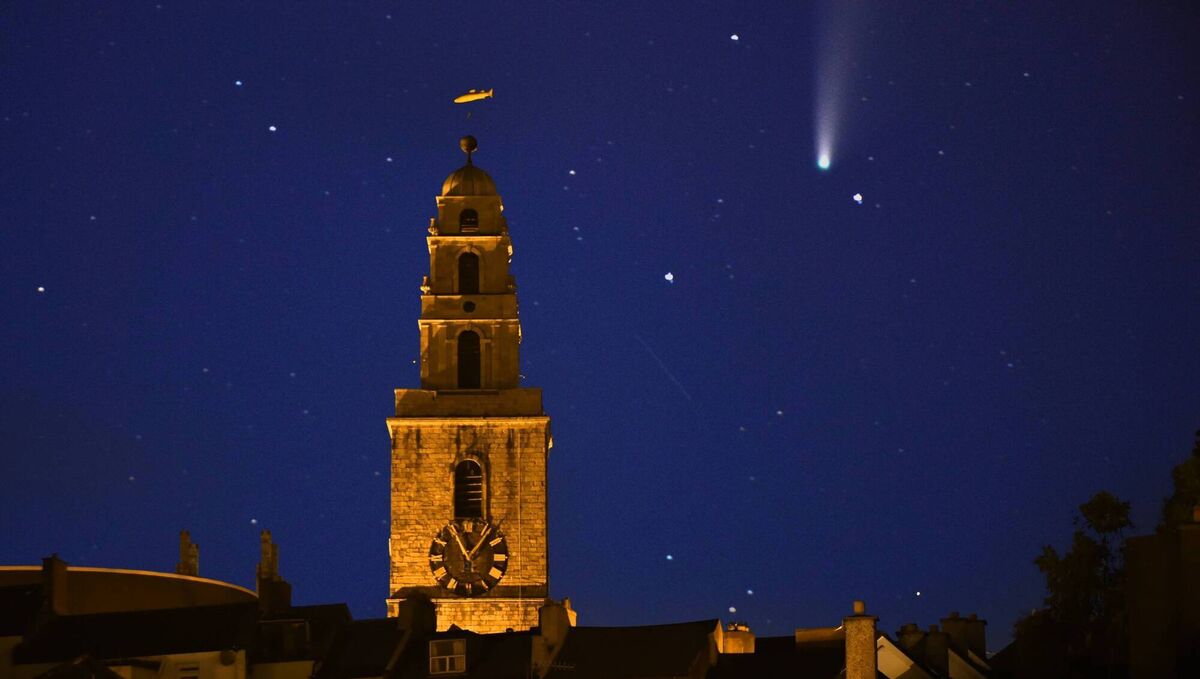
Total solar eclipses happen somewhere on earth once or twice a year. But from a given location you would be lucky to see even one in your lifetime. In Ireland, the last total solar eclipse occurred in 1724 and the next one will take place on September 23rd 2090. (On August 12th this year there will be an impressive partial solar eclipse that will be particularly evident from the south of the country. With over 96% of the Sun covered, this will be the best partial eclipse in Ireland for over 100 years.) Or consider bright comets. While many can be seen on a regular basis through a telescope, truly visible ones might come along but once or twice in a lifetime. They are largely unpredictable as even the most famous of comets can disappoint. This is because the brightness of a comet results in large part from how much material it ejects, and that depends on a lot of factors including the internal geology of the comet which we really have no knowledge of.
Even rarer are meteor storms (not just meteor showers). The great Leonid meteor storm of 1833 is probably the most recent of these. Sometimes referred to as “the night the stars fell” it produced somewhere between 50,000 – 100,000 meteors per hour! The reference to stars falling wasn’t only artistic license. In 1833 we didn’t yet know what stars were, nor that meteors were just small particles burning up in the atmosphere. So to a casual observer it was perhaps not unreasonable to make the connection between the stars as points of light and meteors as being somehow closely related.
Beyond naked-eye astronomy, the scale of rarity becomes even more dramatic.
Exploding stars, or supernovae, have been observed with some degree of certainty in the historical records in 1006, 1054, 1181, 1572 and 1604. The 1054 supernova resulted in an expanding cloud of gas and dust that was coined the “Crab Nebula” by the Third Earl of Rosse in Birr, using the largest telescope in the world in circa 1844. Statistically we’re overdue a supernova – could May be the month to fix all that!
Perhaps one of the rarest events, not visible without the most powerful detectors, is the merger of two black holes. In the Universe there may be 100,000 such events annually, but that’s amongst a total population of 200,000,000,000,000,000,000,000 stars from which most of the black holes would have been born.
But the rarest event is us. You and me. We are scarily rare. At the present moment utterly unique. A real privilege …. and a universe of responsibility.
CONNECT WITH US TODAY



Be the first to know the latest news and updates